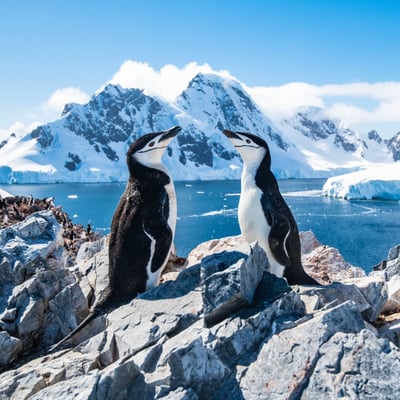
Antarctica sits at the edge of the map, larger than Europe and almost entirely covered in ice. Expedition cruises are the best way to reach it, travelling across the Drake Passage from South America or crossing the Southern Ocean from New Zealand. Penguins gather in rookeries that stretch for miles, seals haul out on ice floes and whales surface in channels between towering icebergs. This is travel at its most elemental.
Antarctica Expedition Cruises


Find a cruise
Our top picks
Seabourn Cruises
59-Day Labrador Coast, Caribbean, South America & Scotia Arc
From Reykjavik to Ushuaia
20 Sep - 19 Nov 2026 (60 Nights)
From £28,813 per guest
Australis
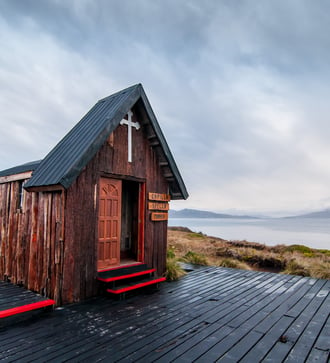
Fjords of Tierra del Fuego
From Punta Arenas to Ushuaia
21 Sep - 25 Sep 2026 (4 Nights)
Call us for a price
Australis
Patagonian Explorer
From Ushuaia to Punta Arenas
25 Sep - 29 Sep 2026 (4 Nights)
Call us for a price
Australis
Fjords of Tierra del Fuego
From Punta Arenas to Ushuaia
29 Sep - 3 Oct 2026 (4 Nights)
Call us for a price
Our Insight
Highlights of an Antarctica expedition cruise
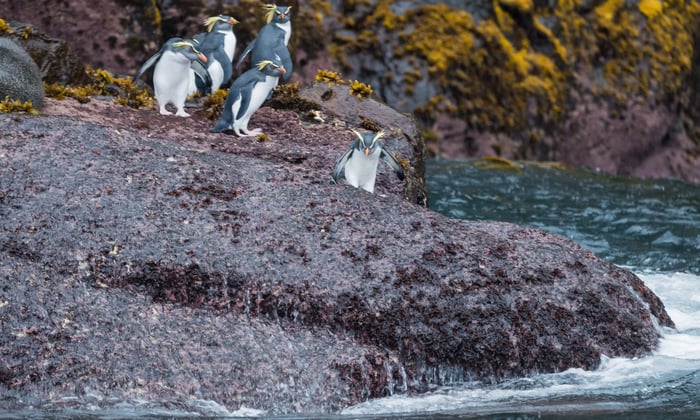
The Antarctic Peninsula is where most expeditions begin, with mountains rising straight from the water, glaciers calving with cracks that echo across bays and icebergs drifting past in shapes that defy logic. Landings happen daily when weather allows, with Zodiac transfers taking you ashore to walk among chinstrap, Adélie and gentoo penguins that show no fear of humans. Research stations cling to rocky outcrops, remnants of the Heroic Age of exploration mark historic sites and leopard seals hunt in the shallows while Weddell seals bask on the ice.
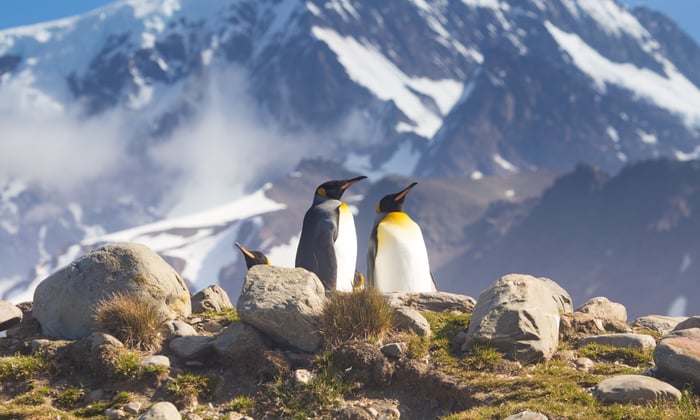
South Georgia delivers wildlife on a scale that changes your sense of what is possible, with king penguin colonies at St Andrews Bay numbering in the hundreds of thousands and elephant seals and fur seals adding to the mass of life that covers every beach. The abandoned whaling stations at Grytviken stand as monuments to a different era, with Shackleton's grave facing the mountains he crossed to reach safety. The Falklands bring you back to human scale, with Stanley's red post boxes, stone churches and the Historic Dockyard Museum documenting the 1982 conflict with quiet authority.
The Ross Sea represents Antarctica at its most remote, with voyages departing from New Zealand to follow Scott, Shackleton and Mawson into regions where expedition ships rarely venture. Historic huts stand perfectly preserved with tins still stacked on shelves and boots by the door, while emperor penguin colonies gather on ice, thousands of birds moving as one against wind that never stops. The Weddell Sea offers the rarest prize of all in Snow Hill Island, home to emperor penguins with their chicks, though landings are never guaranteed and reaching it requires ice-capable ships, helicopters or icebreaking power.
The expedition difference in Antarctica
Small expedition ships carry between 100 and 270 guests, with some ships limiting standard guest numbers to ensuring everyone gets substantial time ashore. Ships are purpose-built for ice, with reinforced hulls, Zodiac fleets and expedition teams that include marine biologists, ornithologists, glaciologists and historians. Lectures fill sea days, covering everything from penguin behaviour to the mechanics of ice formation to the details of Shackleton's Endurance expedition.
Days follow a rhythm dictated by weather and wildlife rather than fixed schedules. The expedition leader scouts sites each morning, assessing wind, swell and ice conditions before deciding where to land. A busy day delivers two landings with Zodiac cruising between them, while other days see you anchored offshore watching the weather shift across the water. This flexibility is what allows expedition ships to reach places that would be impossible with rigid itineraries.
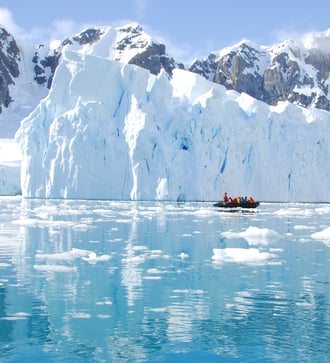
Zodiacs are central to the experience, shuttling small groups from ship to shore and cruising alongside ice cliffs to watch glaciers calve or seals slide into the water. Some operators offer kayaking, camping ashore, snowshoeing or even polar snorkelling for those willing to wear dry suits in water that hovers just above freezing. Scenic Eclipse and Scenic Eclipse II include helicopters and submarines for aerial reconnaissance and underwater exploration, while Ponant's Le Commandant Charcot can break through multi-year ice that would stop other vessels entirely.
Antarctica expedition itineraries
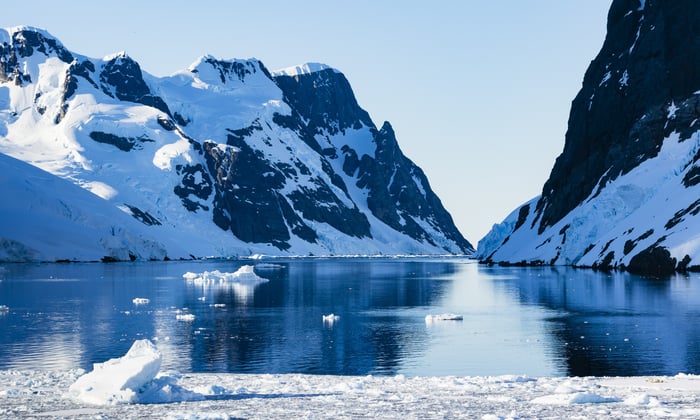
The Antarctic Peninsula is the classic route, departing from Ushuaia or Puerto Williams with 10-14 nights that include two days crossing the Drake Passage each way and 6 to 7 days exploring the Peninsula itself. These itineraries visit the South Shetland Islands, Antarctic Sound and sites along the western coast of the Peninsula, with daily landings and Zodiac cruising when conditions allow.
- Extended itineraries add South Georgia and the Falklands, running 18-23 nights and offering the most comprehensive Antarctic experience available. These voyages typically spend two days in the Falklands, 4 to 5 days in South Georgia and 6 to 7 days on the Peninsula, with additional sea days crossing between each region.
- Ross Sea expeditions depart from Dunedin or Hobart, running 20-28 nights with significant time at sea crossing the Southern Ocean. These voyages visit subantarctic islands like Macquarie Island, Campbell Island or the Snares before pushing south into the Ross Sea for landings at Cape Adare, Cape Royds, Cape Evans and Ross Island, weather and ice permitting.
- Weddell Sea itineraries focus on reaching Snow Hill Island to see emperor penguins, typically running 14-18 nights from Ushuaia. Success rates vary depending on ice conditions, with some seasons seeing near-perfect access and others forcing ships to stay on the Peninsula side. Only the most ice-capable vessels attempt these routes, including Ponant's Le Commandant Charcot and Quark Expeditions' Ultramarine with its twin helicopters.
For those short on time or concerned about the Drake Passage, fly-cruise options allow you to skip the Drake and embark your ship at King George Island in the South Shetland Islands. These condensed itineraries run 6-8 nights with all time spent in Antarctic waters, though flights are subject to weather delays and some would argue that crossing the Drake is part of the authentic Antarctic experience.
Expedition cruise lines sailing to Antarctica
Most luxury expedition operators include Antarctica in their programmes, each bringing different strengths and ship types. Silversea Expeditions operates Silver Endeavour, Silver Wind and Silver Cloud with exceptional crew-to-guest ratios and all-suite accommodation. Scenic's Discovery Yachts, Eclipse and Eclipse II, offer ultra-luxury with helicopters, submarines and butler service for every suite.
Ponant's fleet includes L'Austral, Le Boréal, Le Soléal and Le Lyrial for Peninsula voyages, plus Le Commandant Charcot for icebreaking expeditions into the Weddell Sea and beyond. Seabourn Venture and Seabourn Pursuit deliver luxury expedition credentials with kayaking available and extensive deck space. Quark Expeditions specialises in polar travel exclusively, with Ultramarine's twin helicopters enabling flightseeing and access to remote landing sites.
AE Expeditions has operated in Antarctica since 1991, known for flexible itineraries and strong expedition teams aboard Greg Mortimer, Sylvia Earle and Douglas Mawson. Hapag-Lloyd Cruises brings German-English bilingual operations and consistently high Berlitz ratings aboard Hanseatic Nature, Hanseatic Inspiration and Hanseatic Spirit. HX (formerly Hurtigruten Expeditions) operates hybrid-powered vessels with environmental focus, while National Geographic-Lindblad Expeditions offers citizen science programmes and National Geographic expertise.
For detailed comparisons and current availability, speak to us or explore our Antarctica expedition collection.
The best time for an Antarctica expedition cruise
- November marks the start of the season, with pack ice breaking up, snow covering everything above sea level and elephant seals battling for territory. Penguin colonies are establishing, with birds courting and claiming nest sites. This is the quietest time for tourist numbers and the coldest conditions, with temperatures often well below freezing.
- December through January delivers peak conditions for most travellers. Days are long, with light that barely fades even at midnight. Penguin chicks have hatched and demand constant feeding, creating non-stop activity in the rookeries. Fur seal pups arrive in South Georgia, beaches fill with life and whales appear more frequently as krill blooms feed the entire ecosystem. This is also peak season for bookings, with popular departures filling a year or more in advance.
- February sees chicks growing fast, with some penguin species already fledging by month's end. Whale sightings increase as more animals move into Antarctic waters to feed. Light begins to shift, taking on golden tones as the sun drops lower on the horizon.
- March marks the end of the season, with colder weather returning, animals dispersing and ships moving on to other regions.
The season is short, concentrated into the Antarctic summer when temperatures rise enough to make landings feasible and ice conditions allow ship access. Every month within the season offers something different, from the pristine snow and territorial seals of early season to the feeding frenzy and active wildlife of peak summer to the golden light and quieter conditions of late season.
Travel tips and FAQs for Antarctica expedition cruises
Is Antarctica suitable for first-time expedition cruisers?
Yes, particularly Peninsula itineraries departing from Ushuaia. These voyages are well-established, with clear daily routines, comprehensive briefings and expedition teams experienced in guiding first-time polar travellers. Ships range from luxurious to comfortable, allowing you to choose the level of onboard experience that suits you.
How rough is the Drake Passage crossing?
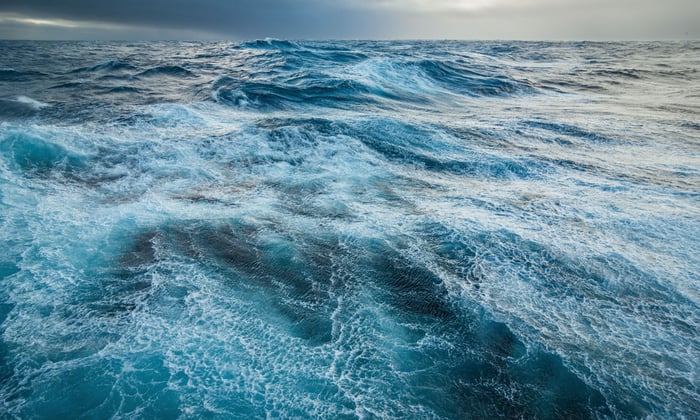
The Drake Passage sits between Cape Horn and the South Shetland Islands, with nothing to break the wind or swell as it circles Antarctica. Crossings typically take two days each way, with conditions ranging from mirror-calm to genuinely rough. Ships are built to handle these seas, with stabilisers and ice-strengthened hulls. If you are prone to seasickness, bring medication and expect to spend time in your cabin or suite during the worst of it.
Do I need special gear for Antarctica?
Expedition operators provide waterproof boots and often include parkas as part of the voyage. You will need layered clothing for cold weather, waterproof trousers, gloves, hats and sunglasses with UV protection. Some ships have drying cupboards in cabins for wet gear between landings. Binoculars are provided by some in suites but many guests prefer to bring their own.
How active are Antarctica expeditions?
Zodiac transfers and shore landings are central to every expedition, requiring you to climb in and out of inflatable boats and walk on uneven terrain including snow, ice, rock and penguin-covered beaches. Some landings involve steep slopes or longer hikes to viewpoints. You do not need to be an athlete, but basic mobility and fitness help you make the most of each day.
Should I add South Georgia to my Antarctica cruise?
If you have the time and budget, yes. South Georgia delivers wildlife experiences that surpass even the Antarctic Peninsula, with king penguin colonies numbering in the hundreds of thousands and Shackleton's history woven through every landing site. The extra week adds cost and sea days, but most people who skip it wish they had gone.
Can I see emperor penguins in Antarctica?
Emperor penguins are rare on standard Peninsula itineraries. To see them, you need either a Weddell Sea voyage to Snow Hill Island (offered by Quark Expeditions and Ponant) or a Ross Sea expedition from New Zealand. Both options require significant additional time and cost compared to Peninsula-only voyages.
What is included in an Antarctica expedition cruise?
Most expeditions include all meals, expedition landings, Zodiac excursions, lectures and use of expedition gear like boots and parkas. Some operators include alcoholic beverages, gratuities and pre-cruise accommodation, while others charge separately for these. Helicopter flights, submarine dives and activities like kayaking may incur additional charges depending on the operator.
How far in advance should I book an Antarctica expedition?
Popular departures, particularly those including South Georgia or travelling during peak season (December-January), often fill 12-18 months in advance. Ross Sea and Weddell Sea voyages with limited departures can sell out even earlier. Peninsula-only itineraries in November or March typically have better availability closer to departure.
collections
The ends of the earth

South Georgia & Falkland Islands
An Antarctica expedition might be all about the White Continent, but if you have the time, it is well worth including South Georgia and the Falkland Islands in your Antarctica itinerary. These isolated outposts are wildlife havens with fascinating history and spectacular landscapes that will make your once-in-a-lifetime trip truly unforgettable.
Learn more
East Antarctica & Ross Sea
If stepping foot on the Antarctic Peninsula is a rare privilege that very few experience, visiting East Antarctica and the remote Ross Sea region is even rarer.

Antarctic Peninsula & Weddell Sea
A trip to Antarctica, the seventh continent, is like travelling to another world – an extraordinary experience of a lifetime that you will never forget.