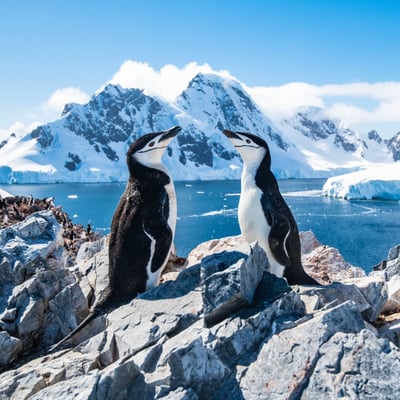
East Antarctica and the Ross Sea represent the rarest Antarctic experience. Departing from New Zealand or Australia, these voyages follow Scott, Shackleton and Mawson into regions where expedition ships seldom reach. Expect preserved explorer huts, vast emperor penguin colonies and ice formations that stretch beyond sight. This is Antarctica at its most remote and historically significant.
East Antarctica & Ross Sea Expedition Cruises

Find a cruise
Our top picks
AE Expeditions
Ross Sea Odyssey
From Hobart to Dunedin
14 Dec 2026 - 8 Jan 2027 (25 Nights)
From £24,285 per guest
Ponant Explorations
Expedition to New Zealand’s Subantarctic Islands
From Dunedin to Dunedin
28 Dec 2026 - 11 Jan 2027 (14 Nights)
From £14,030 per guest
AE Expeditions
Epic Antarctica: Crossing the 7th Continent
From Dunedin to Ushuaia
7 Jan - 9 Feb 2027 (33 Nights)
From £33,233 per guest

Ponant Explorations
Expedition to New Zealand’s Subantarctic Islands
From Dunedin to Dunedin
11 Jan - 25 Jan 2027 (14 Nights)
From £12,320 per guest
Our Insight
Highlights of an East Antarctica & Ross Sea expedition
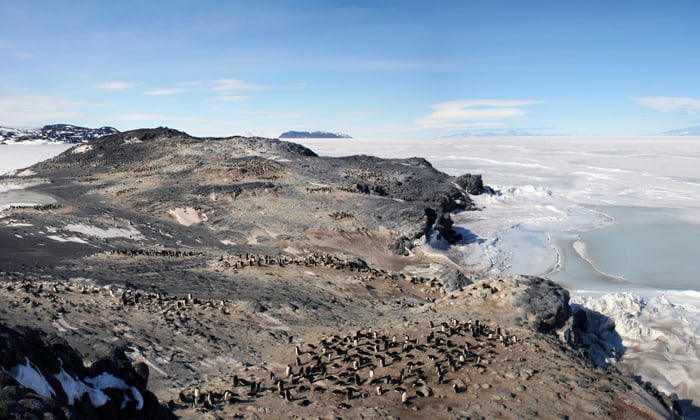
The Ross Sea sits where history and isolation meet. Scott and Shackleton's huts stand exactly as they were left, tins stacked on shelves, boots by the door, frozen in a century of stillness. McMurdo Sound stretches wide and grey, with the Transantarctic Mountains rising behind it in ridges that seem carved from the sky itself. Emperor penguins gather here in numbers that feel impossible, standing shoulder to shoulder against the wind. Nearby, the Balleny Islands break through the Southern Ocean like black teeth, uninhabited except for fur seals hauled out on volcanic rock and seabirds wheeling overhead.
Commonwealth Bay delivers the coldest winds on the planet, funnelling down off the ice cap and hitting the water with enough force to shape every surface. Mawson's hut sits pinned to the rock here, walls crusted with ice, surrounded by nothing but white. East Antarctica offers a scale you cannot judge from the deck. Ice shelves extend for days, flat and featureless. Icebergs the size of cities float past in silence. Every landing feels significant because so few people ever reach these coordinates. This is not the accessible Peninsula. It is Antarctica as the early explorers found it.
The expedition difference in East Antarctica & the Ross Sea
These are long voyages. Twenty to twenty-eight nights, with days at sea that feel like crossings to another world. The ships that sail here are purpose-built for ice, with hulls that lean into pressure and captains who read the pack ice like a language. Weather dictates everything. Landings are never guaranteed. Sometimes you spend hours offshore, waiting for wind to drop or visibility to clear. Sometimes the ice is too thick and you reroute entirely.
When you step ashore, the silence is complete. No other ships. No infrastructure. Just rock, ice and wind that never stops. Expedition teams know these sites by heart. They brief you on the huts before you enter, explain the history without drama, and let you stand inside the spaces where men waited out winter with nothing but time. Emperor penguin colonies feel less like wildlife viewing and more like witnessing something ancient. Thousands of birds moving as one, calling across the ice, chicks huddled between their feet.
East Antarctica and the Ross Sea expeditions attract a particular type of traveller. People who have already visited the Peninsula and want something harder to reach. People drawn to exploration history who want to stand where it happened. People comfortable with uncertainty, long days at sea and the reality that Antarctica makes no promises. This is expedition cruising at its purest.
East Antarctica & Ross Sea expedition itineraries
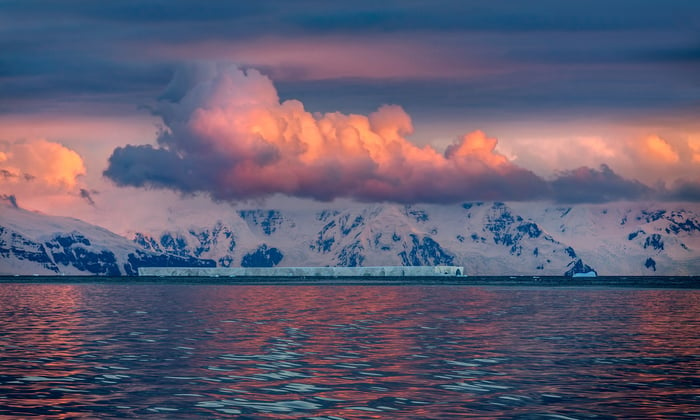
Most voyages run 20-28 nights, departing from Dunedin or Hobart and returning to the same port. Some include subantarctic islands like Macquarie Island, Campbell Island or the Snares, adding wildlife diversity and breaking the open ocean crossing. The Ross Sea itself accounts for around ten days, with time spent at Cape Adare, Cape Royds, Cape Evans and Ross Island, weather permitting.
A handful of itineraries attempt a partial circumnavigation of Antarctica, linking the Ross Sea with the Peninsula via the Amundsen Sea or Bellingshausen Sea. These are rare, long and logistically complex, typically 30-40 nights with extensive time in pack ice. Only the most ice-capable ships attempt them.
Expedition lines sailing East Antarctica & the Ross Sea
The majority of expedition cruise lines that explore Antarctica do so from South America, but there are just a handful that visit Antarctica from Australia or New Zealand. Expedition cruise lines offering East Antarctica cruises include Scenic, with their ultra-luxury Discovery Yachts, AE Expeditions, on board their innovative X-Bow vessels, and Ponant Explorations, on their sister ships or the innovative Le Commandant Charcot. Hapag-Lloyd Cruises also offer epic itineraries undertaking a semi-circumnavigation of Antarctica exploring both the Antarctic Peninsula and East Antarctica.
The best time for an East Antarctica & Ross Sea expedition
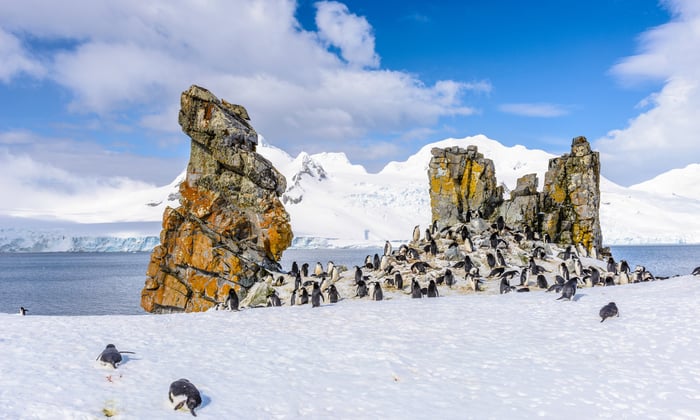
- December and January are the core months. The ice begins to break up in late November, allowing ships to push further south. January offers the longest days and slightly warmer air, though temperatures remain well below freezing. By mid-February, ice conditions start to deteriorate and most operators have moved back to the Peninsula or finished the Antarctic season entirely.
- Weather in the Ross Sea is notoriously unpredictable. Winds can reach hurricane force without warning. Blizzards last for days. Fog blankets the sea, making navigation impossible. This is part of the experience. You plan around it, wait it out and adjust expectations accordingly. The reward is reaching places that remain untouched because they are so difficult to access.
Travel tips and FAQs for East Antarctica & Ross Sea expeditions
Is the Ross Sea suitable for first-time Antarctica visitors?
Most people visit the Peninsula first. The Ross Sea demands longer time commitments, higher costs and greater tolerance for sea days and weather delays. If you have limited time or want guaranteed daily landings, start with the Peninsula.
How rough are the sea crossings from New Zealand?
The Southern Ocean between New Zealand and Antarctica can be challenging, with swells that match or exceed the Drake Passage. Ships are built for these conditions, but if you struggle with seasickness, come prepared. Days at sea are part of the journey, not an inconvenience.
What is the historical significance of the Ross Sea?
The Ross Sea was the staging ground for the Heroic Age of Antarctic exploration. Scott's Terra Nova Expedition, Shackleton's Nimrod and Ross expeditions, and Mawson's Australasian Antarctic Expedition all operated from this region. The preserved huts offer direct connection to that history.
Will we see emperor penguins in the Ross Sea?
Emperor penguin colonies are a highlight of Ross Sea voyages, particularly at Cape Washington and Cape Crozier. Landings depend on ice conditions and weather. When accessible, these colonies are among the largest in Antarctica, with thousands of breeding pairs visible from the shoreline.
How long does a Ross Sea expedition take?
Expect a minimum of 20 nights, with many voyages running 25-28 nights. Partial circumnavigation itineraries can extend to 40 nights. Time at sea accounts for a significant portion of the voyage, particularly during the crossings to and from New Zealand or Australia.
What should I expect onboard during long sea days?
Expedition teams run lectures on wildlife, glaciology, Antarctic history and polar exploration. Some ships offer photography workshops, citizen science programmes or fitness sessions. Sea days are for reading, resting and watching for seabirds and whales from the deck.
Are helicopters and submarines available on Ross Sea expeditions?
Scenic Eclipse and Scenic Eclipse II include helicopters and submarines as part of their Ross Sea voyages. These are used for aerial scouting, ice reconnaissance and underwater exploration when conditions permit. Other operators focus on Zodiac operations and shore landings.
What kind of fitness level is required for Ross Sea landings?
Zodiac transfers and landings on uneven ice or rock require reasonable mobility. Some sites involve walking on snow or across rocky terrain. Expedition staff assess conditions daily and tailor activities to guest ability. You do not need to be an athlete, but basic fitness helps.
collections
You may also like

Antarctic Peninsula & Weddell Sea
A trip to Antarctica, the seventh continent, is like travelling to another world – an extraordinary experience of a lifetime that you will never forget.

South Georgia & Falkland Islands
An Antarctica expedition might be all about the White Continent, but if you have the time, it is well worth including South Georgia and the Falkland Islands in your Antarctica itinerary. These isolated outposts are wildlife havens with fascinating history and spectacular landscapes that will make your once-in-a-lifetime trip truly unforgettable.

Svalbard & the North Pole
Travel further north than 99.99% of the population to Spitsbergen and the Svalbard archipelago on a Svalbard expedition, where you really will feel as if you have gone to another planet – a magical experience.