The tiny Norwegian archipelago of Svalbard sits closer to the North Pole than to mainland Norway and offers some of the best polar bear viewing in the world. This is true Arctic wilderness: ice-bound shores, vast tundra and waters rich with wildlife. Expedition ships navigate the freezing channels around Spitsbergen, the main island. Get ready for the ultimate Arctic journey: a voyage to the geographic North Pole itself.
Svalbard & North Pole Expedition Cruises


Find a cruise
Arctic & Svalbard Expedition Cruises
HX Expeditions
Circumnavigating Spitsbergen - In the Realm of the Polar Bear
From Longyearbyen to Longyearbyen
4 Jul - 16 Jul 2026 (12 Nights)
From £8,637 per guest
Hapag-Lloyd Cruises
Expedition Svalbard Circumnavigation
From Longyearbyen to Tromsø
5 Jul - 19 Jul 2026 (14 Nights)
From £13,287 per guest
Hurtigruten
The Svalbard Line – North
From Bergen to Longyearbyen
7 Jul - 14 Jul 2026 (7 Nights)
From £3,054 per guest
Hurtigruten
The Svalbard Line
From Bergen to Bergen
7 Jul - 21 Jul 2026 (14 Nights)
From £5,090 per guest
Our Insight
Highlights of a Svalbard and North Pole expedition cruise
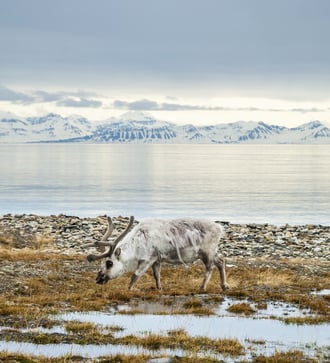
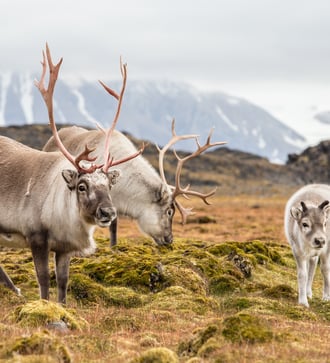
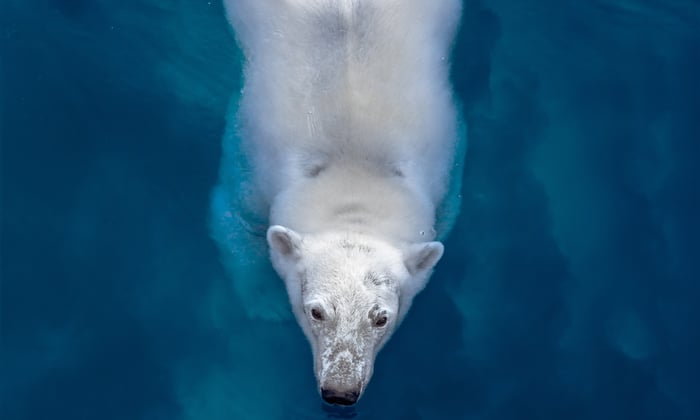
From Northern Norway, travel north and further north towards the archipelago of Svalbard. Next stop, the North Pole. An expedition cruise around Svalbard, often centred on the main island of Spitsbergen, provides an unmatched opportunity in the Arctic for wildlife viewing. Huge flocks of birds wheel above coastal cliffs. Walrus and seals lounge scattered across the ice. Opportunist Arctic foxes patrol the shoreline. And it is this concentration of wildlife along the shores and in the waters surrounding Svalbard that makes it a perfect hunting ground for the most famed resident: the polar bear.
Svalbard is one of the best places in the world to see polar bears in the wild. Norwegian regulations, which govern Svalbard, mean ships are not allowed within 300 to 500 metres of a polar bear depending on the time of year. The aim is to view the wildlife without causing a change in animal behaviour.
In the spring, the Arctic tundra blooms with a muted brightness. Summer sees the magical midnight sun, where the light never fully fades and the sky shifts through pale gold and soft blue around the clock. As autumn gives way to dark nights, late sailings in the area offer the chance to see the Northern Lights sweeping green and violet across the Arctic sky.
Svalbard is also the start and finish point of the most extreme expedition there is: an attempt to reach the North Pole. This journey sets a course due north, slowly making its way through the sea ice to the geographic North Pole and offering the ultimate bragging rights. There is currently only one ship that can achieve this remarkable feat, Ponant's luxury icebreaker Le Commandant Charcot. A small number of Itineraries are offered each year, so you will always be one of an exclusive group if you do make the Pole.
The expedition ship difference in Svalbard
Expedition ships are built for these conditions. Ice-strengthened hulls push through broken pack ice. Zodiacs launch from protected platforms at the stern, carrying small groups ashore or close to ice floes where wildlife gathers. The ships are small enough to navigate narrow channels and adjust course when a polar bear is spotted on distant ice, yet large enough to provide comfort and stability in open Arctic waters.
Days follow the wildlife and the weather. If conditions allow, you go ashore for guided walks across the tundra. Other days, you remain on board, watching from the deck as the ship threads between icebergs or follows a pod of beluga whales. Expedition leaders scan constantly for movement. The regulated distance from polar bears means you watch through binoculars or cameras, but the bears are still clearly visible, still unmistakably wild.
Svalbard expedition and North Pole itineraries
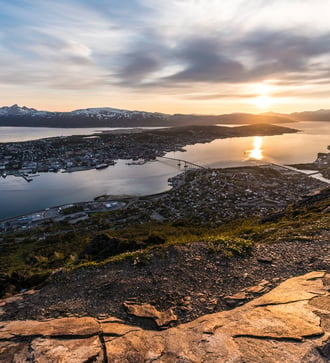
On the island of Spitsbergen, a couple of so-called 'towns', Longyearbyen and Ny-Ålesund, house scientists and a few intrepid visitors, and provide the most common start and end point. Longyearbyen round-trip itineraries are common and completely focused on Svalbard, usually running between 7 and 10 nights. These voyages offer an intensive itinerary with Zodiac discovery cruises and hikes ashore daily, maximising your time in the archipelago.
Some longer itineraries combine Norway's North Cape or Iceland's volcanic shores with Svalbard, or link Greenland's fjords for a broader Arctic exploration. These extended voyages typically run 14 to 21 nights and offer a wider perspective on the Arctic region.
Operating from Svalbard is tricky for flights. Many cruise lines operate charter flights from Oslo, Helsinki or, in the case of French cruise line Ponant, from Paris, and for German cruise line Hapag-Lloyd Cruises from Germany, to help with the logistics of reaching Longyearbyen.
The North Pole is a highly unusual itinerary. Once the preserve of Russian nuclear-powered icebreakers offering their crew quarters to tourists during their quiet summer season, in 2021 Ponant's luxury electric hybrid ship Le Commandant Charcot launched, offering a truly luxurious way of reaching the world's most remote areas. The most technically advanced expedition vessel in the world employs every tool it has to make the journey, starting with an exploration of North West Spitsbergen and turning due north, offering guests the chance to walk on sea ice in the footsteps of the explorers of old.
These North Pole expeditions are unlike anything else in expedition cruising.
Expedition cruise lines sailing to Svalbard and the North Pole
Our partners that operate Svalbard expeditions include AE Expeditions, HX Expeditions, Hapag-Lloyd Cruises, National Geographic-Lindblad Expeditions, Ponant, Quark Expeditions, Scenic and Silversea.
The majority of expedition operators we work with spend time focused on the islands, such is the demand from intrepid travellers, but regulations are strict and numbers are controlled. These rules extend to how close expedition cruise operators take guests to polar bears, so sightings are usually at a distance for the animals' protection. Expedition cruise lines are also unable to use helicopters (if they have them) over the islands, an important factor when weighing up who you might wish to travel with.
Only Ponant's Le Commandant Charcot can reach the North Pole.

The best time to cruise Svalbard
May to September is the main expedition season. May and early June bring longer daylight hours, sea ice still clinging to the shores and spring wildlife activity. By late June and July, the midnight sun is in full effect and the ice has retreated enough for ships to reach further north. August sees the tundra bloom and wildlife at its most active. September marks the start of autumn, with darker nights returning and the first chance to see the Northern Lights, though conditions can be more challenging as winter approaches. See our month by month guide for more information.
The North Pole is only accessible in high summer, typically July and August, when ice conditions allow passage. Even then, success is not guaranteed. Ice moves, shifts and reforms unpredictably, and the journey requires patience and flexibility.
Travel tips and FAQs for Svalbard cruising
What wildlife can I expect to see in Svalbard?
Polar bears are the main draw, but Svalbard is rich with other Arctic wildlife. Walrus colonies gather on beaches and ice floes. Bearded seals, ringed seals and harp seals are common. Arctic foxes patrol the shoreline. Bird life is extraordinary: Arctic terns, puffins, guillemots, kittiwakes and skuas nest in vast numbers on coastal cliffs. Beluga whales and occasionally bowhead whales are seen in the waters.
Are polar bear sightings guaranteed?
No wildlife sighting can be guaranteed. Polar bears are wild animals and move according to food availability, ice conditions and their own behaviour. However, Svalbard has one of the highest polar bear populations in the world, and expedition leaders are skilled at finding them. Most voyages see multiple bears at varying distances.
How close can the ship get to polar bears?
Norwegian regulations require ships to stay 300 to 500 metres away from polar bears, depending on the time of year and whether the bear is on land or ice. These rules protect the bears and ensure human presence does not alter their behaviour. Binoculars and telephoto lenses are essential for good viewing.
What should I pack for a Svalbard expedition?
Layered clothing is critical. Even in summer, temperatures can drop quickly, and wind chill is significant. Waterproof outer layers, insulated jackets, warm hats and gloves are essential. Most expedition lines provide parkas and rubber boots for shore landings. Bring binoculars, a good camera with a zoom lens, and seasickness medication if you are prone to it.
Can I go ashore in Svalbard?
Yes, most expeditions include daily Zodiac landings and guided walks ashore, weather and ice permitting. Landings are carefully managed by expedition staff, and guests are always accompanied by armed guards due to the polar bear presence. Landings may be adjusted or cancelled based on conditions and wildlife activity.
Is the North Pole expedition suitable for first-time expedition cruisers?
The North Pole expedition is one of the most challenging and remote journeys available. It requires significant time, financial investment and a tolerance for unpredictable conditions. First-time expedition cruisers may prefer a Svalbard-focused voyage to gain experience before attempting the Pole.
What is Longyearbyen like?
Longyearbyen is the world's northernmost settlement with a permanent population. It is small, functional and surprisingly lively, with hotels, restaurants, museums and shops. The settlement is surrounded by mountains and glaciers. The Svalbard Museum is worth visiting, and Huset, at the heart of the town, offers excellent food and one of the largest wine cellars in Europe. There have been no new burials in Longyearbyen for over 70 years because the permafrost prevents bodies from decomposing.
How do I get to Longyearbyen?
Most expedition lines operate charter flights from Oslo or Helsinki to Longyearbyen, included in the cruise fare. Some lines, such as Ponant, operate charters from Paris, and Hapag-Lloyd from Germany. Regular scheduled flights also operate from Oslo and Tromsø, though these can be less convenient for cruise schedules.
collections

Greenland & Northwest Passage
Breathtaking scenery, great wildlife and a fascinating history are the key features of Greenland, with access to the fabled Northwest Passage on exciting cruises to Greenland.

Antarctic Peninsula & Weddell Sea
A trip to Antarctica, the seventh continent, is like travelling to another world – an extraordinary experience of a lifetime that you will never forget.

Norwegian Fjords & North Cape
Norway is a spectacular destination on our very doorstep: breathtaking scenery, captivating towns and villages, and the most welcoming people you could imagine.