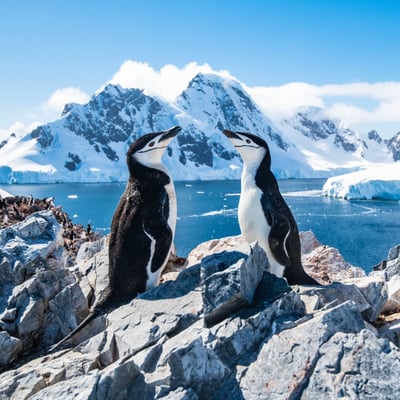
The world's largest island sits 9 times the size of the UK with a fraction of the population. Greenland's terrain is so arduous that overland travel is virtually impossible, making expedition cruises the best way to explore. On the water, you move between settlements, navigate ice-choked fjords and witness landscapes that shift from stark volcanic rock to endless ice sheets. The thing that gets you is the scale, it's vast, silent and utterly removed from anywhere else.
Greenland & Northwest Passage Expedition Cruises

Find a cruise
Greenland & Northwest Passage Expedition Cruises
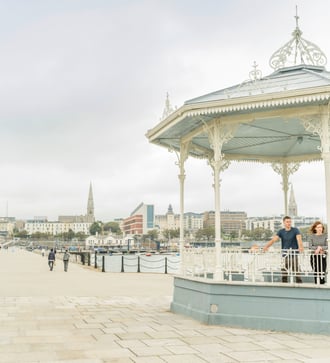
Seabourn Cruises
20-Day Scottish Isles, Iceland & Scoresbysund
From Dublin to Reykjavik
6 Jul - 26 Jul 2026 (20 Nights)
From £13,004 per guest
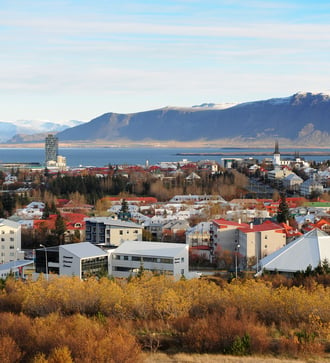
National Geographic - Lindblad Expeditions
Wild Arctic Shores: Circumnavigating Iceland and Exploring Greenland
From Reykjavik to Reykjavik
9 Jul - 17 Jul 2026 (8 Nights)
From £15,287 per guest
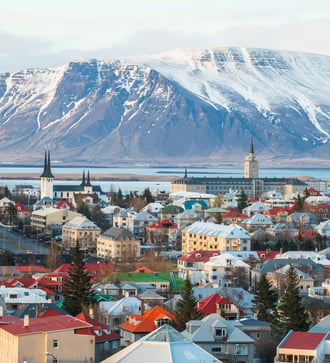
National Geographic - Lindblad Expeditions
Wild Arctic Shores: Circumnavigating Iceland and Exploring Greenland
From Reykjavik to Reykjavik
10 Jul - 18 Jul 2026 (8 Nights)
From £10,991 per guest
Hapag-Lloyd Cruises
Expedition North-West Greenland - Intensive Adventure Around Thule And Beyond
From Kangerlussuaq to Zurich
12 Jul - 25 Jul 2026 (13 Nights)
From £9,107 per guest
Our Insight
Highlights of a Greenland and Northwest Passage expedition cruise
Greenland is the place where ice dictates absolutely everything. Around 80% of the land is covered by ice sheets, 3 kilometres thick in places and 18 million years old. Human settlement clings to the coast in brightly coloured houses that look fragile against the scale of what surrounds them. From these outposts, you explore by Zodiac and on foot, moving through fjords where glaciers calve icebergs the size of buildings, watching them crack and collapse into the sea with a sound that rolls across the water like distant thunder.
The east coast is more remote and better for wildlife. Fewer people live here, which means polar bears, musk oxen, Arctic foxes and walrus colonies are less disturbed. The landscapes feel wilder, more untouched. Scoresby Sound, the world's longest fjord system, snakes nearly 250 miles inland through layers of basaltic lava. The Blosseville Coast sits so isolated that only a handful of ships reach it each season.
The west and south coasts are where you meet Inuit communities where hunting and fishing still shape daily life. In Ilulissat, you watch dog sleds being prepared. In Tasiilaq, locals explain how halibut fishing has become more lucrative than traditional hunting. Viking ruins mark where Norse settlers lived for 400 years before mysteriously abandoning Greenland in the 15th century. The west coast also delivers Disko Bay, one of Greenland's most famous sights, where the Sermeq Kujalleq glacier calves vast icebergs that drift through turquoise water.
The Northwest Passage is the legendary sea route linking the Atlantic and Pacific via the Canadian Arctic archipelago. Norwegian explorer Roald Amundsen first completed the passage in 1903-1906, and even now, with ice retreating due to climate change, it remains treacherous and often impassable. Northwest Passage expeditions typically depart from Kangerlussuaq in Greenland and end at an Alaskan port such as Nome, or reverse, taking around three weeks. These are collector voyages, attempted only once or twice per season by each operator, booking up fast and commanding a higher price point.
The expedition ship difference in Greenland
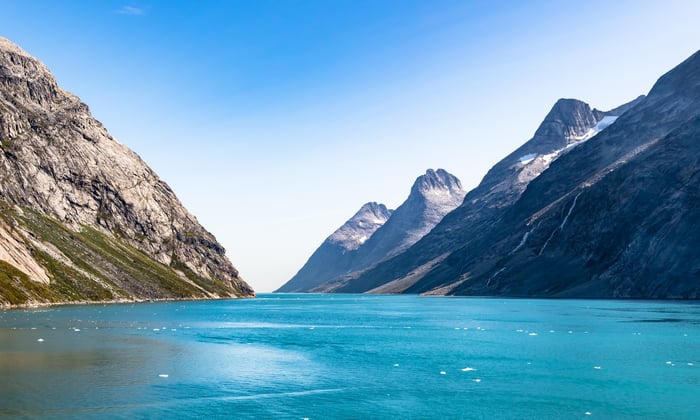
Greenland has virtually no roads. Settlements are scattered along thousands of miles of coastline with nothing connecting them but water and ice. Expedition ships are the only way to access this landscape in any meaningful sense. Ice-strengthened hulls allow passage through fjords choked with brash ice and growlers. Zodiacs launch from the stern, ferrying small groups ashore or weaving between icebergs for closer views of seals hauled out on ice floes or seabirds nesting on cliffs.
Days are shaped by ice conditions, weather and wildlife. Itineraries are fluid. If a polar bear is spotted on distant ice, the ship adjusts course. If a fjord is blocked by pack ice, plans change. Expedition leaders brief guests each evening on the next day's intentions, always with the caveat that everything depends on conditions. This flexibility is what allows access to places larger ships cannot reach and rigid schedules cannot accommodate.
Greenland expedition and Northwest Passage itineraries
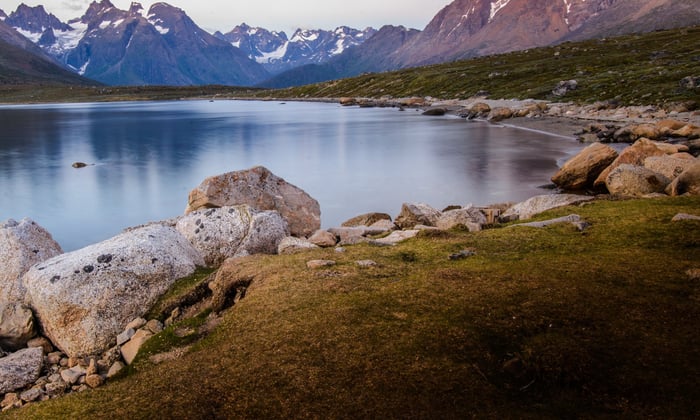
Most Greenland expeditions run 10 to 14 nights, though longer voyages combining Greenland with Iceland, Svalbard or the Northwest Passage can extend to 3 weeks or more.
- East coast itineraries usually sail from Reykjavik and focus on Scoresby Sound, the Northeast Greenland National Park and the Blosseville Coast. These voyages prioritise remoteness and wildlife. Ponant's Le Commandant Charcot operates some of the earliest sailings in May when ice is still thick and few other ships can reach the area.
- West coast itineraries typically start or end in Kangerlussuaq or Nuuk, both served by charter flights from Reykjavik, Copenhagen or other European hubs. These voyages explore Disko Bay, Ilulissat icefjord, Sisimiut and settlements further north such as Uummannaq and Qaanaaq. Some lines operate round-trip sailings from Reykjavik.
- South coast itineraries often combine with west coast routes and include Viking ruins at Hvalsey and Qassiarsuk, as well as Prince Christian Sound, a narrow passage where waterfalls cascade down mountain sides and icebergs drift through water barely 1,500 feet wide.
- Northwest Passage expeditions depart in late summer, typically August, when ice has retreated to its limits. Even then, success is not guaranteed. Ice conditions are unpredictable, and ships may need to turn back or wait for rescue from an icebreaker. The journey crosses from Greenland through the Canadian Arctic archipelago, visiting sites linked to Franklin's and Amundsen's historic attempts, and passing through waters rich with narwhal, beluga whales, walrus and polar bears.
Operating from Greenland requires logistical planning. Many cruise lines operate charter flights from Reykjavik, Copenhagen, or in the case of Ponant from Paris, and Hapag-Lloyd from Germany. These flights are usually included in the cruise fare and coordinate with ship schedules. Some itineraries sail from Reykjavik, removing the need for flights into Greenland entirely.
Expedition cruise lines sailing to Greenland and the Northwest Passage
All of our Arctic expedition partners operate in Greenland, reflecting the region's importance as a key expedition destination. Each line brings a different approach to ship size, onboard style and itinerary focus. These partners are AE Expeditions, HX Expeditions, Hapag-Lloyd Cruises, National Geographic-Lindblad Expeditions, Ponant, Quark Expeditions, Scenic, Seabourn and Silversea Expeditions.
The best time to cruise Greenland
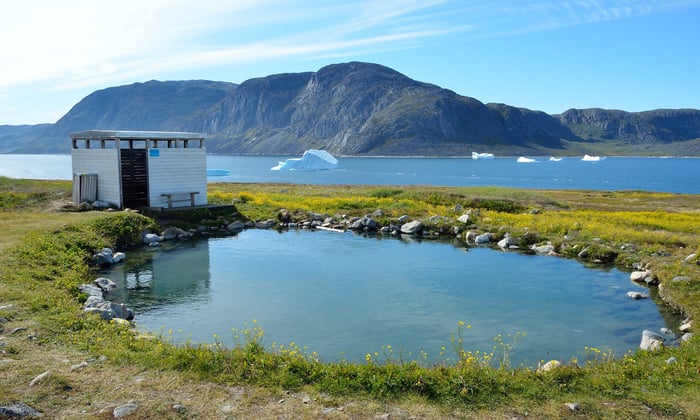
June to September is the main expedition season. June sees longer daylight hours, cooler temperatures and more sea ice still clinging to the shores. July and August bring the warmest weather, midnight sun and peak wildlife activity. Whales feed in the fjords, seabirds nest on cliffs in vast numbers and Arctic flora blooms across the tundra. September marks the start of autumn, with darker nights returning and the first chance to see the Northern Lights, particularly in Kangerlussuaq which sits just north of the Arctic Circle.
The Northwest Passage is only accessible in late summer, typically August, when ice has retreated to its seasonal minimum. Even then, passage is not guaranteed. Ice moves unpredictably, and conditions can change within hours.
Travel tips and FAQs for Greenland cruising
What is the difference between east and west Greenland?
In broad terms, the east coast is more remote and better for wildlife. Fewer people live there, so polar bears, musk oxen, Arctic foxes and walrus are less disturbed. The west and south coasts offer stronger Inuit culture, Viking history and more accessible infrastructure. Both coasts deliver dramatic fjords and icebergs, but the emphasis shifts depending on which you choose.
Will I see polar bears in Greenland?
Polar bear sightings are possible but not as likely as in Svalbard. Greenland has a lower density of bears and they range across vast, inaccessible terrain. East Greenland, particularly the Northeast Greenland National Park and Scoresby Sound, offers the best chances. The west coast has hunting pressure which reduces sightings. If polar bears are your primary motivation, Svalbard is a better choice.
What other wildlife can I expect to see?
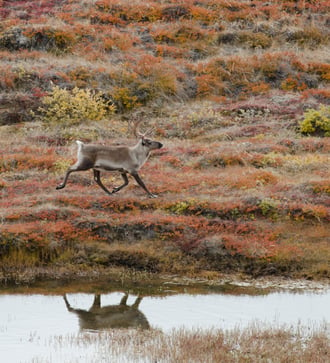
Greenland is rich in marine life. Humpback, minke, fin, bowhead and beluga whales are common, along with the elusive narwhal. Walrus, bearded seals, ringed seals and harp seals haul out on ice and beaches. Musk oxen are found primarily in the northeast, though occasionally on the west coast. Arctic foxes, hares, reindeer and white-tailed eagles are seen in coastal areas. Seabirds nest in vast colonies: puffins, guillemots, kittiwakes, skuas and Arctic terns.
What is the Northwest Passage and is it guaranteed?
The Northwest Passage is the sea route from the Atlantic to the Pacific via the Canadian Arctic archipelago. Norwegian explorer Roald Amundsen first completed it in 1903-1906. Even with modern icebreakers and ice-strengthened ships, passage is not guaranteed. Ice conditions are unpredictable, and ships may need to turn back or alter course. Passengers sign disclaimers acknowledging this risk. The journey typically takes three weeks and is attempted once or twice per season by each operator.
How do I get to Greenland?
Most expedition lines operate charter flights from Reykjavik, Copenhagen or other European hubs to Kangerlussuaq or Nuuk. These flights are usually included in the cruise fare. Some itineraries sail from Reykjavik, reaching Greenland by sea and removing the need for flights. Greenland opened a new airport in Nuuk in late 2024, with direct flights from Copenhagen and New York. Two more airports are scheduled to open in Qaqortoq (south) and Ilulissat (north) in 2026, making access easier.
What should I pack for a Greenland expedition?
Layered clothing is essential. Even in summer, temperatures are cool and wind chill is significant. Waterproof outer layers, insulated jackets, warm hats and gloves are necessary. Most expedition lines provide parkas and rubber boots for shore landings. Bring binoculars, a good camera with a zoom lens, and seasickness medication if needed. Sunglasses and sunscreen are also important, as glare from ice and water is intense.
Can I go ashore in Greenland?
Yes, most expeditions include daily Zodiac landings and guided walks, weather and ice permitting. Landings are managed by expedition staff and may be adjusted or cancelled based on conditions. In some remote areas, particularly where polar bears are present, landings are accompanied by armed guards. Settlements welcome visitors, though numbers are controlled to minimise impact on small communities.
What is Inuit culture like in Greenland?
Inuit traditions remain strong in Greenland, particularly in smaller settlements. Hunting and fishing shape daily life, with strict quotas governing what can be taken. Dog sledding is still used for transport and hunting. Kayaks, first invented by Inuits 4,000 years ago, are a national symbol. Visitors often have opportunities to meet locals, visit homes, see traditional clothing and learn about how communities survive in one of the world's harshest environments.
Is Greenland accessible for first-time expedition cruisers?
Yes. Greenland expeditions are generally less challenging than destinations like the Ross Sea or high Arctic. Settlements provide cultural context alongside natural landscapes, and infrastructure (relative to other polar regions) is more developed. However, conditions can still be unpredictable, and flexibility is required. For those new to expedition cruising, a west Greenland itinerary offers a good introduction.
collections

Svalbard & the North Pole
Travel further north than 99.99% of the population to Spitsbergen and the Svalbard archipelago on a Svalbard expedition, where you really will feel as if you have gone to another planet – a magical experience.

Norwegian Fjords & North Cape
Norway is a spectacular destination on our very doorstep: breathtaking scenery, captivating towns and villages, and the most welcoming people you could imagine.

Alaska & Pacific Northwest
What a wonderful wilderness this is: geographically extraordinary, with glowing glaciers alongside lush greenery, ancient cultures and an extraordinary history to boot.