Trip Reports

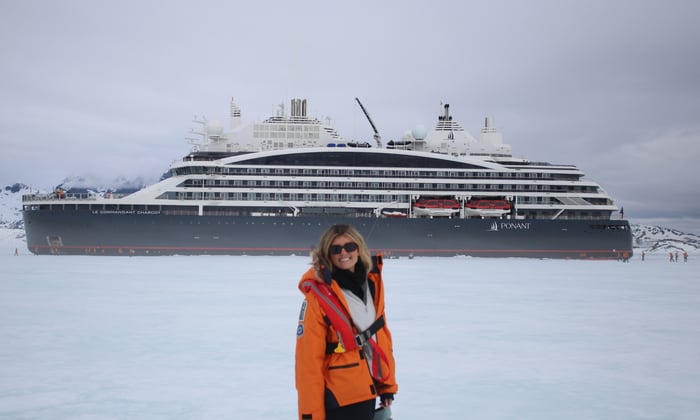
Ponant's ground-breaking Le Commandant Charcot is a true industry first. This is a totally unique vessel that is literally rewriting the rulebook for polar travel.
At a glance: Le Commandant Charcot
- Type: Polar class icebreaker, true hybrid (LNG + electric)
- Operator: Ponant Explorations
- Launched: 2021
- Destinations: High Arctic (incl. North Pole), Greenland, Antarctica, Snow Hill Island
- Guests: 200 (Antarctica limit), 245 guests elsewhere
- Key features: Icebreaking capabilities, helicopter supported landings, indoor & outdoor pools, Alain Ducasse dining, all-balcony suites
- Highlights: True icebreaking, adaptive routing, spa, rare landings (Snow Hill emperor penguins, North Pole access)
Here's why you can trust this review
We were among the first to see Le Commandant Charcot just after she entered full polar service. Since launch, we have sailed on her in Greenland and several members of the Mundy Adventures team have travelled on board between Arctic and Antarctic seasons. This review blends that first-hand experience with up-to-date operational insight from Ponant.
What Charcot is and why it matters
A lot of expedition ships are ice-strengthened. That does not make them icebreakers.
Le Commandant Charcot was built to operate in far heavier ice than the typical expedition fleet. Earlier industry commentary around her build focused on the difference between Polar Class 6 ships, common for seasonal first-year ice and Charcot's much higher ice classification. That distinction is what opens the door to true high Arctic routing and North Pole attempts without relying on external icebreaker support.
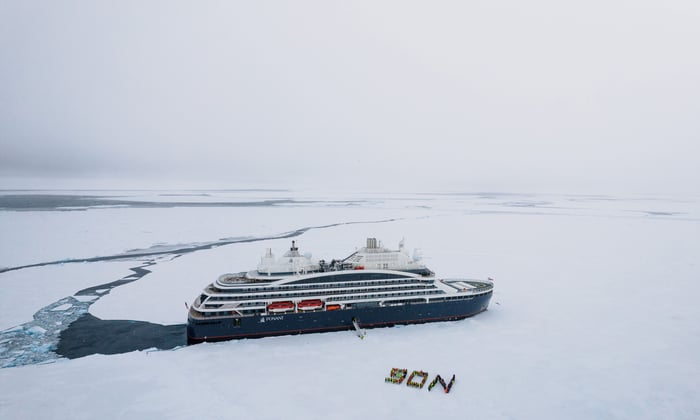
If you are choosing between polar ships, this is the point that changes everything. It affects access, timing, and how often the expedition team can adapt the day around ice movement, wildlife and safe landing conditions.
This unique capability is exactly what has allowed Charcot to attempt and complete several voyages to the North Pole, demonstrating her engineering in practice, not just on paper.
The ship that tested itself at the North Pole
Before welcoming guests, Charcot undertook a trial voyage to the geographic North Pole and became the first French ship to make that journey. In practical terms, it was a statement of intent and a real-world proof of capability rather than a marketing claim.
Ponant's expedition leadership continues to describe Charcot as a true icebreaker. She can cope with ice beyond three metres. In reverse, the propellers are used to break up ice, which forms part of how the ship manages heavier conditions and pressure ridges.
Hybrid propulsion and the wider Ponant picture
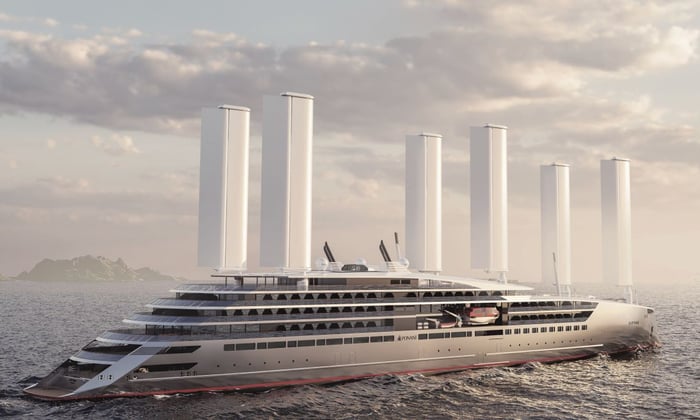
Charcot's hybrid system combining LNG and electric power was a milestone at launch. It sits within a broader Ponant push on lower-emissions technology and operational standards.
At a 2025 Ponant seminar at sea, the line shared a clear message on where it is heading next. This includes Clean Ship certification across the fleet and the Swap2Zero project, which aims to deliver a zero-emissions ocean-going ship by 2030.
For guests, this means smoother, quieter sailing and a lower environmental impact.
Further detail on how this fits into Ponant's wider environmental strategy is covered in our latest sustainability news coverage.
First impressions on board
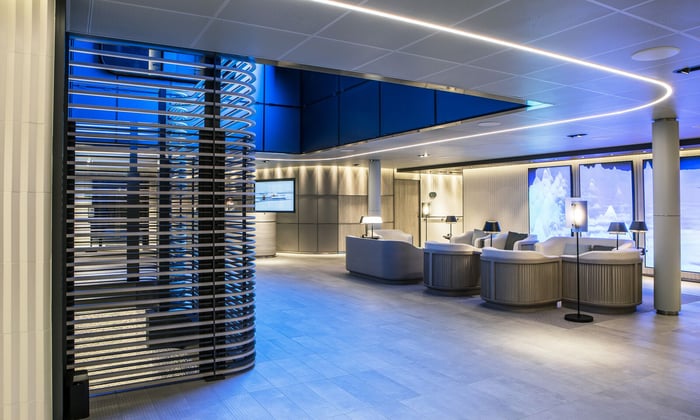
I joined the ship in Le Havre for a short repositioning sailing to La Rochelle as she prepared for her first Antarctic season. The first surprise is how hotel-like she feels. The lobby and public areas could pass for a smart city property, which feels slightly surreal given what the ship is designed to do.
That contrast is the Charcot proposition. Serious polar capability, with comfort layered on top.
Interiors, layout and the spaces you will actually use
French designers Jean-Philippe Nuel and Jean-Michel Wilmotte created a deliberate shift across the ship. Public areas lean into cool whites and blues inspired by polar landscapes. Cabins and lounges use warmer materials and softer lighting, which makes a difference after time outside.
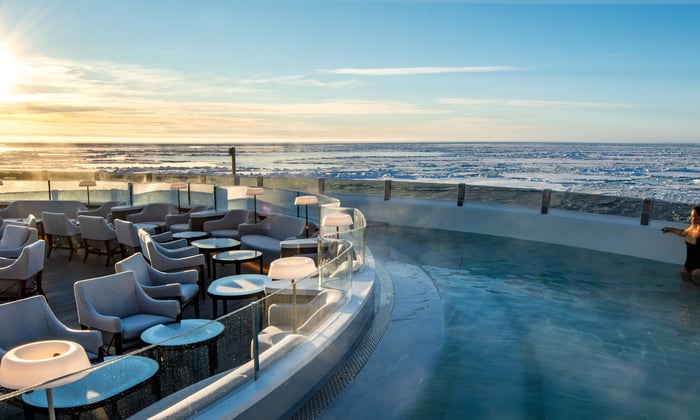
Public spaces are mainly on decks 5 and 9. Deck 9 is home to the Blue Lagoon, an outdoor heated pool that curves around the stern with a central fire pit and heated seating. It is not a gimmick. It is where people go to thaw out between briefings and dinner.
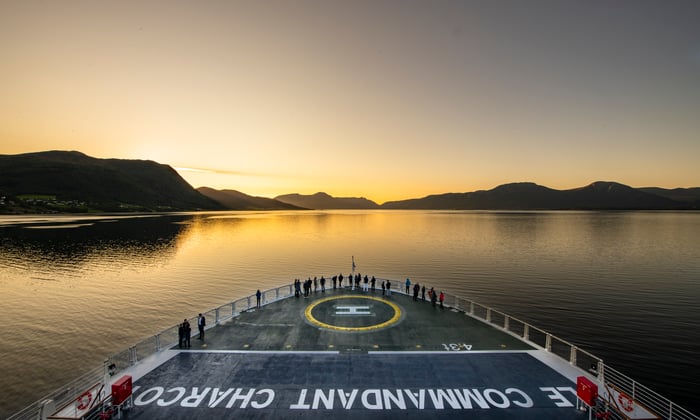
Forward, the observation lounge overlooks the helipad. The helicopter supports scouting and planning. My colleague Claire saw this in action on a Greenland voyage where it played a practical role in checking ice ahead and helping the team decide what was safe and possible.
Nuna spa and the winter garden
Nuna, named after the Inuit word for wellbeing, includes treatment rooms, a hair and nail salon, a sauna with sea views and even a snow room. The adjoining winter garden, Imaq, includes an indoor pool and a quiet relaxation space.
The generous amount of space given to the spa, especially on such a small ship means it feels calm even on sea days, which is not always the case on expedition ships when the weather forces everyone inside.

Food, wine and the tone on board
On deck 5, the theatre can accommodate the maximum of 245 guests, and offers extra space on Antarctica voyages where guest numbers are limited to 200.
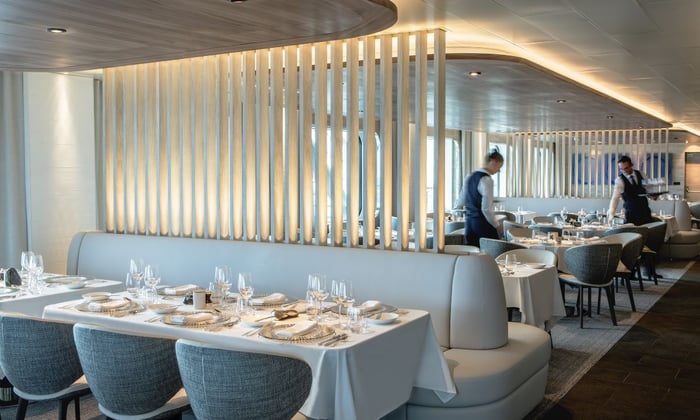
Dining reflects Ponant's French identity properly. The main restaurant, Nuna, features menus created by Alain Ducasse. Sila on deck 9 offers a more casual buffet grill option with a wide range of choice.
A useful reality check from our experience sailing in Greenland is that, despite Ponant's online guidance leaning towards elegant casual, guests skew practical. Outdoor gear at dinner is common. People are here for the expedition and nobody gets precious about it.
Staterooms and suites
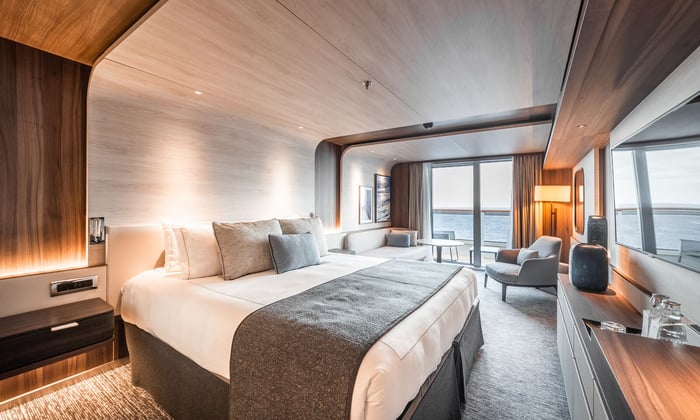
Accommodation is spread across decks 6, 7 and 8 and every cabin has a private balcony.
Prestige Staterooms are compact but well designed, with clever lighting, a separate toilet and a bathroom layout with sea views, something that really help when conditions are rough.
We love the Deluxe Suite midship on deck 8. Genuinely spacious it's nice to have a separate loo, the black marble bathroom with power shower and sliding viewing panel felt luxurious and there was a small but comfortable sitting area.
At the aft, the Owner's Suite and Duplex Suites are the standout options if space matters. The Owner's Suite includes a large living area and a balcony with a Jacuzzi. Duplex Suites use double-height windows with the bedroom on a mezzanine, adding a sense of volume that is rare on expedition ships.
The expedition core and what makes this ship different in the ice
Beneath the hotel finish, Charcot is built around operational capability.
She carries a helicopter with a dedicated hangar, scientific laboratories and systems designed for collecting data in polar waters. The ship also supports researchers, which is particularly relevant in the Arctic where access barriers have historically limited data gathering.
A recurring theme from Greenland was how directly ice and wildlife control the day. The expedition team's line was simple and repeated daily: if the weather, ice and wildlife allows.
That mindset is what you are paying for. You are not buying a fixed schedule. You are choosing a ship and a team built to work with whatever the polar regions decide to do next.
North Pole voyages and how Ponant approaches them
In our interview with Ponant expedition leader Ryo Ijichi, he described North Pole expeditions as far more than a single coordinate. The 14-night structure exists because time is needed for ice variability and because the route allows for additional exploration around Greenland or Svalbard depending on conditions.
Ponant has said they have reached the North Pole on every attempt so far. Voyages are structured to keep that achievable without turning the trip into a single-purpose mission. Read the interview for a deeper look at how these voyages are planned.
Antarctica, Snow Hill Island and emperor penguins
Charcot does not operate in Antarctica every year, which is one reason Snow Hill Island demand remains high.
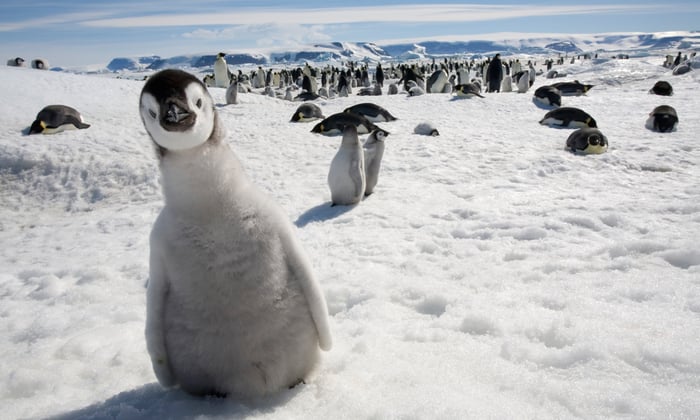
Ryo Ijichi explains that Charcot can work deeper into the Weddell Sea, with the aim of positioning close enough for a walk to the emperor penguin rookery on Snow Hill Island when fast ice conditions allow. He also notes that Ponant has seen emperor penguins on every Snow Hill itinerary, even when the full walk to the rookery is not possible.
If Snow Hill Island is on your radar, our guide to visiting the emperor penguins of Snow Hill Island explains why this is one of Antarctica's most demanding and rewarding expeditions.
For context on how Charcot compares with other ships operating at the limits of Antarctic travel, see our guide to the best extreme Antarctica expedition cruises.
What Greenland on Charcot looks like in real life
The East Greenland sailing brings the ship's capabilities to life in real conditions, showing how all the technical promise translates into memorable experiences and genuine adventure for guests. It shows how the capability translates into days you actually remember.
Highlights included multiple polar bear sightings, time on deck watching the ship move through dense ice and activities that only work when the ship can safely hold position in heavy conditions. Guests described walking on the ice, kayaking between bergs in rare calm weather, dog sledding with local mushers, a polar plunge set up on the ice and expedition-led sessions that made the destination feel lived-in rather than observed from a distance.
For a detailed, day-by-day account, our Greenland cruise review on Le Commandant Charcot brings that experience to life.
Final view
Le Commandant Charcot remains one of the most ambitious ships ever built for expedition cruising. Ponant built a true icebreaker with serious capability and paired it with a level of comfort that means you can spend your day in the polar wilds and still come back to great food, a proper spa and cabins that feel like a retreat.
If your priority is maximum polar reach without giving up onboard standards, Charcot belongs on a very short list.

Meet the Author

Find a cruise
Expeditions on Le Commandant Charcot
Mundy Exclusive
Mundy Exclusive
Ponant ExplorationsSetting sail for the ice of the mythical Weddell Sea
From Ushuaia to Ushuaia
25 Oct - 10 Nov 2027 (16 Nights)
From £23,895 per guest
Ponant Explorations
Setting sail for the ice of the mythical Weddell Sea
From Ushuaia to Ushuaia
8 Nov - 20 Nov 2027 (12 Nights)
From £22,500 per guest
Ponant Explorations
Setting sail for the ice of the mythical Weddell Sea
From Ushuaia to Ushuaia
20 Nov - 2 Dec 2027 (12 Nights)
From £22,500 per guest
Ponant Explorations
Beyond the Antarctic Circle – In the Wake of Jean-Baptiste Charcot
From Ushuaia to Ushuaia
30 Nov - 18 Dec 2027 (18 Nights)
From £22,890 per guest
Related articles