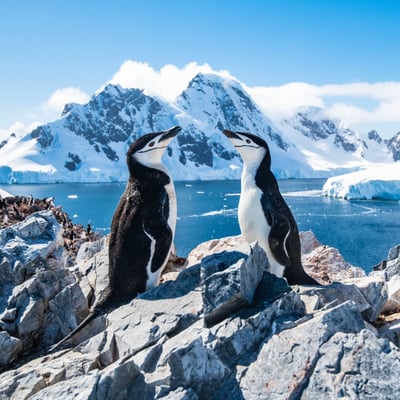
Meet the Experts

From seeing emperor Penguins in Antarctica to an extensive heli-sightseeing programme in Greenland, we speak to Jonathan Mutch, lead helicopter pilot for Quark Expeditions, and Jessie Long, Vessel Aviation Manager at Quark Expeditions to find out about Quark's helicopter sightseeing that is so extraordinary it leaves guests in tears of joy, and hear what you can expect from the most extensive and inclusive helicopter programme available on an expedition cruise. Read on for everything you need to know about helicopter sightseeing in the Arctic and Antarctica with Quark Expeditions...
Arranging a video call between Jonny Mutch while he was in balmy Penzance using one of Quark's two twin-engine Airbus H145 helicopters to run commercial operations to the Scilly Isles, and Jessie Long in Calgary, Alberta, as she prepares for the start of this Arctic season wasn't easy but during a UK heat-wave, we managed to get together to talk about Quark's extraordinary helicopter programme.
How Quark's helicopter programme started
When Quark launched the Ultramarine, their first fully owned ship in 2021, it represented a significant shift for the polar specialist that has been operating since 1991.
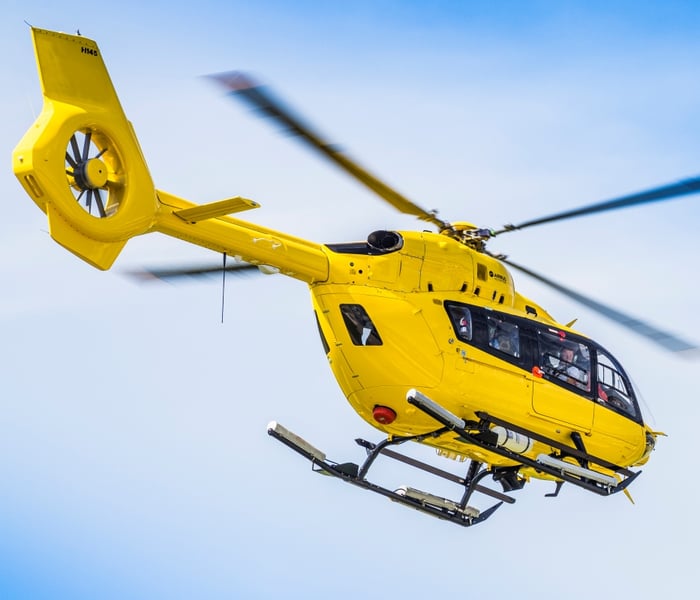
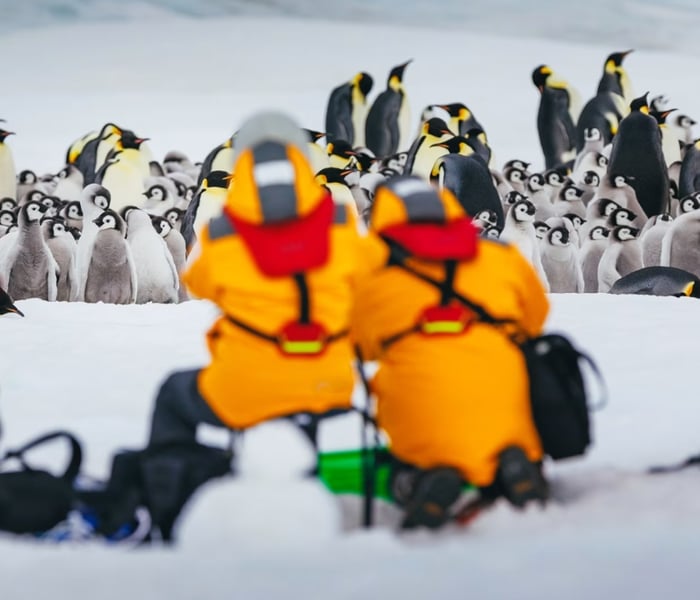
The first new ship to be designed and built to Quark's exacting specifications, it carries two helicopters that deliver an extensive programme of excursions including a free 15-minute flight-seeing excursion for every guest on every cruise (where regulations allow), glacier landings, Greenland camping (where you can fish with a local chef for your dinner), trips to Antarctica's emperor penguin rookery on Snow Hill Island, and much more.
What experience is needed for Quark's helicopter programme?
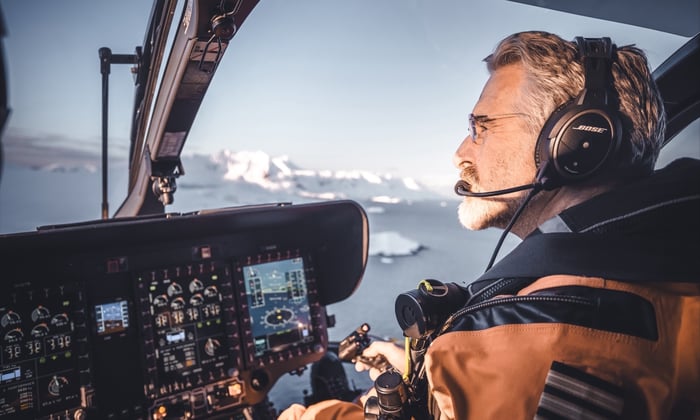
Jonny's background was originally the Royal Navy with time spent flying for the British Antarctic Survey. Self-described as always having "a bit of an expeditionary bent" he didn't think the privilege of flying off an ice exploration ship was one he would repeat. From there he served in the French Navy for three years where he "discovered that there's a lot more shiny super yachts off the coast of the Mediterranean, where pilots were getting better paid for fewer hours."
Tempted by this he found himself working in a "gilded cage", watching the world's richest launching ice-strengthened super yachts but being limited to the tarmac of glamorous airports for over a decade until an opportunity with Quark came up when fate seem to play a hand.
"I'd actually considered the Quark job before and when it came back on the horizon I was applying for another job with a helicopter company who picked up the wrong CV, the one that I'd previously submitted for Quark. So the job came back and followed me and I thought, well, this is great. I absolutely have to do this now. I'd been dreaming up my own ambitious adventures and expeditions, whether they were in the Himalayas or Siberia or bush flying in Africa and some really crazy solo stuff.
And that's how I was scratching that itch really to be expeditionary and extraordinary in some way, then I came to Quark and I found my tribe. It's populated entirely by people just like me who thrive on being out there on the edge, living off their passion, sharing it with others, and exploring places we don't belong."

Jessie's aviation background stretches back to 2005 working at an airport in British Columbia, involved in all aspects of operations. Moving overseas she spent time in Australia and even seven years in Afghanistan honing her skills in managing airports and aerodromes in extreme locations. When an opening to do the same for Quark on board a ship came up she jumped at it and is now responsible for ensuring the smooth running of Ultramarine's airfield (or helipads to you and me) from forecasting and tracking flight hours, technical management, heli-deck inspections and more. Throw in responsibility for future developments and it's amazing we all found the time to talk!
Image: Jessie Long, Vessel Aviation Manager
What's the average day like for a helicopter pilot on Quark Expeditions?
Jonny highlights that most of the pilots have come from either a military or a super yacht background and if they've worked on a super yacht the idea is they should be "neither seen nor heard", simply hired-help to facilitate the ease of their employer's life. On an expedition ship, they form part of the guest experience, in demand because of their knowledge and always engaging with guests - dining with them, joining them on deck with binoculars, and more.
When it comes to flying, he says "we're looking at the area into which we're arriving, we're chasing the weather. We're looking then at topography, the landscape, the climate, liaising with the captain, the experienced mountain guides, and the whole aviation team to come up with a plan. We always trying to get airborne and share what's out there. Then on a flying day, we might run 2 aircraft continually, 7 hours each and that's absolutely full on."
And it's not just about the flying. "We have to do our research, you've got to know the difference between different types of rock and different ice formations. It wouldn't do your credibility any good if you were to point out walrus whilst you're in Antarctica because there ain't none! It's not just the flying, it's the other skills, giving a commentary and a little bit of knowledge and being able to wax lyrical and be poetic about, to guide people's eyes onto things. They might be so overwhelmed that they barely know which way to look so you guide them to the highlights, you just sort of gently guide the aircraft around and then draw their eyes onto spectacular crevasses or ice walls or features that that they're just too overwhelmed to see."
What are the challenges of operating helicopters in Antarctica and the Arctic?
Expecting to hear about the obvious logistical difficulties it was reassuring when Jonny outlined his primary concern as being sensitive to the environment in which he was flying.
"They are very delicate and precious places and there is a very strong argument that suggests none of us should be there at all. So we have to be very careful about how we operate the aircraft and where we operate them. Our primary consideration is to consult all of the literature on wildlife avoidance, where all the known colonies are, seasonal avoids, geographical avoids, and avoiding other ships because we don't want to ruin someone else's experience."
Snow Hill Island and reaching emperor penguins by helicopter
As one of the most sensitive places that Quark go the planning involved in their outstanding Snow Hill Island itineraries is immense. Getting there means weathering varying degrees of sea ice and, as Jonny sums up "if it goes wrong, there's no one there to help us."
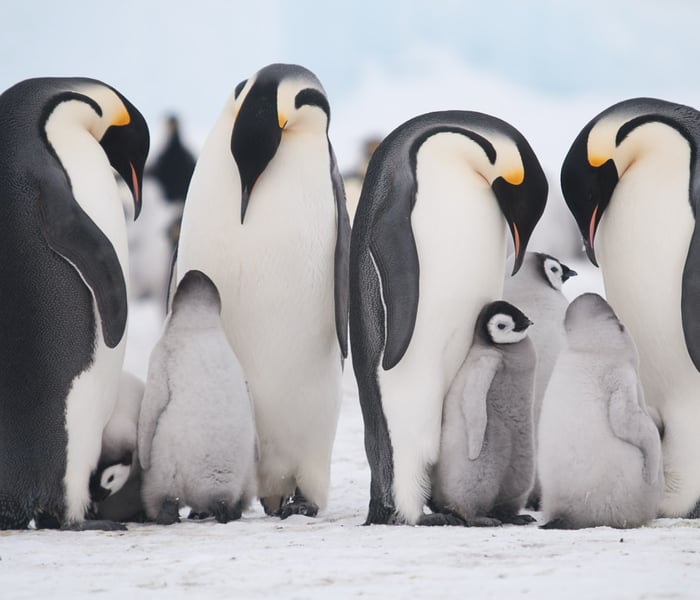
"This is old fashioned expedition," I'm told, and when it's achieved it's a big deal. How this is done involves using Ultramarine's helicopters to fly out over the sea ice, landing guests a few miles from the colony in an area that won't cause a disturbance. Guests then walk the remaining distance. As with all things expedition there's no guarantee of success with low cloud, excessive sea ice, or strong winds all able to prevent it being done safely. "When we've achieved it, it's a real sense of achievement for everybody, the guests and the team. Everyone knows it's been difficult and it's an emotional rollercoaster."
The chances of guests reaching the Emperor penguin rookery with Quark are good. Unique access to satellites for real-time imagery is purchased, Ultramarine operates with double the number of pilots as normal, an increased team of engineers, experts on sea ice and mountaineering guides: everything is done to give the best chance of success. When conditions aren't looking good every effort is made and the team think imaginatively. Whether this be staying for four days rather than two or working with greater flight distances from the ship. In Jonny's four years of doing it, there has only been one trip where it wasn't possible. Importantly every effort is made to keep guests informed with information shared every step of the way, so this really is an expedition you'll become part of rather than a guest along for the ride.
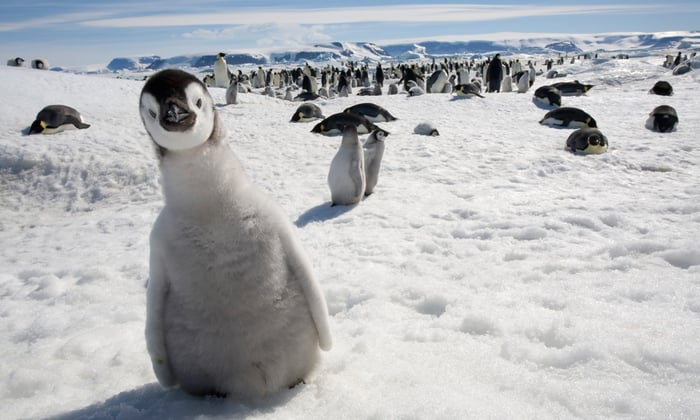
If you're interested in finding our more about Quark's Snow Hill Island expeditions, their Arctic helicopter programme, or their other polar trips just call and speak to Mundy Adventures' expert team.

Meet the Author

Find a cruise
Polar adventures on Quark Expeditions' Ultramarine
Quark Expeditions
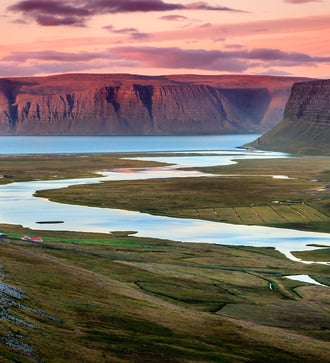
Iceland Circumnavigation: Helicopters, Glaciers and Volcanoes
From Reykjavik to Reykjavik
27 Jul - 7 Aug 2026 (11 Nights)
From £11,151 per guest
Quark Expeditions
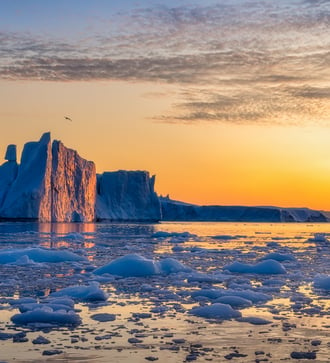
Iceland to Greenland Total Solar Eclipse
From Reykjavik to Reykjavik
6 Aug - 18 Aug 2026 (12 Nights)
Call us for a price
Quark Expeditions
Iceland to Greenland: Total Solar Eclipse, 13 Days
From Reykjavik to Reykjavik
6 Aug - 18 Aug 2026 (12 Nights)
From £30,995 per guest
Quark Expeditions
South Greenland Adventure: The Majestic Alpine Arctic
From Reykjavik to Reykjavik
17 Aug - 30 Aug 2026 (13 Nights)
From £9,237 per guest
Related articles