Meet the Experts

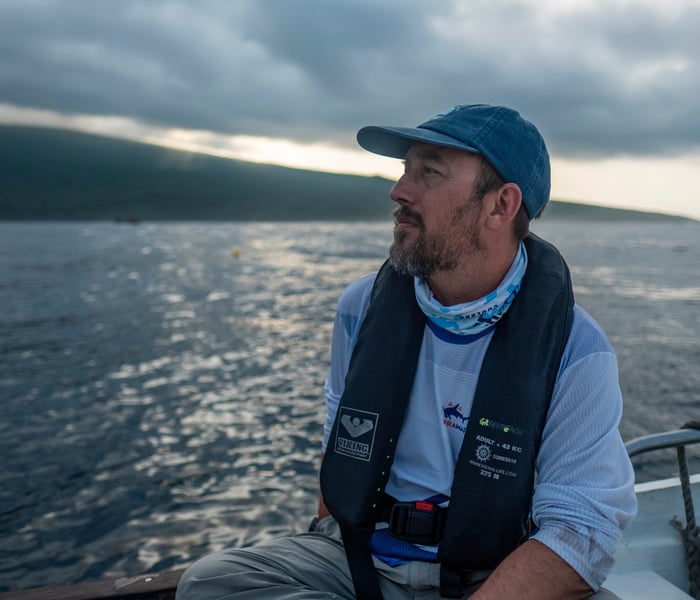
Having studied marine biology in Southampton and completed his PhD on the windswept Orkneys, Alex Hearn travelled to the Galapagos, originally for six months. Over 20 years later, he still works on the islands, conducting research into the migratory patterns of sharks, critical to the health of the marine environment.
His work was fundamental to the creation of Ecuador's open ocean Hermandad Marine Reserve, which added 60,000 square kilometres to the Galapagos Marine Reserve, taking the total area of Ecuador's protected ocean from 13% to nearly 19%. He is also a Mission Blue Hope Spot Champion for Galapagos, a founding member of the regional MigraMar network of scientists working to protect endangered marine migratory species, and an occasional guest lecturer with National Geographic-Lindblad Expeditions.
Mundy Adventures and National Geographic-Lindblad Expeditions have pledged financial support for his work, and Alex takes some time to speak with us to explain the importance of supporting his research, some of the changes needed to protect sharks, and how cruise tourism could be used to help.
Understanding Galapagos Shark Behaviour
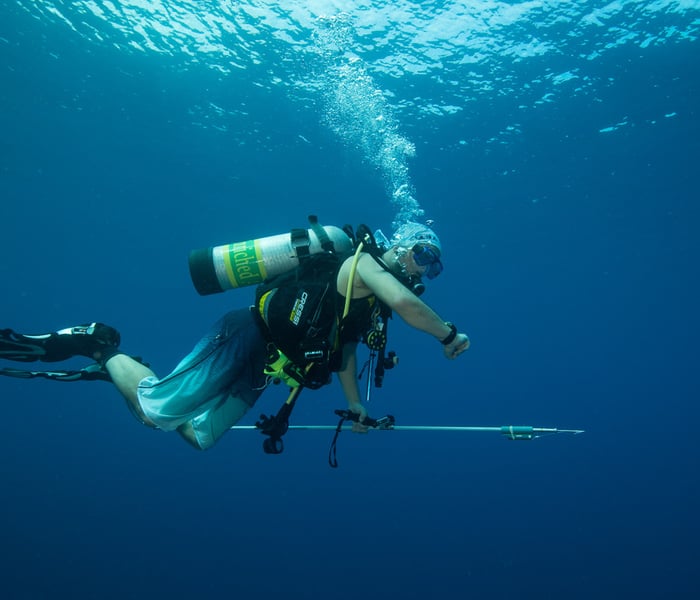
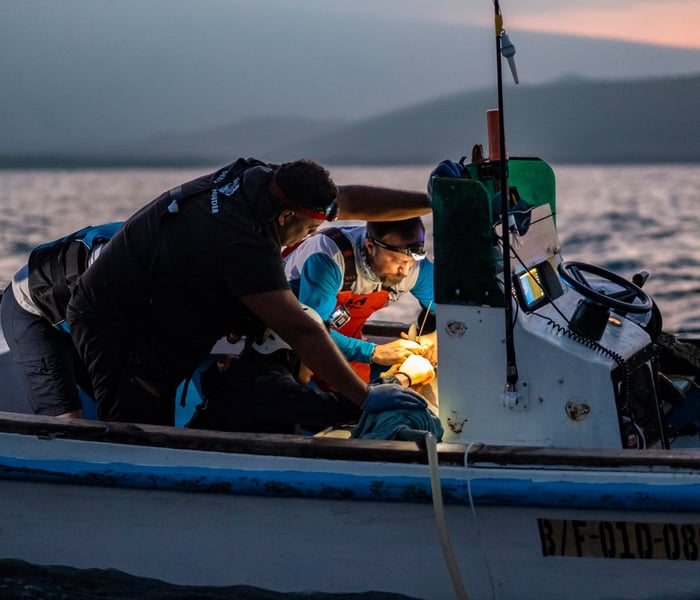
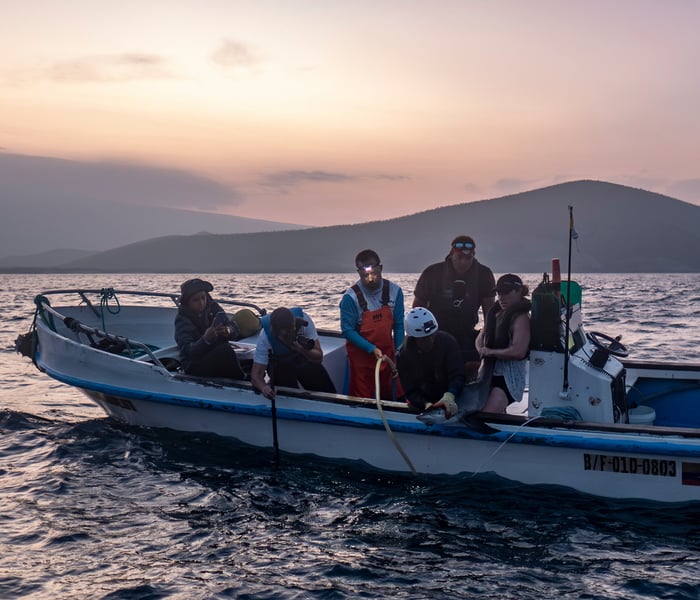
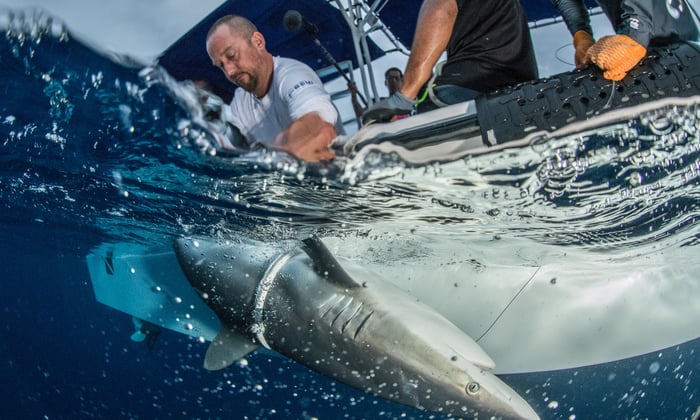
Beginning by explaining a little more about his research into sharks in the Galapagos, Alex tells us, "The work I do mostly involves understanding their behaviour. The 'what' they do, and then of course, the next step is understanding the 'why?'. Why is it that they're doing this and then simultaneously, how can we use what we know about their behaviour to optimise their protection?"
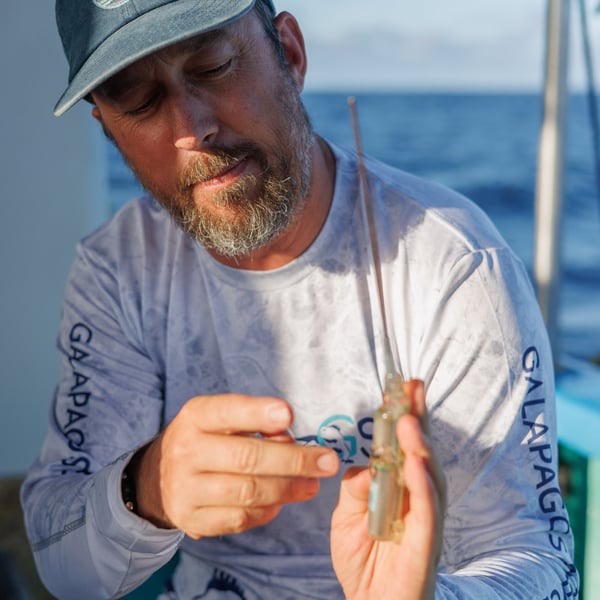
By using satellite tracking, it's now possible to see, in real time, the movement of a single shark. In fact, as part of Mundy Adventures and National Geographic-Lindblad Expeditions' support of the research, Alex has given us the opportunity to name and then track a shark (check our socials for more information).
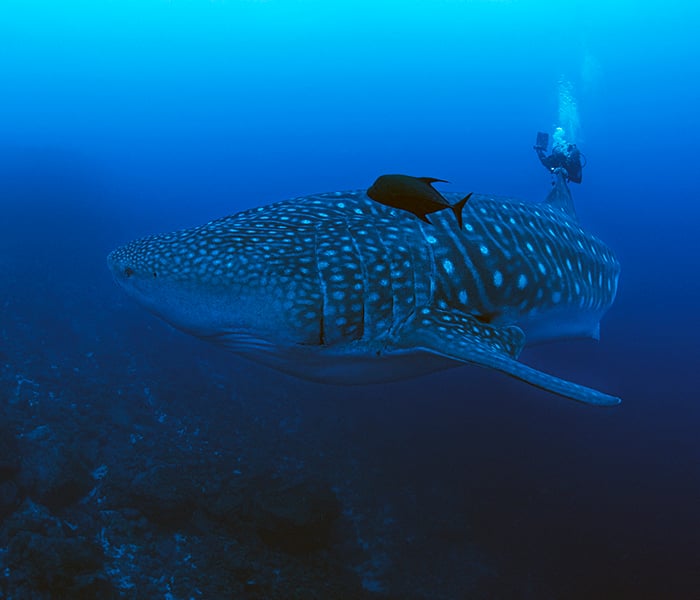
There is much mystery around sharks. "For example, with whale sharks, there are these big females that appear to have these distended abdomens - we thought they might be pregnant. We've now done ultrasounds, the first people ever to have done so on a free-swimming whale shark, and have found no evidence of pregnancy. So then that begs the question - what are they doing? The latest hypothesis that I'm working with is that they're actually commuting between major feeding grounds and the reason that it's mainly females doing it is because they have to put on that extra energy storage in order to be able to produce 300 offspring, so it's indirectly related to reproduction, but it's directly about feeding." This is incredibly important when considering the design of marine reserve expansion or creation.

Mapping Shark Nurseries and Future-Proofing Protection
Alex has also discovered and mapped shark nursery grounds in the Galapagos with the aim of increasing protection of this type of environment elsewhere. "We're trying to take what we know about those sites and predict where there might be similar sites near mainland Ecuador and in the eastern tropical Pacific," Alex says. Then, work can be done establishing protection from threats such as artisanal fishing, and habitat loss including mangrove deforestation.
His work continues to evolve, now focusing on predicting factors that may influence shark movement in the future by analysing sea surface temperature, chlorophyll concentrations (indicative of phytoplankton), and changes in the food chain to help design marine reserves suitable for a changing climate.
How Galapagos Shark Research Began
It's been a significant change from studying crabs and lobsters in the Orkney Islands. In fact, sharks, an iconic species of the Galapagos, weren't the reason Alex began his research in the Galapagos. "I went to Galapagos to do fisheries biology because at the time, there was a large lobster and sea cucumber fishing industry. So I arrived in Galapagos in 2002, ostensibly for six months, and never left."
In 2005, local fishermen were trying to get longlining permitted, a practice banned in Galapagos as it leads to high levels of bycatch, with sharks, turtles, and seabirds caught on the baited hooks intended for other species. This was when Alex realised that no one was studying sharks in Galapagos and began doing so himself. "I never really envisaged it to be my main study area. My expectation of the first shark project, a hammerhead one, was for it to be a three-year side project, and it's ended up now being huge. Now other organisations have their own shark research, because it's sexy, and shark research has become quite a big thing in Galapagos, which is kind of cool."
Future plans and ideas
Alex's work continues as he highlights the need for management plans for marine preserves, including monitoring and continued research. This includes a roadmap for the eastern tropical Pacific with conservation targets and working with other organisations and local stakeholders.
When asked about the impact of cruise lines operating around the islands, Alex is very positive about their presence.
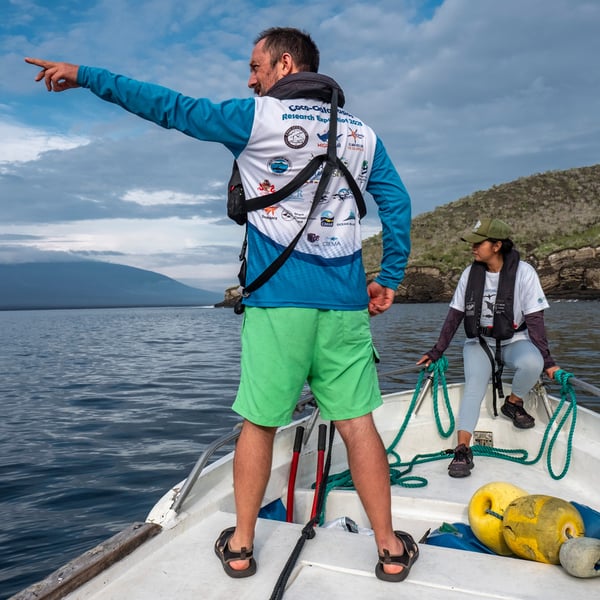
"I see a potential benefit because one of the things that I've been working on most recently is trying to engage people, to switch their vision of Galapagos from what it has always been. Ever since the first whalers, it's been 'let's take out as much as we can because there's a market that needs to be satisfied'. What's happened in the last few years is that the local fishermen have exhausted their sea cucumber resource, which was highly lucrative.
So they're now looking at something else, and what many want to do is to catch swordfish and tuna for export, a market that is insatiable. It also leads them to use long lines illegally because that's the only way you can catch swordfish."
Instead, Alex, paraphrasing Kennedy, wants people to "ask not what Galapagos can do for you - ask what you can do for Galapagos" but in a non-sectoral way. So if there is a hole in the fishing sector, why not reduce the size of the industry rather than fill the hole, and reduce it in such a way that promotes the sustainability of the islands? As an example, all but two cruise ships drop anchor when stopped at one of the 123 designated sites around the islands, which can damage coral reefs and disrupt seabed habitats. The exceptions are Silversea's Silver Origin and Celebrity Cruises' Celebrity Flora, which have a dynamic positioning system designed specifically to avoid this type of harm. A programme to install and maintain moorings across these sites could be just the alternative work needed.
There should also be a push for all tourist ships and boats to source fish caught from the waters immediately around the islands. The cruise lines Mundy Adventures work with ensure all produce served is Ecuadorian (not to mention ensuring a 100% Ecuadorian crew), but micro-partnerships between fishing crews and tour boats would help reduce the carbon footprint from flying supplies to and exporting from the islands. "I'm working with fishermen now that use a traceability system, so they have cameras on board that film everything they do - when they come back to port, they get a seal of traceability and QR code. So when you buy [or are served] your piece of fish, you can scan it and watch the fish come out of the water." Currently, consumers aren't demanding this, so education in this area is key.
How to Support
The progress made and the additional protection for sharks now in place have been significant, and we look forward to continuing our support.
Alex's research is also supported by our charity partner, the Galapagos Conservation Trust, and if you're interested in finding out about ways you can support conservation work in Galapagos, we recommend visiting their website galapagosconservation.org.uk.
Discover the Galapagos with Alex
Alex is a guest lecturer with National Geographic-Lindblad Expeditions and is next due to accompany the 9th December 2025 seven-night Galapagos Escape voyage on board National Geographic Islander II, so if you wish to discover more about his work, call us to reserve your stateroom.
And for more information about Mundy Adventures and National Geographic-Lindblad Expeditions' support, including the chance to name a tagged shark and track its movement, check out our socials @MundyAdventures and @luxurymundyadventures!

Meet the Author

Find a cruise
National Geographic-Lindblad Expeditions Galapagos Cruises
National Geographic - Lindblad Expeditions
Galápagos Escape: A 7-Day Voyage
From Quito to Guayaquil
21 Jul - 25 Jul 2026 (4 Nights)
From £8,602 per guest
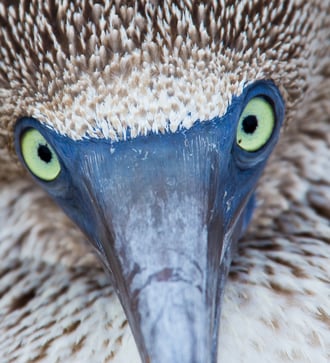
National Geographic - Lindblad Expeditions
Galápagos by Catamaran, Machu Picchu and Peru's Land of the Inca
From Quito to Lima (Callao)
24 Jul - 1 Aug 2026 (8 Nights)
From £12,213 per guest

National Geographic - Lindblad Expeditions
Exploring Galápagos, Machu Picchu and Peru's Land of the Inca
From Quito to Lima (Callao)
24 Jul - 1 Aug 2026 (8 Nights)
From £11,360 per guest
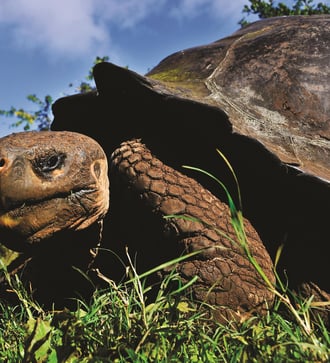
National Geographic - Lindblad Expeditions
Exploring Galápagos, Machu Picchu and Peru's Land of the Inca
From Quito to Lima (Callao)
24 Jul - 1 Aug 2026 (8 Nights)
From £12,781 per guest
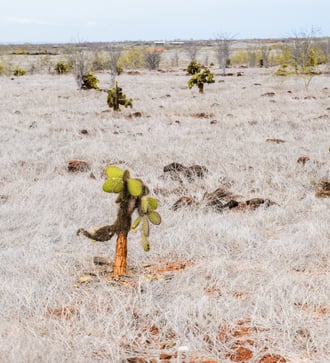
National Geographic - Lindblad Expeditions
Galápagos by Catamaran: An Intimate Voyage
From Quito to Quito
24 Jul - 30 Jul 2026 (6 Nights)
From £7,198 per guest
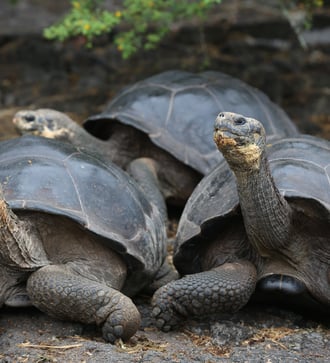
National Geographic - Lindblad Expeditions
Exploring Galápagos
From Quito to Quito
24 Jul - 31 Jul 2026 (7 Nights)
From £6,344 per guest
National Geographic - Lindblad Expeditions
Exploring Galápagos
From Quito to Quito
24 Jul - 31 Jul 2026 (7 Nights)
From £7,765 per guest
National Geographic - Lindblad Expeditions
Galápagos Escape: An 8-Day Voyage
From Quito to Quito
25 Jul - 30 Jul 2026 (5 Nights)
From £9,702 per guest
National Geographic - Lindblad Expeditions
Peru and Galápagos Escape
From Lima (Callao) to Quito
30 Jul - 5 Aug 2026 (6 Nights)
From £10,865 per guest
National Geographic - Lindblad Expeditions
Exploring Galápagos, Machu Picchu and Peru's Land of the Inca
From Quito to Lima (Callao)
31 Jul - 8 Aug 2026 (8 Nights)
From £11,877 per guest
National Geographic - Lindblad Expeditions
Exploring Galápagos, Machu Picchu and Peru's Land of the Inca
From Quito to Lima (Callao)
31 Jul - 8 Aug 2026 (8 Nights)
From £11,842 per guest
National Geographic - Lindblad Expeditions
Exploring Galápagos
From Quito to Quito
31 Jul - 7 Aug 2026 (7 Nights)
From £6,861 per guest