Trip Reports

Great weather year-round. Wildlife you will not see anywhere else. Exciting activities above and below the water. The Galapagos was the best family holiday I have ever had, and my kids agree.
I travelled with National Geographic-Lindblad Expeditions on board National Geographic Endeavour II during the February half term with my wife and daughters, aged 8 and 6. There were 9 other children onboard, ages ranging from 4 into young teens.
This 7-night all-inclusive Galapagos family cruise had multiple activities every day including snorkelling, nature walks and the National Geographic Explorers in Training programme. Read on for details of the extraordinary wildlife, the children's activities, the naturalist team and our first-hand experience on board.
The Galapagos
The Galapagos is at the convergence of three ocean currents, responsible for its rich marine ecosystem and making it utterly unique. So I was told by my daughter, who had been speaking to one of our guides to complete part of her National Geographic Explorers in Training workbook, earning points for naming each current.
Our trip was all about discovery. The huge array of endemic wildlife, otherworldly landscapes and fascinating history is like nowhere else on earth. Sitting on the equator and enjoying warm weather year-round, these islands, with their plentiful array of soft sand beaches, are a paradise for families who want an active holiday like no other.
If you are considering a Galapagos family holiday, this is what to expect.
Wildlife
In the Galapagos the wildlife is really on display. You do not need to go searching for it. Just turn up and it is there. Before we even got onboard National Geographic Endeavour II we were taking pictures of sea lions, sharks, pelicans and more.
Daily excursions were operated by the ship's fleet of Zodiacs, small rubber boats that zip you ashore, either directly onto the beach or to a rocky outcrop with a small landing zone. When ashore, we were guided by one of the ship's 8 naturalists who highlighted the astonishing wildlife and answered questions from my curious kids and equally curious adults. Each island we visited, and even each landing site, had a different highlight, with the wildlife that famously differs between islands taking centre stage.
On our trip we enjoyed:
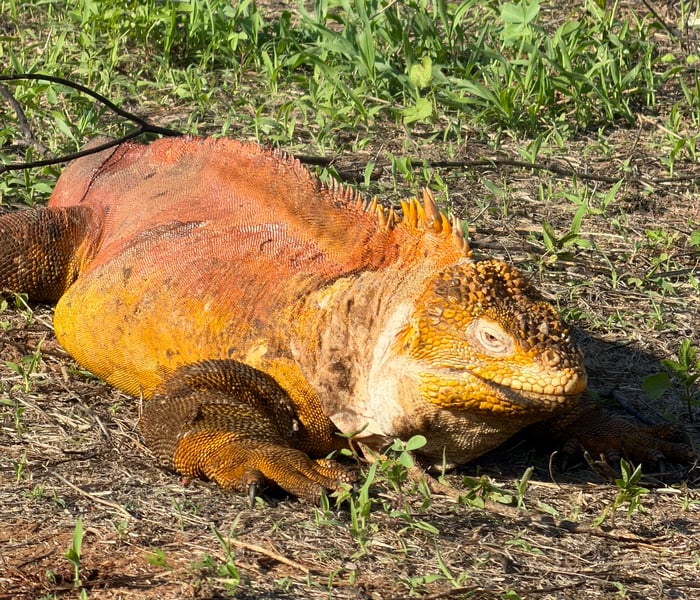
- A dragon hunt at Cerro Dragón (Spanish for Dragon Hill) on Santa Cruz, where we saw brightly coloured land iguanas
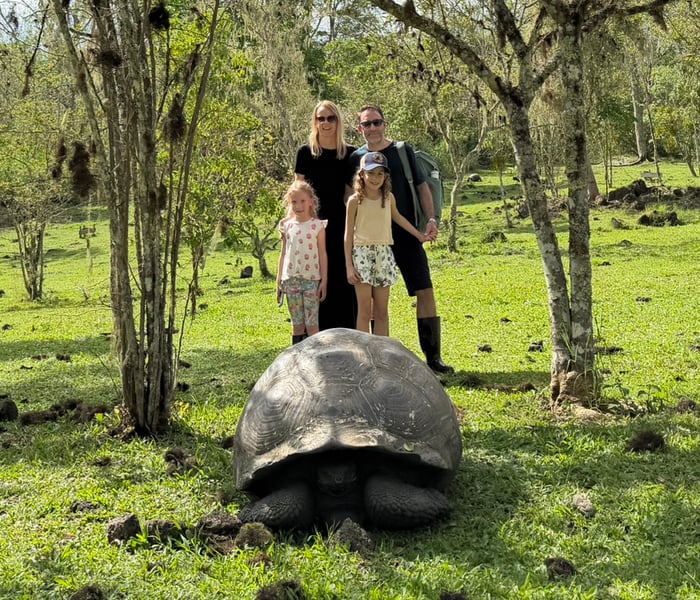
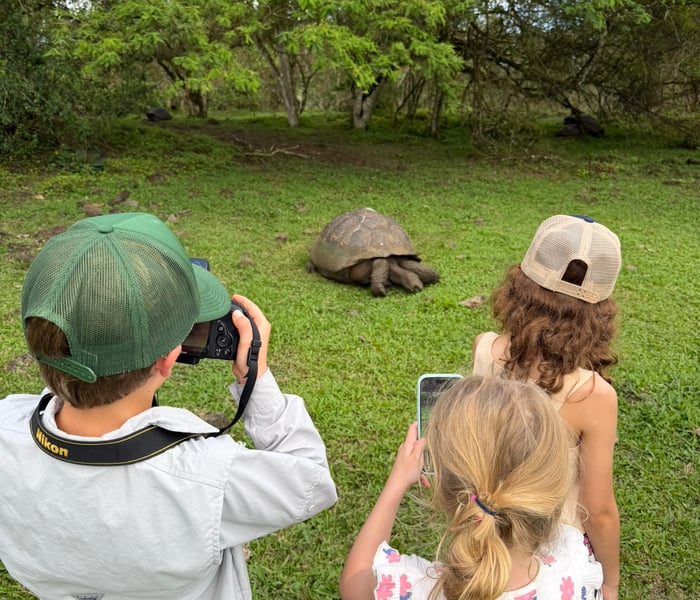
- A tortoise adventure in the highlands of Santa Cruz, with the children searching for the biggest tortoise they could find, cameras in hand
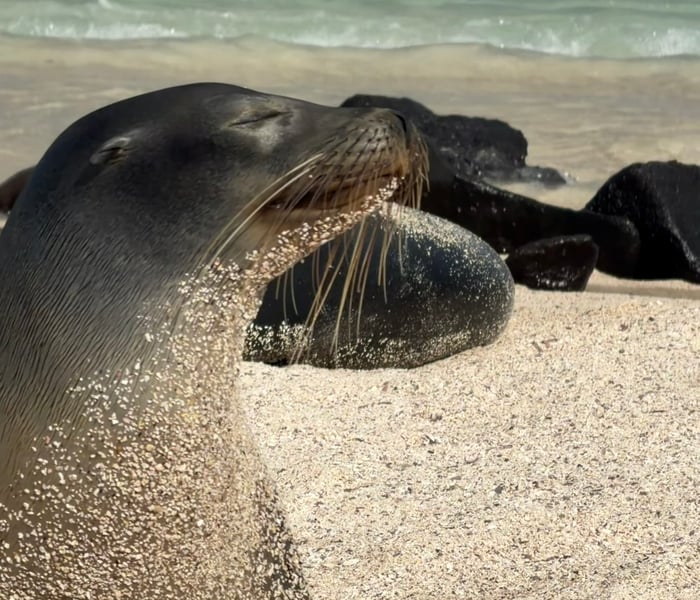
- Sea lions at almost every stop, with playful pups giving close-up viewing as they darted about the shallows
- Green sea turtles so often that by the end of the trip the kids almost stopped caring
- A huge pod of dolphins on our first morning, passing right next to the ship over the course of 15 minutes
- A single waved albatross on Española, spotted when all others had left the island, our very own Pixar movie storyline
- Snorkelling with an array of the Finding Nemo cast, all helpfully pointed out by the guides, plus huge schools of fish and rays, sharks, sea lions, starfish and more
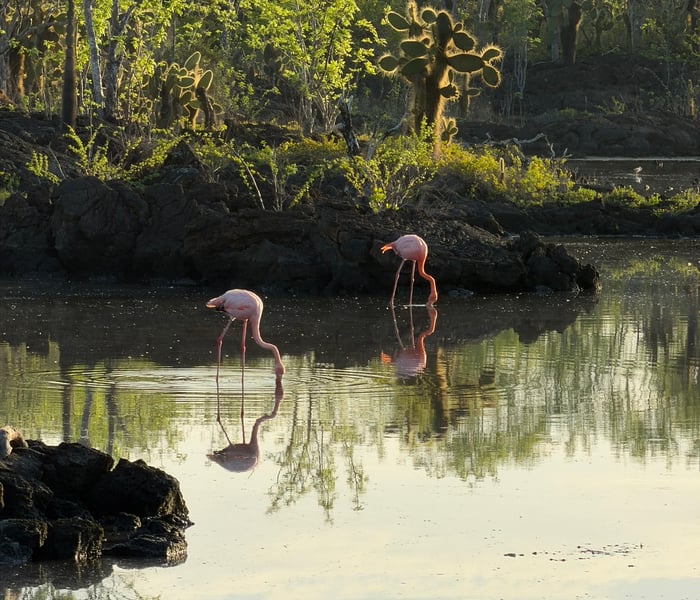
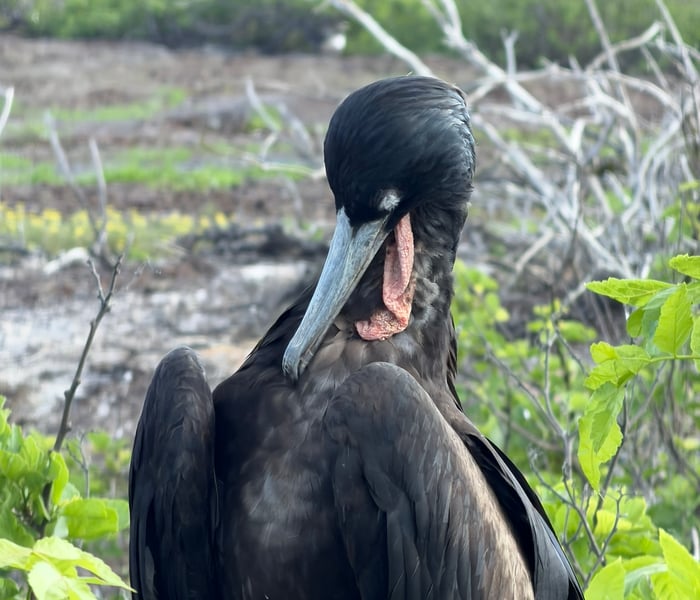
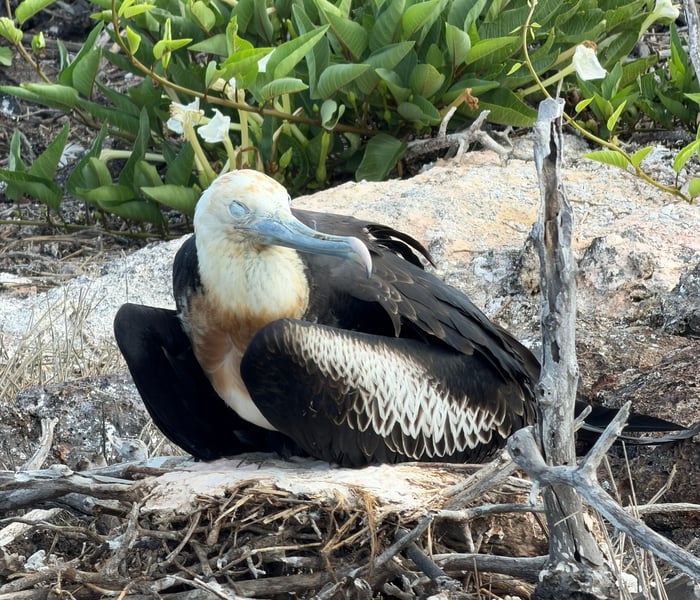
- Galapagos penguins, blue-footed, red-footed and Nazca boobies, frigate birds, Galapagos short-eared owls, flamingos, herons, pelicans and finches, to name just a few
- Marine iguanas swimming and sunning themselves on the black lava rock
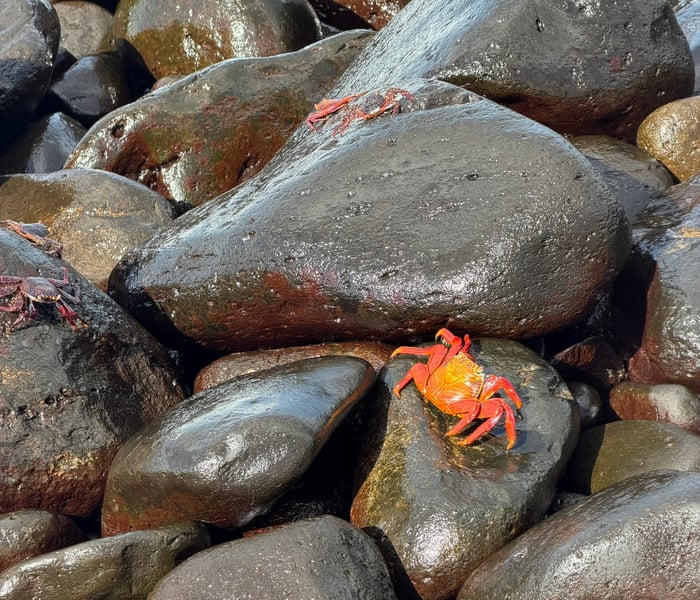
- Bright red Sally Lightfoot crabs
Our standout moments
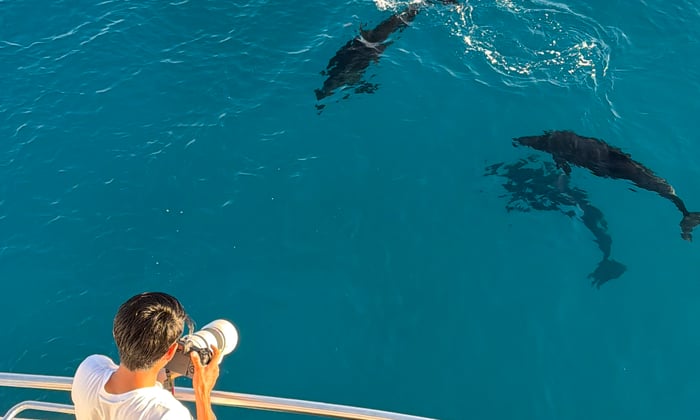
Dolphins off the stern
Our first morning set the tone of an extremely active trip where memorable moments came thick and fast. It started before breakfast when I spotted dolphins out of my cabin window. Heading out on deck, my daughters and I were joined by other guests and an excited expedition team (always a good sign), who had announced their approach over the ship's PA. There must have been a hundred or more bottlenose dolphins passing right next to the ship, jumping and playing as they did so. It was incredible.
The last albatross of Española
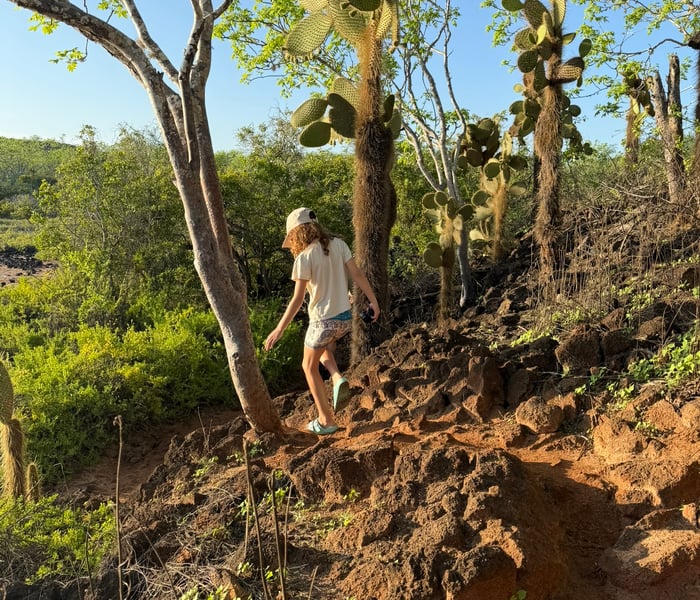
The hardest walk of the trip was a 1.5 mile trail on Española. It sounded easy enough, so my wife and our 6-year-old decided to tackle it, the uneven ground and idea of having to hop from boulder to boulder only heightening the appeal to our active youngest.
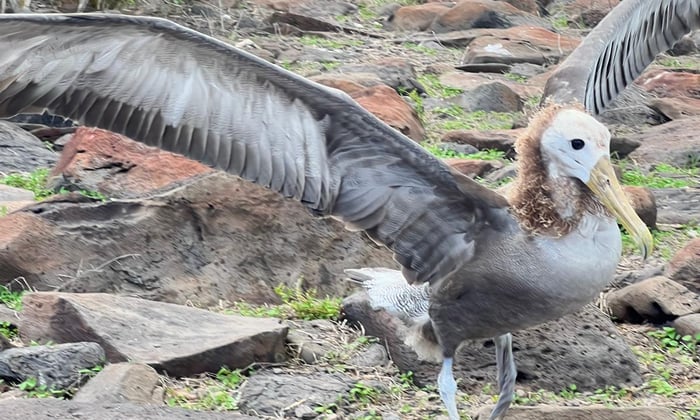
At this time of year all the waved albatrosses have fledged and left the island. These birds are the only tropical albatross in the world and only found on this island. They return mid to late April to begin their breeding cycle again. So it was a complete surprise and delight that they spotted a juvenile albatross almost ready to strike out on their own. The naturalist reassured the group that the bird looked healthy enough to make it, and as he did so the bird spread its huge wings (which can reach up to 8ft wide) almost to reassure the onlookers.
Playful sea lions
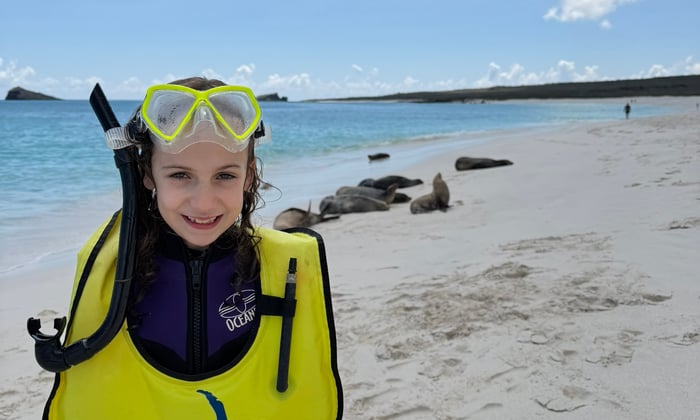
On our first morning they were playing in the shallows and basking on the soft white sand of Gardener Bay on Española as we snorkelled in the vivid turquoise waters. My first deep water snorkel at Champion Isle off Floreana had a group of sea lions swimming in the shallows by the rocky coastline. At Bartolomé Islet a single pup seemed as fascinated by the kids who gathered round on the golden sand beach as they were of it. Probably the most memorable experience was at Darwin Bay on Genovesa, a calm shallow lagoon where my eldest spent most of the outing playing in the shallows with a group of puppy-like juveniles.
Tortoises, tortoises and more tortoises
When exploring Santa Cruz, we visited the Charles Darwin Research Station, home of the taxidermied Lonesome George and a breeding centre for a variety of tortoise species including the Floreana tortoise that was reintroduced to the wild the week we were in the islands. We then travelled to the highlands to look for tortoises in a nature reserve, where the kids took the camera and led the way, losing count of how many we saw. To prepare us for the experience, one of our guides had shown us a video of her 10-year-old self talking about the protection of tortoises, and now my eldest plans to give a talk to her class on the topic!
Kayaking and turtles
Green sea turtles breed in the Galapagos year-round and were abundant on my trip. While I was doing most of the paddling during our double kayak excursion, my daughter was watching a turtle pass almost within touching distance. One of many such sightings.
Snorkelling amongst a crazy variety of marine life
Almost every day gave an opportunity for deep water snorkelling, diving in straight off the ship's Zodiacs. We saw dolphins, sea lions, penguins, blacktip reef and hammerhead sharks, eagle rays, diamond stingrays, tropical fish of all shapes and sizes and in such numbers that you could dive through huge schools, watching them part and gather again as you passed. I have dived and snorkelled across the world but never have I seen such varied marine life, and in such numbers, as I did in the Galapagos.
Shipside wildlife viewing
At times even the ship itself felt like the backdrop for the wildlife. At night we regularly spotted sharks cruising alongside the ship, using the lights to hunt. One evening a playful sea lion seemed to be nipping at the tail of a shark and then dashing off. During the day we watched blue-footed boobies diving into the water alongside the hull, hunting right beside us. It really felt like we could not get any closer to the wildlife.
Stargazing
As we were on the equator you could see constellations from the northern and southern hemispheres, and being so remote the stargazing was stunning. This was showcased by the captain when we were on the open-air observation deck and the ship turned off all the exterior lights after we had enjoyed an evening deck BBQ.
Hunting for dragons
A hike around Cerro Dragón (Dragon Hill) on Santa Cruz gave us a chance to look for land iguanas and the surprise delight of seeing flamingos in a mirror-still lake on the way. We arrived early in the morning and saw several large iguanas sunning themselves, completely unafraid of our presence.

Children's facilities and activities
Children were really well catered for on board the National Geographic Endeavour II and the National Geographic Explorers in Training Programme was a huge hit. Here is a roundup of the kids' activities and children's facilities on my cruise:
- National Geographic Global Explorer field notebook: given out during a special kids' get-together at the start of the trip, it encouraged kids to record their observations and learn about the destination, with daily tasks given
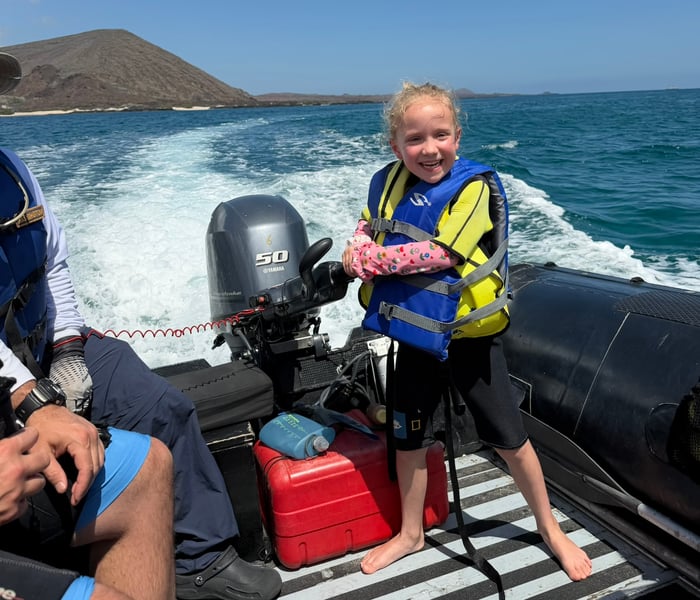
- Zodiac driving: taken out in two Zodiacs, all the kids on the trip got a chance to drive a Zodiac and earn their driving licence
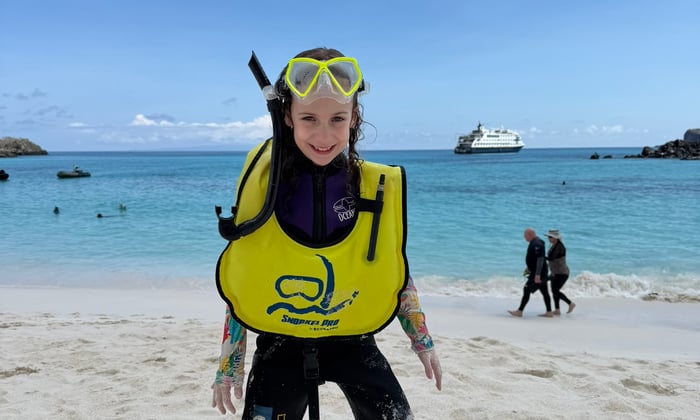
- Kids' shorty wetsuits: a must for snorkelling, there is a small selection on board which had all 11 kids on my trip kitted out comfortably
- Kids' snorkels and masks: again, there is a small selection on board, with plenty to go round my group
- Snorkel vests: there were plenty of these buoyancy aids which were suitable for kids and adults
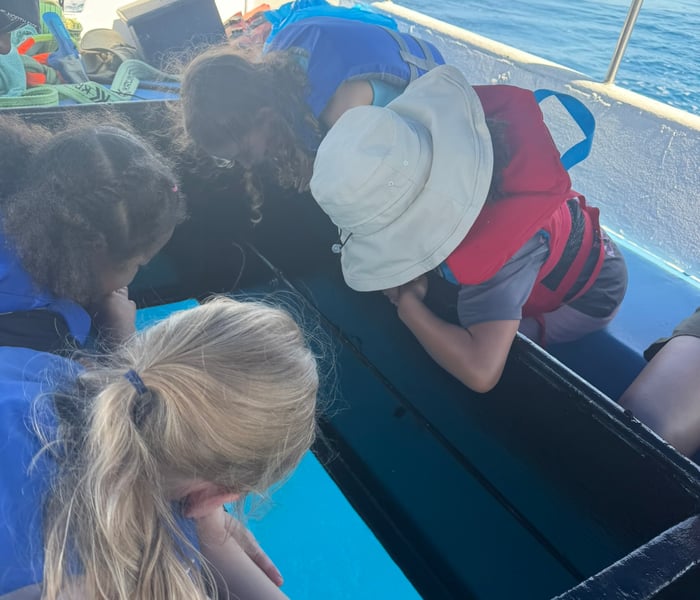
- A glass-bottom boat: offered on a first come first served basis twice on our trip, it was a nice alternative for the kids when they did not fancy snorkelling
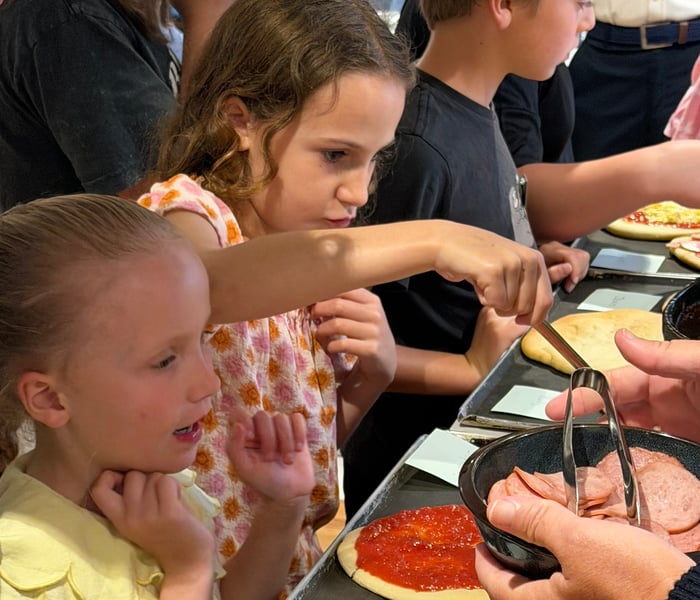
- Kids' pizza making and movie night: to our surprise and delight one evening the kids were welcomed into the restaurant early to make pizzas for a kids-only movie night
- Kids' wellies: when we were in the highlands looking for tortoises, these were supplied for the short nature walk, with plenty of sizes available
- Postcard making: a second kids' get-together had them making postcards to leave in the post office barrel at Post Office Bay. Ours arrived surprisingly quickly thanks to a combination of a helpful UK holidaymaker and Royal Mail
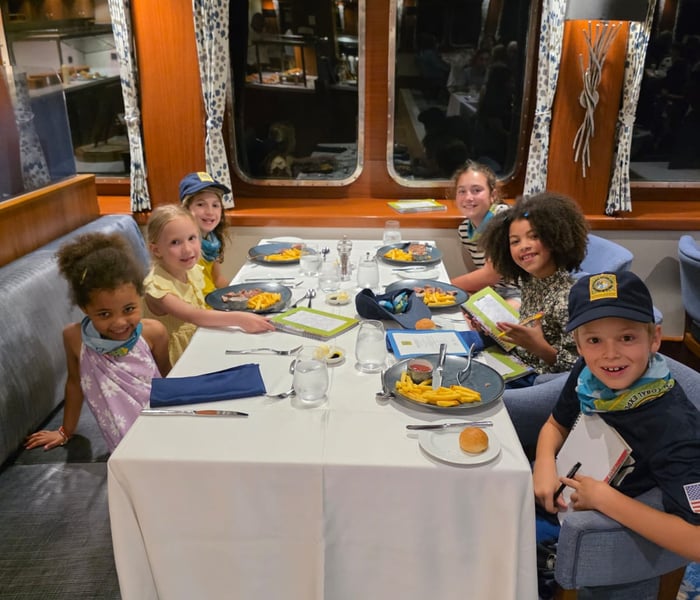
- Kids' meal options: there was always the option of a pasta dish for the kids, or a plain version of a main course with chips for fussy eaters
A welcoming family environment
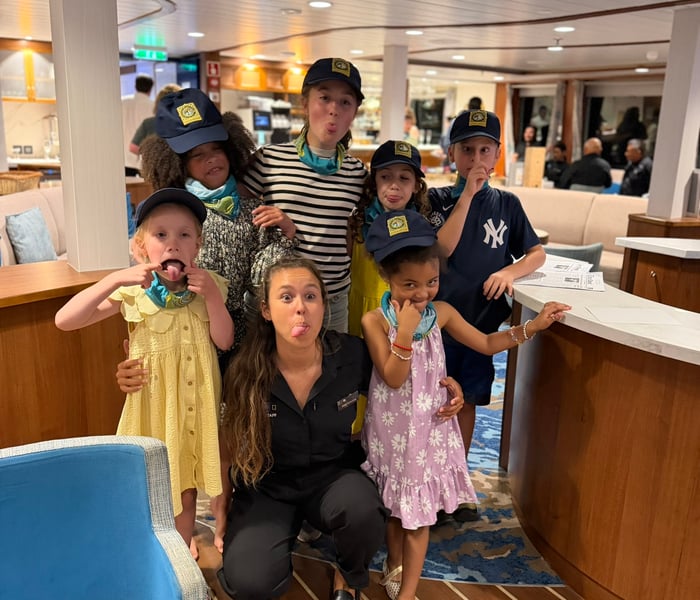
On top of the dedicated activities there was an overwhelmingly family-friendly atmosphere on board. This is what makes a Galapagos family cruise feel so different from other holidays.
On the bridge and on deck
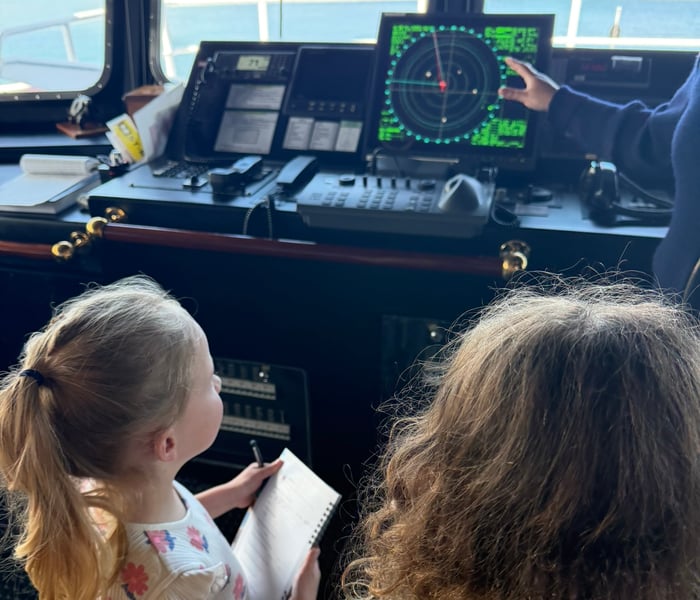
The kids were welcomed onto the bridge (which was open to all guests) and the first officer helped answer lots of questions, the answers of many diligently written into their field notebooks. All the naturalists were happy to explain the wildlife and answer any and all questions.
Flexibility during excursions
During snorkelling trips when the kids had had enough, they were scooped up by our waiting Zodiac, but rather than just be expected to sit and wait for the rest of the group to finish, the Zodiac drivers positioned themselves so the kids could see the wildlife along the shoreline and were happy for some of the kids to jump in and out, making what could have been a dull wait into an interesting and enjoyable activity in its own right.
It is easy to group together for the landings, and when we were on an outing in a Zodiac with some of the other families on board, the Zodiac driver let the kids have another go of driving, completely unprompted, which delighted all the kids.
Medical care on board
There is a doctor on board who dealt with minor bumps and scrapes on my cruise, but also helped my youngest with a touch of croup. To my surprise there was no charge for this, despite the 4am call out.
Entertainment and excursions ashore
When a local band and dancers joined our cruise for an evening and played in the lounge, they went straight to my girls when looking for audience participation and they were happy to lead the way, with (some) adult guests joining in as well.
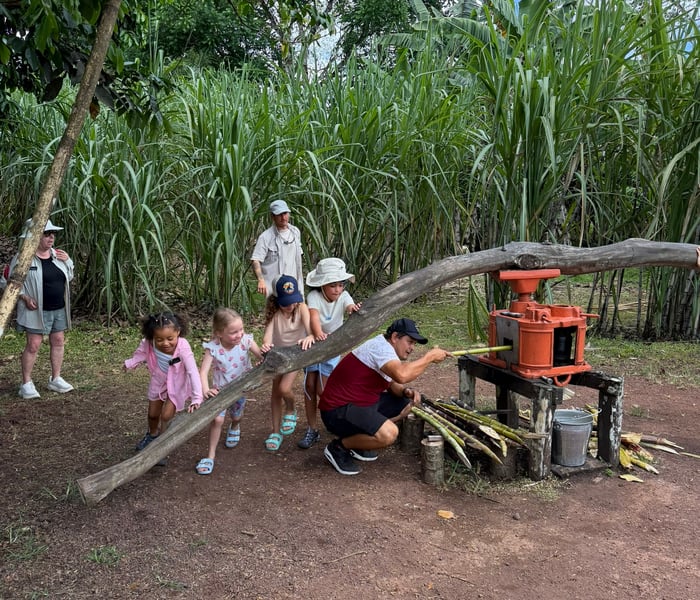
When we visited the highlands in Santa Cruz the sugar cane plantation owner was brilliant with the kids, having them push the mill, throwing a cacao pod around with them, even grabbing some home-grown bananas and adding his farm-produced chocolate powder, warmed over a fire, as a little treat. It helped the kids avoid feeling left out after the rum tasting.
Mealtimes and the restaurant
A pizza-making session had the kids constructing their own dinner with the head chef. This was then served during a movie night in the lounge while the parents enjoyed dinner in the restaurant. The captain was there helping the children select their toppings and all the kids enjoyed an evening hanging out with their newly made friends, as did the parents.
The staff in the restaurant were helpful and attentive. They helped unofficially reserve tables for the families. On the last night they were happy to put together and serve a kids' table made up of my daughters and four other kids, which also meant we had the added benefit of a parents' table.
The farewell evening
During the captain's welcome cocktail on deck, and the afternoon wine and cheese on deck, the kids were offered mocktails, made to order by the bar staff. The captain himself was easy-going and generous with his time. A highlight for my youngest was receiving her National Geographic-Lindblad Expeditions Explorers in Training certificate and Zodiac driving licence at the farewell evening with all the other guests in attendance. The captain called her to the front to say "This certificate entitles the holder to pilot expedition landing craft on future expeditions with National Geographic-Lindblad Expeditions, so long as they remain in good standing with the captain, obey their parents and ask nicely" which received a huge round of applause from all. She, and all the other kids, were also given a couple of goodies to take away. A superb end to an amazing cruise.
What was included on a National Geographic Endeavour II cruise?
Almost everything. This is an all-inclusive experience.
-
Excursions: All excursions whilst onboard are included. That means all Zodiac landings, snorkelling, the glass-bottom boat, kayaking, stand-up paddleboarding, guided walks, entrance to the Charles Darwin Research Station, lunch when we were out for the whole day on Santa Cruz, everything.
-
Equipment: snorkel, mask, fins, snorkel vest (for extra buoyancy) and shorty wetsuits were all supplied for free.
-
Meals: Buffet breakfast, à la carte lunch and dinner.
-
Drinks: There is an open bar in the lounge which serves at lunchtime and in the evening, plus alcoholic drinks including local wine and beer are served at dinner. You can also help yourself to beers and soft drinks from a fully stocked fridge in the lounge at all times.
-
Snacks: Available in the lounge, you can help yourself to fruit, protein bars and crisps. An early risers' breakfast and pre-dinner canapés are also offered.
-
The National Geographic Explorers in Training Programme: The field notebook, the two sessions hosted by the naturalist team and the Zodiac driving lesson were all included.
-
The doctor: Very unusually for a cruise, the onboard doctor treats minor ailments for free. For us this meant no charge for a 4am doctor's visit and a couple of sessions on the nebuliser. For some of the other guests it was being patched up after grazing legs and arms whilst snorkelling in the shallows near a Galapagos penguin.
-
Talks and photography sessions: There were several talks onboard, including two workshops from the onboard photographer giving tips and advice. He even wandered the lounge helping guests with the camera settings on their smartphones to help them get a better shot.
-
The onboard library: A small library was available for guests with games like chess, draughts, Uno and Cluedo, and a computer workstation, in addition to the small range of books.
Getting there
We travelled from London to Quito via Madrid where we had a two-night stay to rest and discover the lovely capital of Ecuador. This helped break up the 13.5 hour flight time (plus layover) from the UK before the 2.5 hour flight to the islands, which has a short stop in Guayaquil, a city on the Ecuadorian coast. On the return, another one-night stopover in Quito gave a final free morning for sightseeing and souvenir shopping before the return overnight flight home, again via Madrid.

Meet the Author