Trip Reports

When you think of the Galápagos Islands you might think of spectacular scenes from a nature documentary, or for me, I am reminded of my geography case studies of species endemism and Charles Darwin's theory of natural selection. To see in real life what you've only ever seen on screen or in the pages of a book is a true privilege and one that I was lucky enough to experience with National Geographic-Lindblad Expeditions during their exploring Galápagos itinerary. Read on for my Galápagos expedition cruise review...
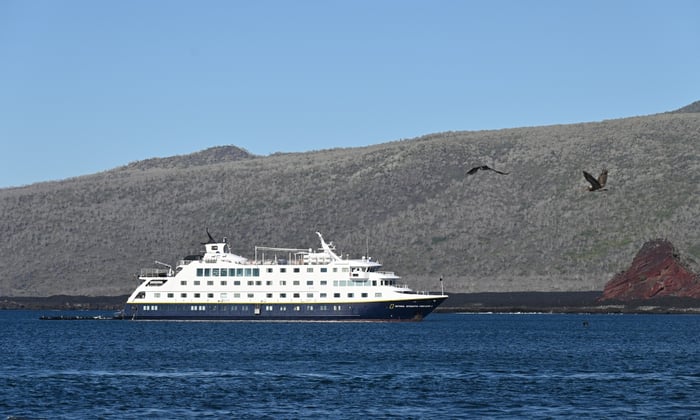
I sailed on board the 96-guest National Geographic Endeavour II which offered a great blend of comfort and adventure, and I enjoyed seven days of exploration in some of the central and western islands of Galápagos. Tourism in the islands is heavily regulated by the Galápagos National Park, but something I didn't quite realise before this trip is that the exact itinerary including specific timings is set by the national park authority. This means that in most cases we were in each landing site for two to three hours before moving to the next, resulting in a voyage which feels like every moment is maximised, with great variety in scenery and activities.
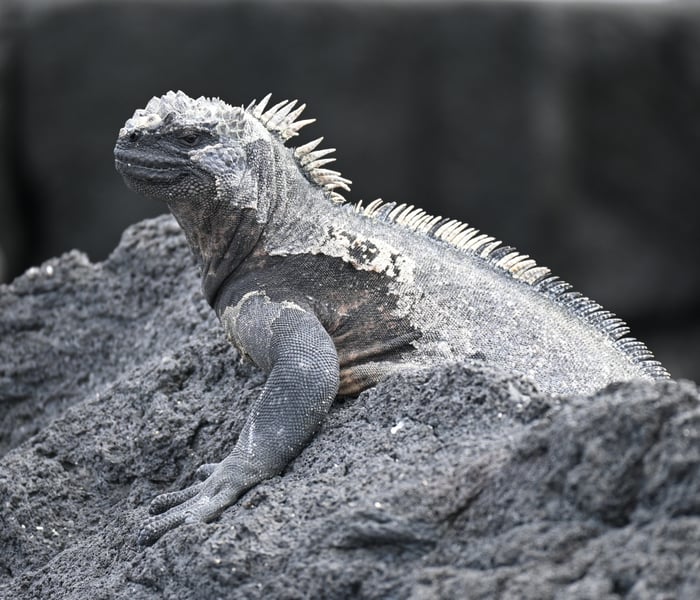
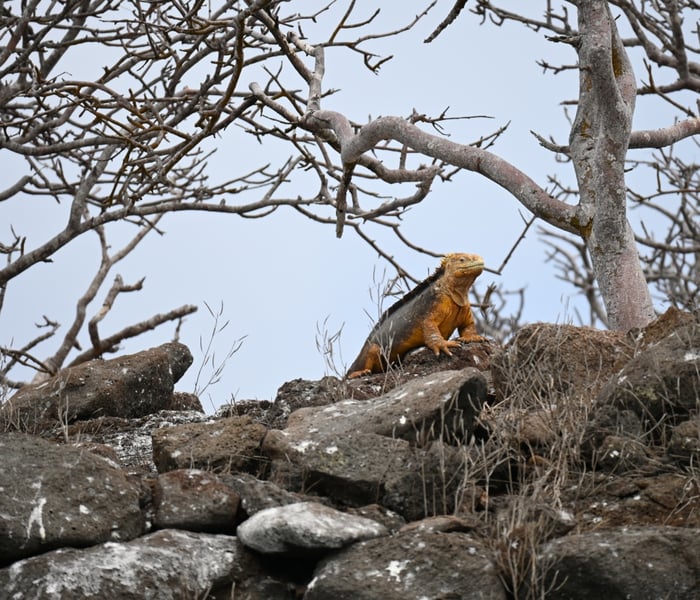
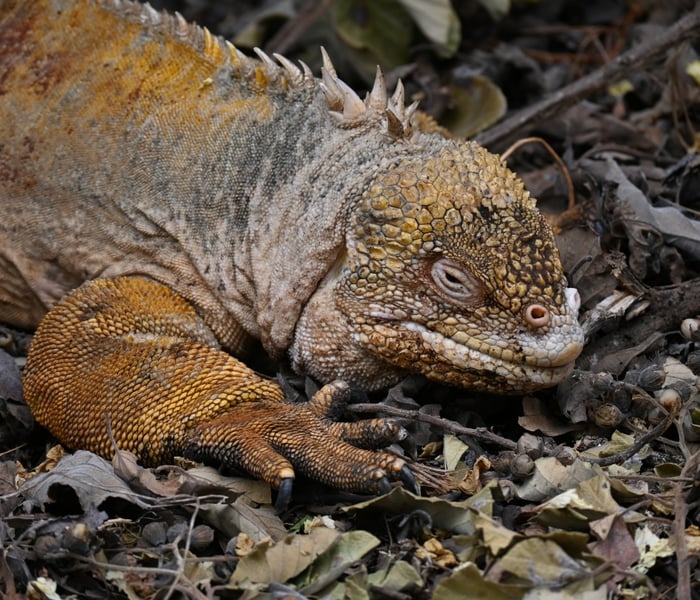
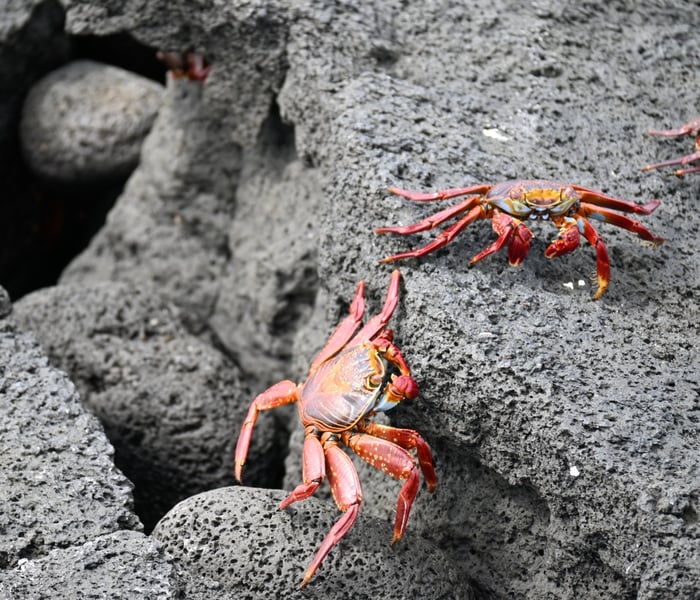
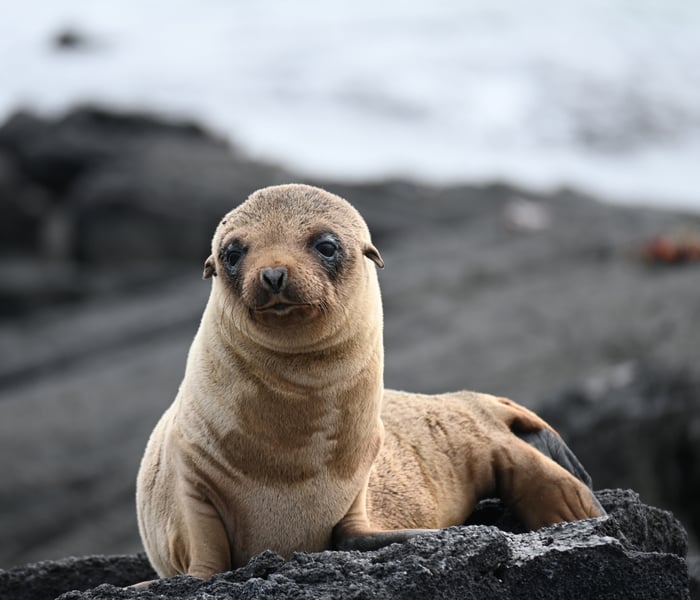
I expected the wildlife encounters to be good on a Galápagos expedition but I didn't expect quite so much in the first half an hour of arriving! As my fellow guests and I were taken on the short drive from the airport we had our first glimpse of a land iguana lazing in the sunshine. Getting ready to board the Zodiac to take us to the ship we saw sea lions on the dockside, the Sally lightfoot crabs and marine iguanas scattered along the shore, and blue footed boobies swooping overhead. It was an excitement overload, and we hadn't even started yet!
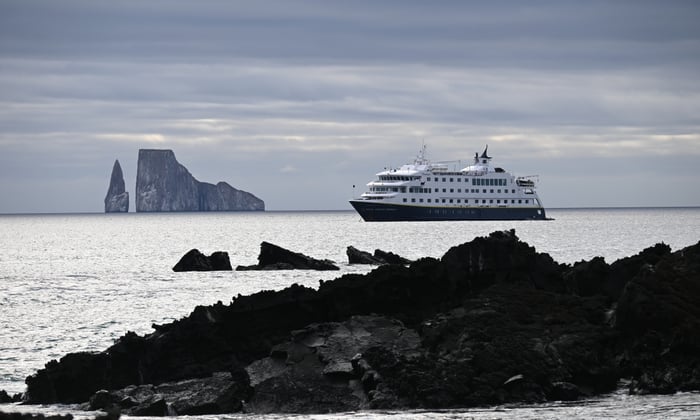
Once on board National Geographic Endeavour II we were shown to our cabins before lunch was served. Dining is at fixed times with all guests served in a single seating. Breakfast is served buffet style usually around 6 or 7am. Lunch and dinner are a la carte with a choice of meat, fish, or vegetarian main dishes plus a couple of starters and desserts to choose from. Each day there was an Ecuadorian speciality to sample and drinks are included in the fare, with the exception of premium brand spirits and wines.
Then it was down to business: we had an initial briefing in the lounge during which we were introduced to the expedition leader, Carlos, and told about upcoming outings, protocols whilst ashore, and what we can expect from the expedition. Our first full day was spent in Rábida Island and offered our first opportunity to snorkel.
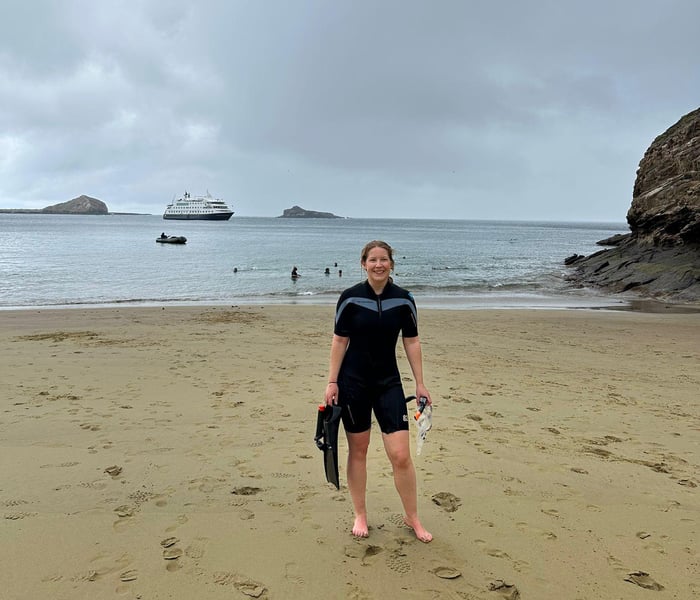
We had a snorkelling briefing and then collected our equipment for use during the voyage - snorkel, mask, flippers, a shortie wetsuit, and if you need it, a flotation device. Of course if you have your own equipment you are welcome to bring it with you. This initial session was from the beach so you could stay with the guide for a training session or refresher, or head out into deeper waters, staying with a buddy and closely monitored by the staff in Zodiacs who could assist if needed.
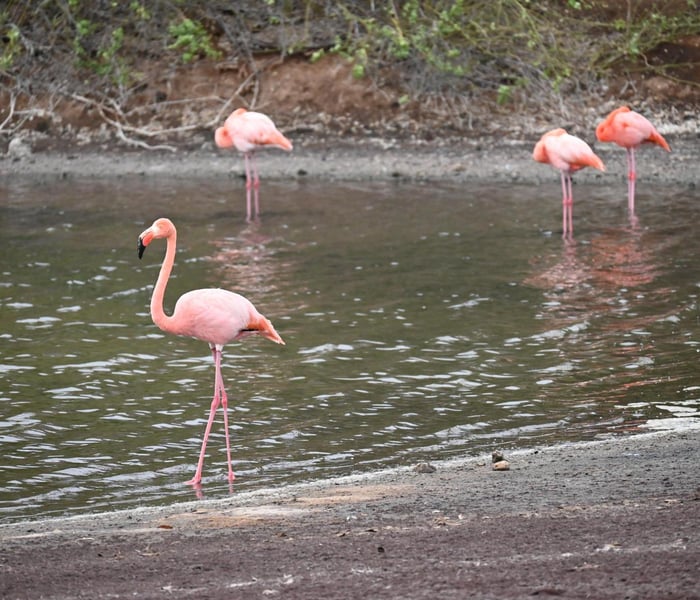
Back on board, we enjoyed a photography lecture before heading out again for a beach walk along the red sandy shore of Rábida. This was a real treat as we were lucky enough to see flamingoes in the lagoon behind the beach - a rare sight - as well as a feeding frenzy just off shore, with pelicans, boobies and frigatebirds diving into the water whilst sea lions popped their heads up amongst the commotion. As we walked, a pair of Galápagos mockingbirds followed us, curiously approaching as we stopped and took in the incredible sights around us. Wow, if this was our first full day we were in for a treat!
Sure enough as the days went on, our wildlife encounters continued to amaze and what I loved particularly was that almost each outing and different island had a different species to look out for so it didn't feel like we were seeing the same animals in every place. The Galápagos islands have relatively low biodiversity but very high endemism, even between islands, so the excitement of seeing species that you cannot see anywhere else in the world was really special.
Each evening we enjoyed a couple of short informational talks from members of the naturalist team. A range of topics was covered from an analysis of sand particles under a microscope to the unique behaviours of certain species, as well as informational videos about National Geographic, ongoing research projects, and more. We then would have a briefing to outline the plan of action for the following day.
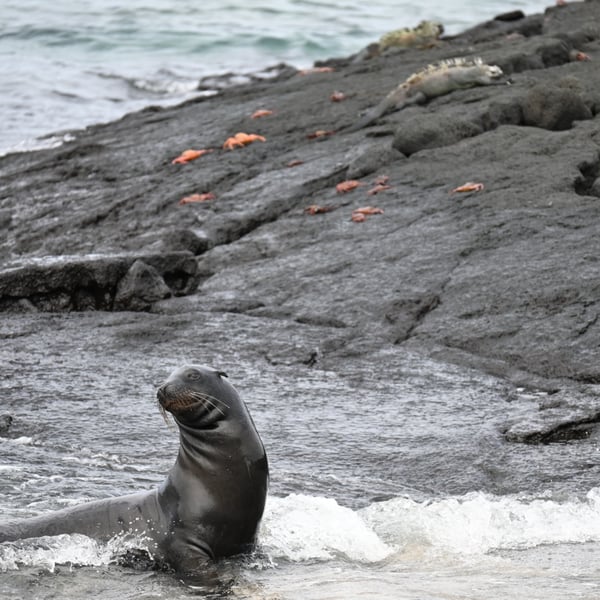
Our day on Fernandina Island was a highlight, as the ship is only permitted to visit once every two weeks. The landscape here is dominated by black lava fields, but watch your step, as there are very well camouflaged marine iguanas dotted across the surface as well as the striking red forms of Sally lightfoot crabs contrasting against the dark rock. Here we also saw sea lions frolicking in the surf, a Galápagos hawk, and a tiny racer snake. Later in the voyage the naturalist team showed the infamous footage of a group of snakes emerging from the rocks to pursue a marine iguana, the tense chase narrated by David Attenborough and filmed here on Fernandina. I think all the guests were glad to see the clip after we'd visited and come back ashore safely without being chased by an army of snakes!
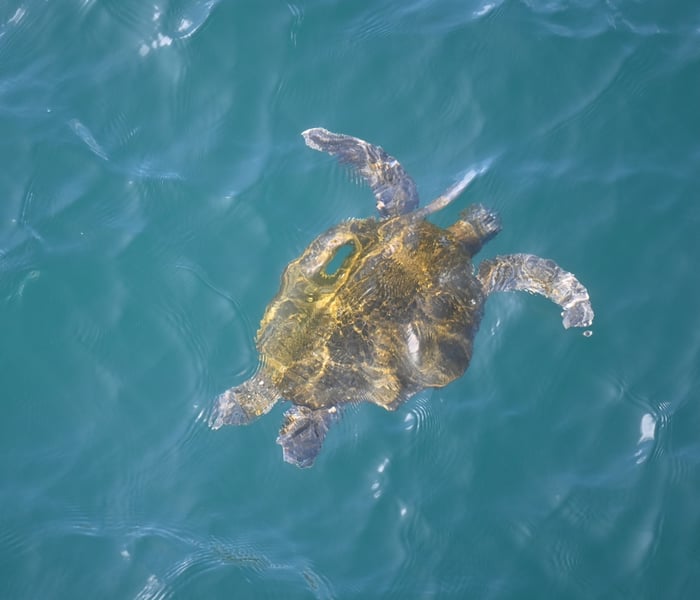
In the afternoon we headed out to snorkel once more, this time straight from the Zodiac to experience deep water snorkelling and some guests were lucky enough to see a marine iguanas feeding underwater! Truly the only place you have a chance to witness this on the entire planet which is mind boggling. Here we also saw turtles rising to the surface for air - and the added hilarity of trying to get your buddy's attention under the water to let them know you've spotted something...
The National Geographic-Lindblad Expeditions team really enhanced our journey with their knowledge and passion. On every outing, a naturalist guide would accompany each group of around 12 guests to provide insights about the geography, history, and wildlife of the islands and help us identify species as we spotted them. Presentations and lectures were informative and we enjoyed seeing underwater footage one of the naturalists took so we could see clearly what we might have seen (or missed!) during our snorkelling trips.
The crew also worked tirelessly on board, the hotel team making up our cabins up to three times a day as we were constantly back and forth between activities, and creating special moments such as an equator crossing party, a deck barbeque and welcoming us back onboard after activities with juice and cookies.
A day spent on Isabela Island was probably my favourite day of the trip (although it is nearly impossible to pick a favourite). We began the day with a nature walk in Urbina Bay where we saw giant tortoises for the first time as well as land iguanas - both completely unfazed as we passed them on the trail, acknowledging us with a disinterested glance before getting back to dozing.
After our walk we could cool off with a dip in the sea just off the beach which was a real 'not bad for a Tuesday morning' moment. Later, we had the chance to kayak. Regulations dictate that we could have 16 kayaks operating at one time so two sessions were laid on and we could sign up accordingly. We skirted a bay, getting close enough to the rocky shore to see crabs, sea lions and birds, as well as turtles popping up in every direction.
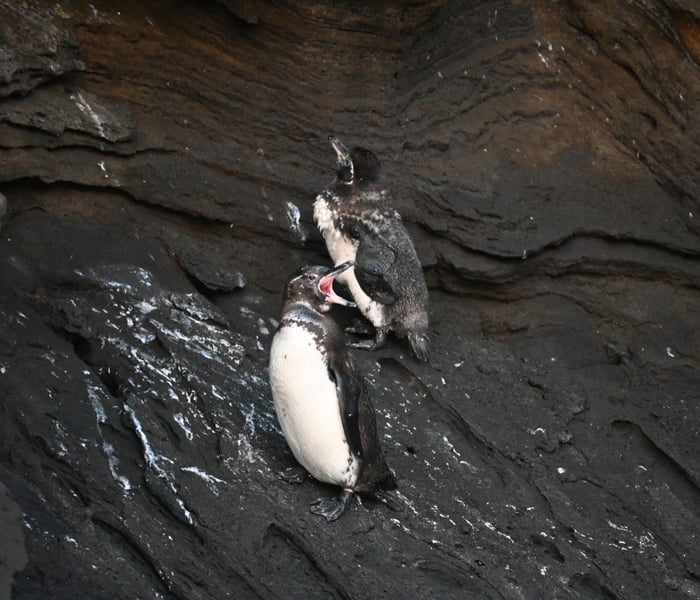
In the late afternoon we had the choice between a hike or a Zodiac cruise and the team let us know that this was potentially our last chance to see penguins as there are known colonies on Isabela, so I opted for the Zodiac cruise and kept my fingers crossed. There are only 1700 Galápagos penguins and they are the only penguin species found above the equator so yet again another unique moment to experience.
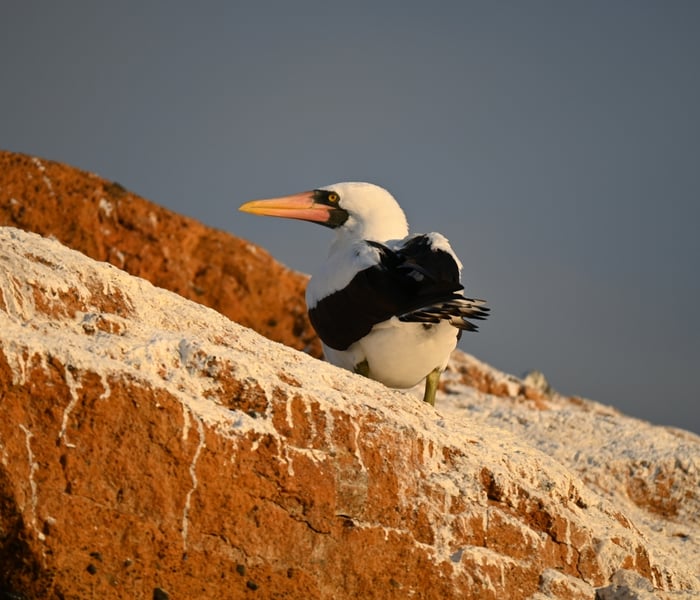
The golden hour light was just beautiful, highlighting the layers and colours in the volcanic rock and offering the perfect light for photos. As we cruised the shoreline our guide spotted two Galápagos penguins and the excitement was palpable as the driver navigated the Zodiac close to the rocks to see them clearly. We were also treated to up close sightings of blue footed boobies, Nazca boobies, and flightless cormorants basking in the evening sun. A special end to a fantastic day.
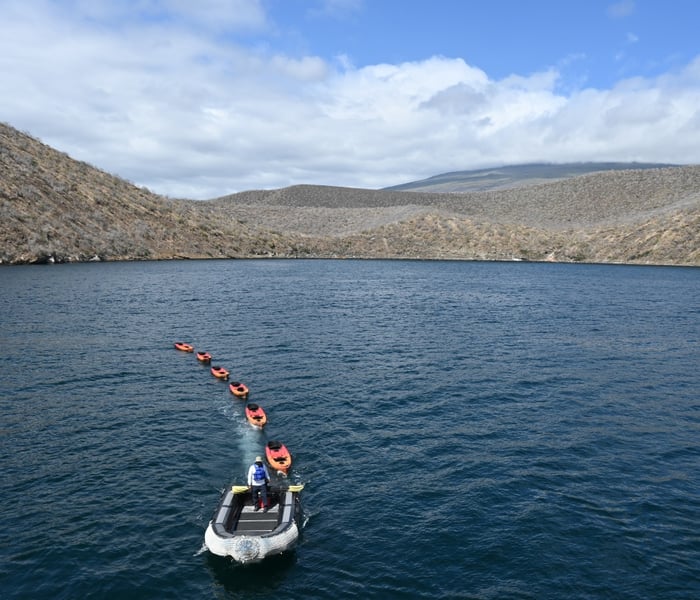
Santiago Island is the third largest island in the Galápagos and here we enjoyed a Zodiac cruise, another chance to kayak, and the opportunity to go in the glass bottomed boat which is carried on board. This allowed guests who didn't wish to snorkel the chance to see marine life, and to have the naturalist guide identify species as we saw them, and we were lucky enough to spot a Galápagos shark swimming below during our trip on the boat. The afternoon brought another choice, this time between a hike or time on a black sand beach swimming and snorkelling. It really felt like we could immerse ourselves in the wonders of the islands from sunrise to sunset.
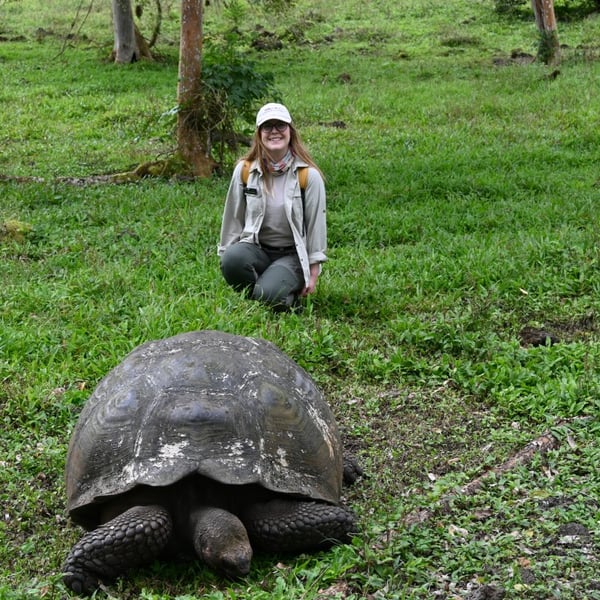
Our visit to Santa Cruz island offered a change of pace, with a whole day spent ashore. Firstly we headed to the Charles Darwin Research Station and tortoise breeding centre where we could find out more about the conservation efforts and research projects undertaken on the islands. The breeding centre houses tortoises of every age and informative displays show the distinct species which exist between the islands.
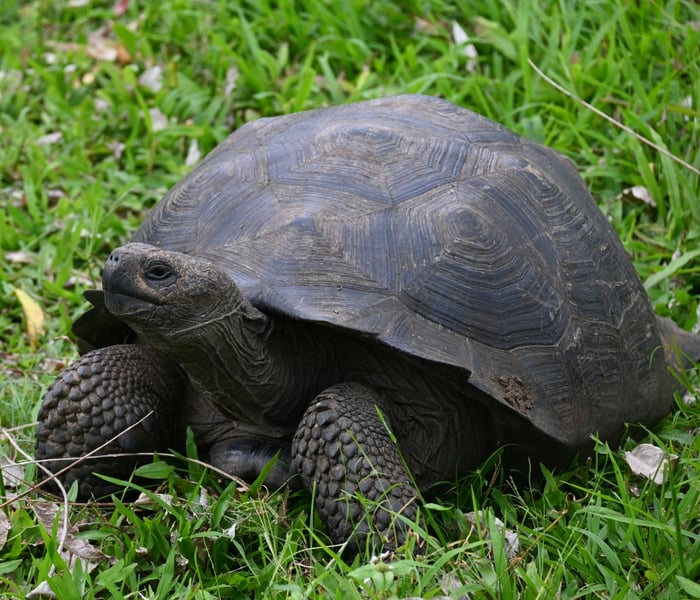
We then headed up to the highlands to see giant tortoises in their natural habitat. This was a truly surreal sight as we wandered a landscape which didn't look too dissimilar to what you'd expect in a British country park, with the notable difference of hundreds of giant tortoises grazing at every turn. Once again it was a unique Galápagos moment that I'll never forget.
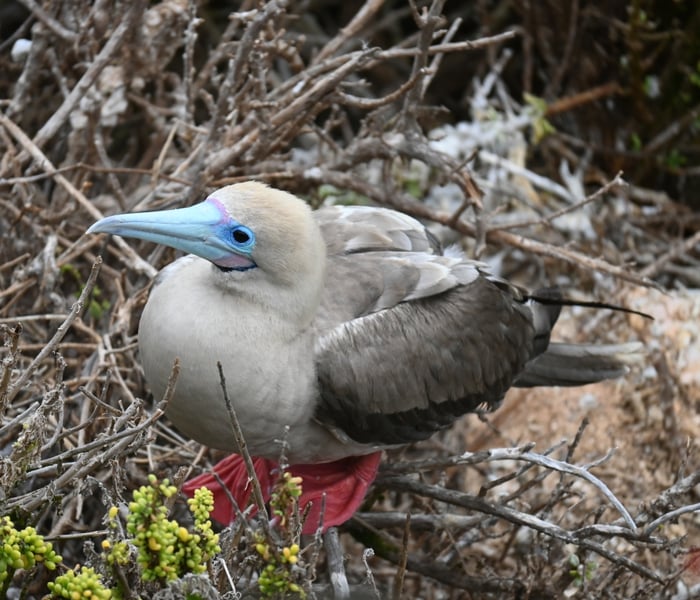
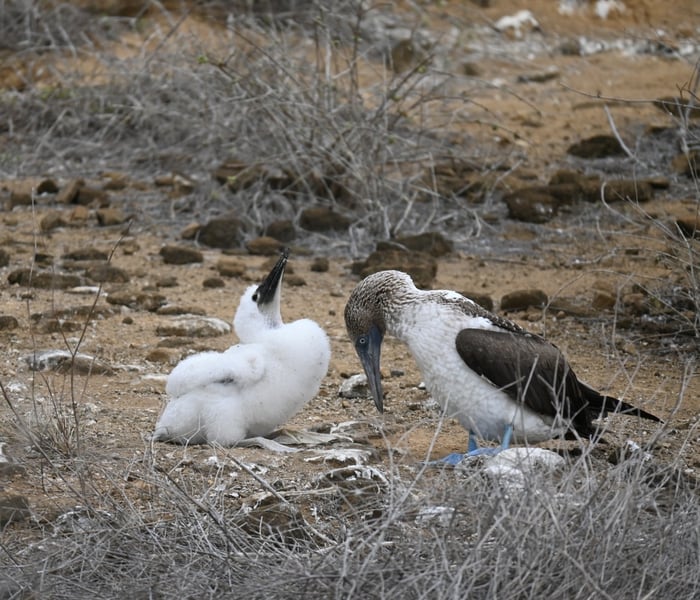
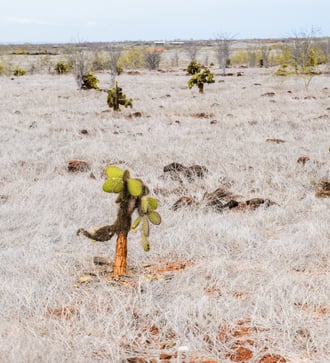
On our final full day we visited two sites on San Cristóbal island and during a morning hike in Punta Pitt, we finally ticked off a sighting of red footed booby. The landscape here was spectacular as our hike took us on top of cliffs scattered with cacti and wiry trees, and we also spotted a fluffy blue footed booby chick.
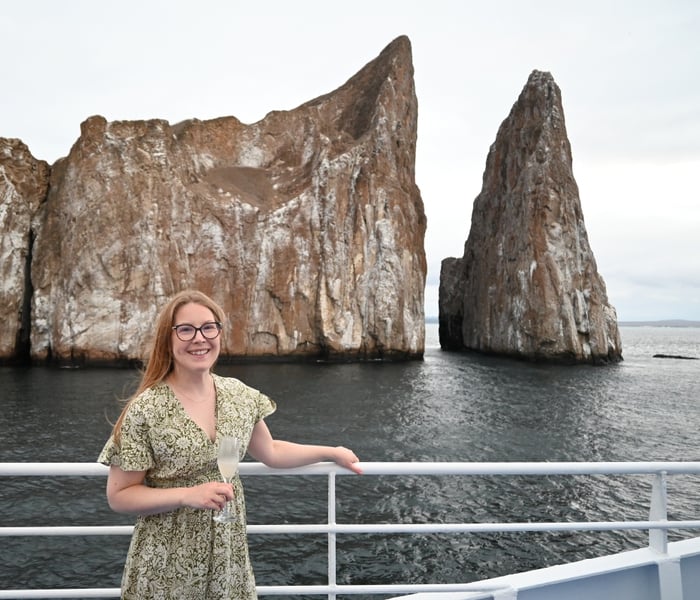
Our last chance to snorkel awaited once we came back down into the bay and I loved experiencing a peaceful moment bobbing along and watching colourful fish dart about below me. In the afternoon we moved round the island to Cerro Brujo, a white sand beach with turquoise waters and sea lions lolling along the shore. We had a final dip in the see against a backdrop of the striking formation of Kicker Rock and reflected on a truly unforgettable experience.

Meet the Author

Find a cruise
Explore the Galápagos Islands...
National Geographic - Lindblad Expeditions
Galápagos Escape: An 8-Day Voyage
From Quito to Quito
16 Jul - 21 Jul 2026 (5 Nights)
From £11,257 per guest
National Geographic - Lindblad Expeditions
Peru and Galápagos Escape
From Lima (Callao) to Quito
16 Jul - 22 Jul 2026 (6 Nights)
From £12,810 per guest
National Geographic - Lindblad Expeditions
Galápagos by Catamaran, Machu Picchu and Peru's Land of the Inca
From Quito to Lima (Callao)
17 Jul - 25 Jul 2026 (8 Nights)
From £13,483 per guest
National Geographic - Lindblad Expeditions
Exploring Galápagos, Machu Picchu and Peru's Land of the Inca
From Quito to Lima (Callao)
17 Jul - 25 Jul 2026 (8 Nights)
From £11,830 per guest