Meet the Experts

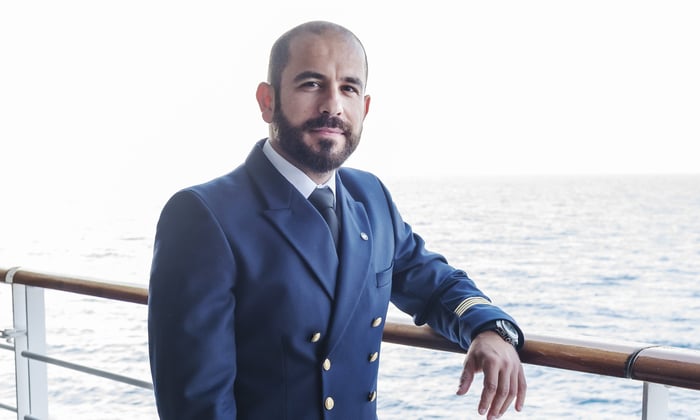
During our Greenland cruise we spoke to French-Lebanese Captain Charbel Daher, who has been captain of Le Commandant Charcot for two years, about his career so far.
Q: What has led you here, to being captain of Le Commandant Charcot?
I did my studies in Marseilles and then you do your training on different ships, I did cargo ships and then I came back as an officer in 2010 in Antarctica on Ponant's Le Lyrial. Then you realise, "this is what I want." I learnt ice navigation and got that experience and then you work your way up to captain and I think for any captain who loves the ice, the ultimate is to be on Le Commandant Charcot - it's the ultimate, ultimate, ultimate thing!
So when Le Commandant Charcot was about to launch and there were all the preparations, I was keeping a close eye on it all - I participated in a few discussions but I was busy on other ships, but I definitely showed my high interest - and then nearly two years ago I became captain.
Q: You said on this trip, 'welcome to paradise'. So I assume you prefer colder environments to warm weather and beaches?
I used to do other non-polar regions, but once I think you get into sailing in the region, you get a polar addiction, a polar virus!
I have become specialised in this kind of environment - it's not that I don't like tropics, from time to time I'm happy to go there - but once you are here it's another way of navigation and you become in love with this sort of place and this way of navigation, not knowing the plan, shuffling things around. So that's what gives the polar regions that surprise element for us which makes it so technically interesting.
Q: So do you prefer the surprise element of not knowing where you're going to navigate?
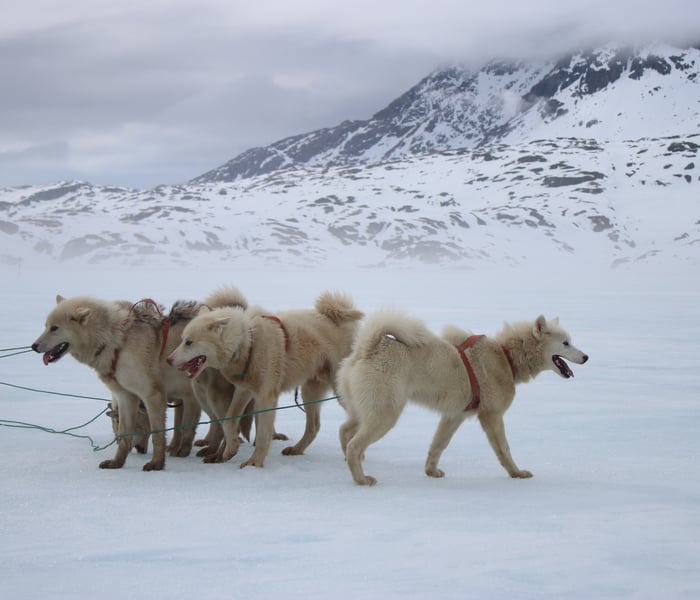
Yes - I mean being on an expedition ship is already great and then being on an exploration ship like this one is one step up - it's the ultimate thing because you continue designing, redesigning the cruise, and what you want to offer to the guests. It's not 'tomorrow, the bus will be waiting...', but 'a dog sled will be waiting'. It's a bit more exciting!
Q: What do you think makes Le Commandant Charcot so unique compared to other Ponant ships and other ships in the expedition industry?
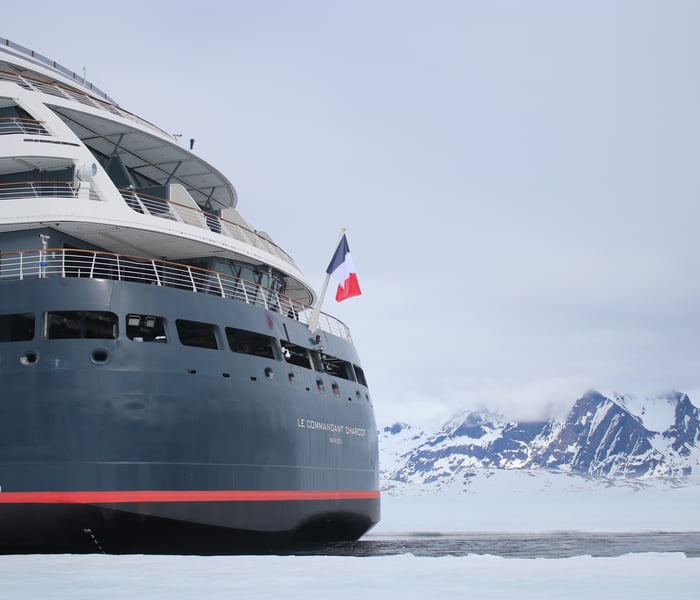
No other ships can emanate this - it's just unique. You need new ideas and a new approach, I work on other vessels that go to the polar regions and there are a few similarities but nothing as unique as this. I don't think people expect what they experience on board - technically for us it's so interesting as you change and adapt to the guests, and it's difficult to know what to 100% expect. You might see the brochure, but once you live it in the moment it's something different - it's not written anywhere that somebody will interrupt you at 4 o'clock in the morning or at midnight because there is an amazing sunset or sunrise! This is what makes this ship amazing and strong enough to go to these remote places in a safe, smooth and comfortable way. So all these elements make up the uniqueness of it, and of course the access to the most remote places in the world.
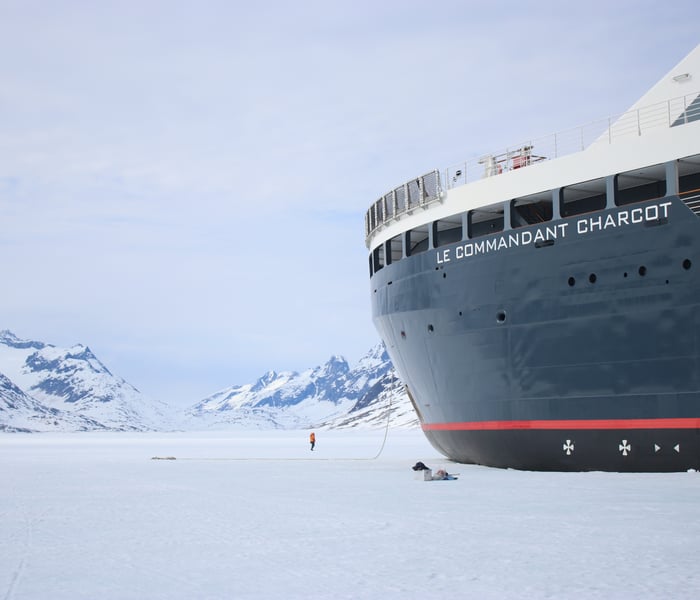
For example Greenland - the first cargo high ice class ships go in June and July. Yet we take fresh food to the locals in May, earlier than anyone else. So it's this access to the remoteness that's so unique. No other ship can really do this at this time of the year. I will not say there's no limits - everything has limits, but the limits of this ship are almost infinite!
Q: What do you think is the most exciting itinerary of them all that Le Commandant Charcot offers?
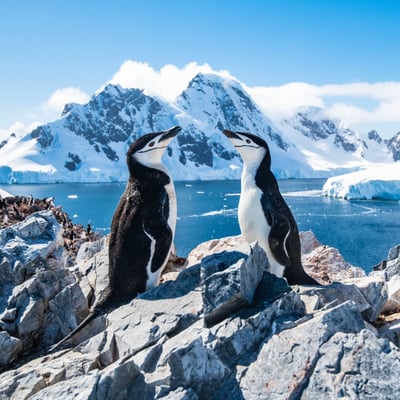
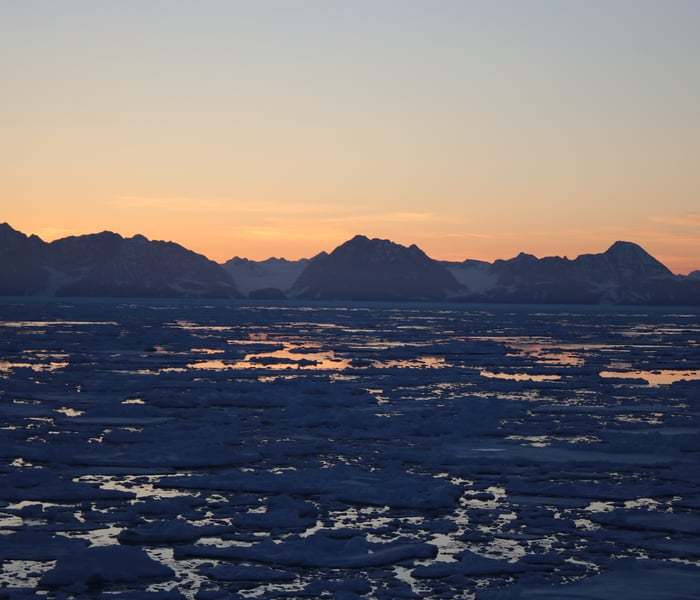
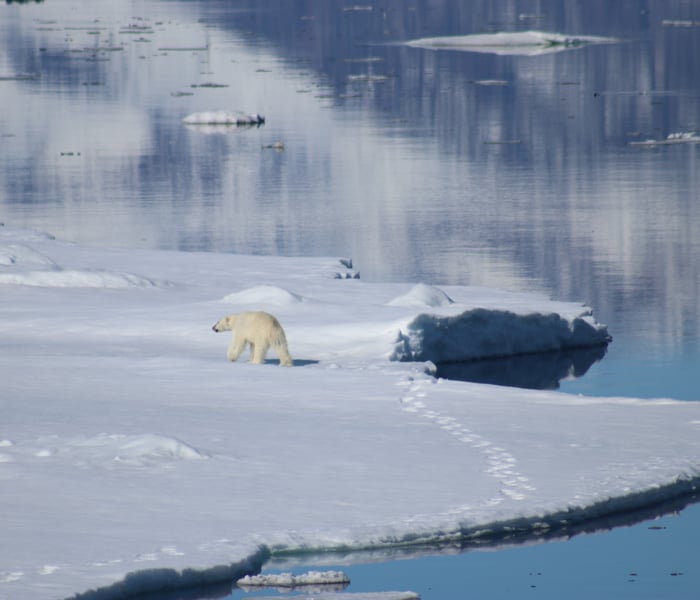
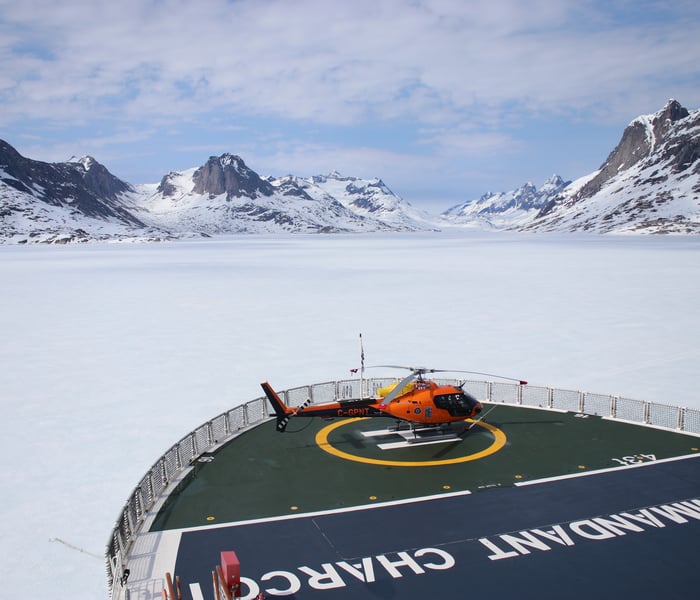
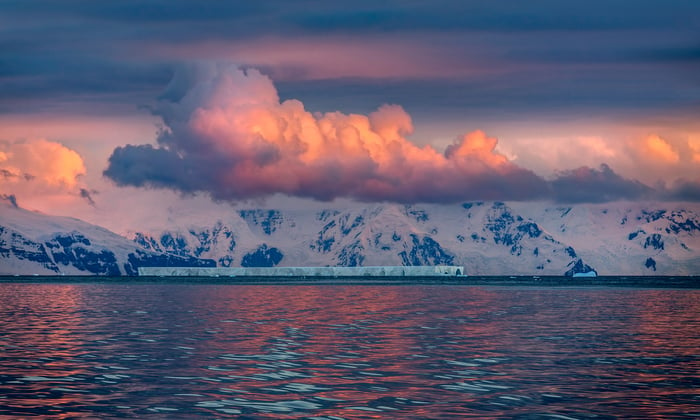
Very, very difficult question. Each one of them has its own unique special aspect. All of them have the ice in common - North Pole, Greenland, Antarctica. The North Pole as a destination is absolutely extreme and unique, with days just breaking and slaloming through the ice. So this is very exciting, I mean to be on the top of the world - not many people do that! Then Greenland, you have the icy landscapes but you also have the connection with the people, with the Inuits, and I think this is the best way to have this experience, in these remote places. And Antarctica, you obviously have the quality and quantity of animals, the wildlife, the landscape - and it's totally different on each side. For example in east Antarctica there are fewer glaciers and less ice, and it's more rocky and extreme because you have the glaciers closer to the sea. So you see the aggressiveness of the nature differently.
I honestly don't have a preference and I have the luxury to do all of them! Some people for example come to Antarctica twice or three times and have a different experience each time, sometimes you arrive early in the season and it's full of ice and the penguin chicks are not yet here, or you come in the middle of the season and see the chicks. And then the end of the season, you have more whales, so it's a totally different experience. To do it with the other ships is a great experience, and then to do it with Le Commandant Charcot is another level, it's just mind blowing.
Q: So, Antarctica, any tips for the Drake Passage?!
The Drake Passage could be bad, it could be, nasty, windy, and wavy - or it could be magical! We have very good predictions of weather, so we can delay the departure or bring it forward to adapt the passage to make it smoother, but we can't guarantee that there will be no swell, a lot of pressure is passing through there. These ships are very stable so in the Drake Passage, it will be rolling - but we are not crazy! If there are such high waves that the guests' comfort is affected, we will delay or bring forward our departure.
But safety-wise, these videos online of these huge swells, there's no reason to be scared. The French flag is very safe. There are many safety rules that have been tested on glass, on metal for years and years. It's an experience and it's a step you have to take - there is a story behind getting there! Some people may get a little sick, my brother actually did, but once you arrive you completely forget it, it's like you push on a button - so I encourage any guests not to view it as an obstacle because I guarantee that you will forget everything once you're in Antarctica!
Q: Are there any other destinations that you would like to see the ship sail in?
The ship is designed to go with the ice, but we did try a new itinerary this winter in Norway and the Baltic Sea, which was interesting, but she's made for this place.
There are new places in the polar region in store that we have not yet explored, but we are always studying different options. There are so many things to explore and that you can dream about, and that's what we try to do with Ponant, to keep people interested.
Q: What are the biggest challenges that you face being captain of Le Commandant Charcot?
The challenge is to make such remote areas comfortable, and to let guests really grasp the difference between this comfort and the remote region in which they're in is tough. Sometimes we are very comfortable inside and we forget the aggression and remoteness of the environment outside. I mean, look at us, look where we are, we are in such a remote place that's not well charted, icebergs everywhere - it's a hostile place, but we are in supreme comfort - everybody has internet, having a coffee! So this aspect is a challenge to make the guests aware of this disconnection, and keep ourselves humble to the environment, and also to deliver the high expectation of guests.
We are so guided by nature and have to work with the elements - in all the brochures you see images of sun the whole time, so it's the expectation of the guests. And of course it's expensive - you don't do it everyday and you don't want people to leave frustrated, it's a once-in-a-lifetime trip for some of them. So to combine all of this is challenging and managing expectations. I have never - touch wood - had people disappointed, but you just want to try and fulfil the dream of the guests, because I put myself in their position and I don't want them to leave with any sort of frustration. And then also managing the crew, a big team in such a remote place and to keep them happy.
Q: Have you seen climate change affect the environment you sail in?
At this scale, during my 15 years in the polar regions, it's difficult to say an obvious yes. We can see on the charts that some glaciers have retreated, but we observe changes year on year - for example this time last year, it was much more difficult to access Tasiilaq - so it doesn't necessarily mean that's climate change, and at this scale it is very difficult to know.
And let's say the North Passage, the first years where we did it, it was quite clear of ice, then we had a few years that were very icy, then the next few years there was much less ice. But we are very aware of this, and we take it very seriously - I try to share what I know with guests, but I'm not a scientist, I just observe!
Q: Have you got one memorable moment that stands out from when you've been captain of Le Commandant Charcot?
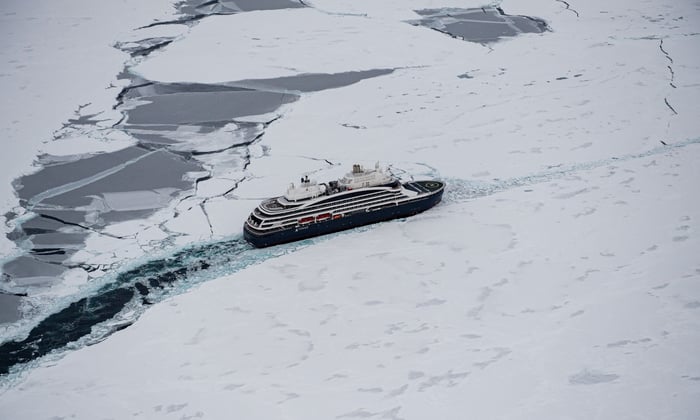
One moment that stands out was in east Greenland, the first time I'd captained this ship in this area. I've been on the ice many, many years and I know how challenging it is, and was I preparing myself and studying ready for the journey, but the first time I captained this ship in this area I saw how strong and how elegant she is, and able to give us access to, I remember, this wall of sea ice that was compressed so close to the land, which was one of the strongest ice conditions that they ever had.
And I truly saw how the ship can access this nature, a place we could never access before, and it was kind of mind blowing when I realised there is a ship capable of this! It was a pinch me moment. I was aware technically, I know the ice, but then you see how elegant and how easy it was to access this - that I think was kind of incredible, this moment between technicity and nature.
Q: When you're not on the ship, where do you do your own like personal holidays?
We used to travel a little bit to Lebanon with my wife. We go from time to time because I still have family there. Now, since two new babies, a bit less! We like also to sail while being on vacation, but now it's a bit reduced because of the baby. Yeah. But we try to keep the connection with the families in Lebanon and work around this job!

Meet the Author

Find a cruise
Cruises on Le Commandant Charcot
Ponant Explorations
The Geographic North Pole
From Longyearbyen to Longyearbyen
27 Jul - 11 Aug 2026 (15 Nights)
From £40,946 per guest
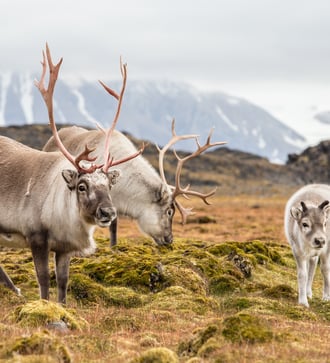
Ponant Explorations
The Geographic North Pole
From Longyearbyen to Longyearbyen
10 Aug - 27 Aug 2026 (17 Nights)
From £116,176 per guest
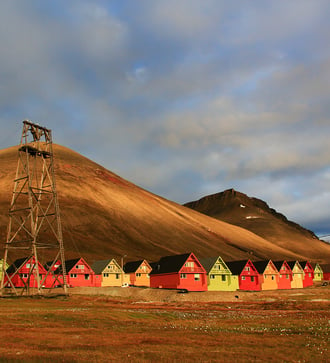
Ponant Explorations
The Geographic North Pole
From Longyearbyen to Longyearbyen
27 Aug - 11 Sep 2026 (15 Nights)
From £39,896 per guest
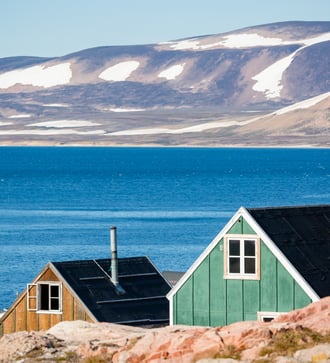
Ponant Explorations
The Geographic North Pole and the east coast of Greenland
From Longyearbyen to Reykjavik
10 Sep - 27 Sep 2026 (17 Nights)
From £47,228 per guest
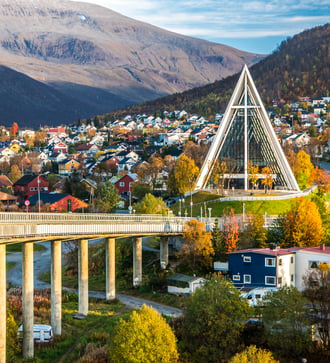
Ponant Explorations
Polar Odyssey between Northeast Greenland & Spitsbergen
From Reykjavik to Tromsø
28 Sep - 14 Oct 2026 (16 Nights)
From £25,040 per guest
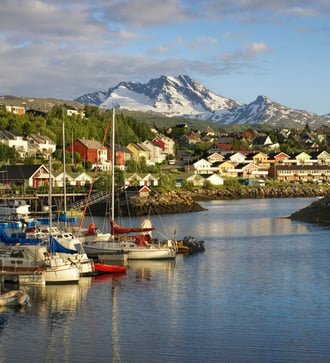
Ponant Explorations
Polar Lights: From North Cape to the Lofoten Islands
From Tromsø to Narvik
24 Oct - 1 Nov 2026 (8 Nights)
From £11,660 per guest
Ponant Explorations
Autumn Splendours: From Lofoten to the Norwegian Fjords
From Narvik to Bergen
1 Nov - 14 Nov 2026 (13 Nights)
From £14,080 per guest
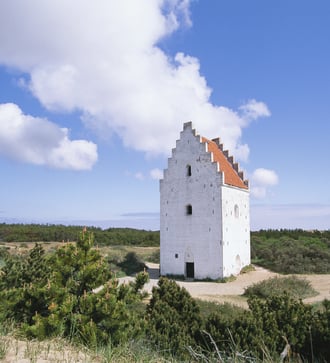
Ponant Explorations
From the North Sea to the Baltic
From Bergen to Helsinki
14 Nov - 24 Nov 2026 (10 Nights)
From £9,280 per guest
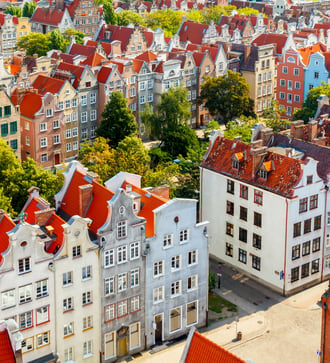
Ponant Explorations
Baltic Bliss & Winter Wonders
From Helsinki to Helsinki
24 Nov - 3 Dec 2026 (9 Nights)
From £8,350 per guest
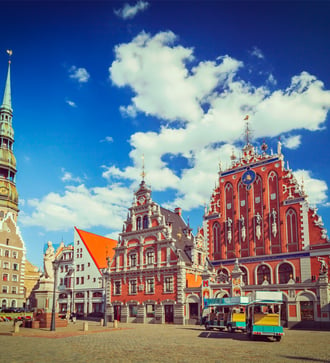
Ponant Explorations
Gautier Capuçon's Baltic Symphony at Sea
From Helsinki to Helsinki
3 Dec - 12 Dec 2026 (9 Nights)
From £10,710 per guest
Ponant Explorations
Baltic Bliss & Winter Wonders
From Helsinki to Helsinki
12 Dec - 21 Dec 2026 (9 Nights)
From £8,350 per guest
Ponant Explorations
The Gulf of Bothnia, at the Gateway to the Arctic
From Helsinki to Kemi
22 Dec - 30 Dec 2026 (8 Nights)
From £9,730 per guest