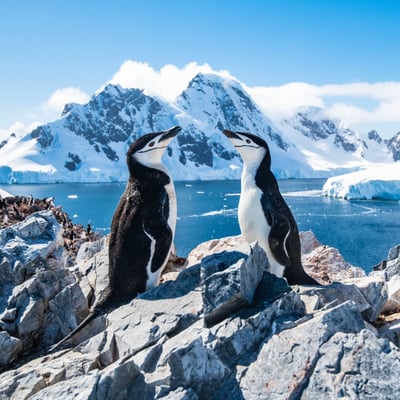
The Sea of Cortez sits between Baja California and mainland Mexico, a UNESCO World Heritage Site that Jacques Cousteau called 'the world's aquarium'. This is one of the planet's best whale watching destinations, with gray whales calving in Magdalena Bay, blue whales feeding near Loreto, plus dolphins traveling in pods that number in the thousands. Small expedition ships carry 60-100 guests into protected waters where you swim with playful sea lion pups at Los Islotes, snorkel over pristine reefs and explore desert islands inhabited only by blue-footed boobies and frigate birds.
Sea of Cortez Expedition Cruises

Find a cruise
Our top picks
National Geographic - Lindblad Expeditions
Channel Islands National Park to Baja California
From Los Angeles to Loreto
22 Nov - 4 Dec 2026 (12 Nights)
From £5,893 per guest
National Geographic - Lindblad Expeditions
Baja California Holiday: A Living Sea and Desert Isles
From Loreto to Loreto
4 Dec - 11 Dec 2026 (7 Nights)
From £4,223 per guest
National Geographic - Lindblad Expeditions
Baja California Holiday: A Living Sea and Desert Isles
From Loreto to Loreto
12 Dec - 19 Dec 2026 (7 Nights)
From £3,590 per guest
National Geographic - Lindblad Expeditions
Baja California Holiday: A Living Sea and Desert Isles
From Loreto to Loreto
19 Dec - 26 Dec 2026 (7 Nights)
From £4,606 per guest
Our Insight
Highlights of a Sea of Cortez expedition cruise
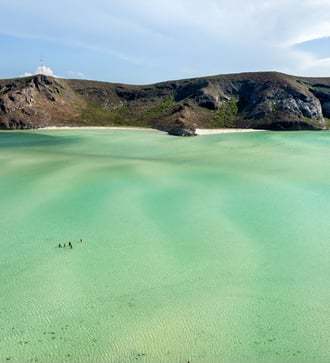
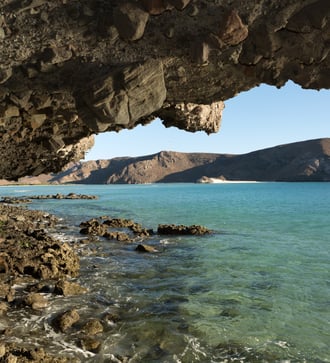
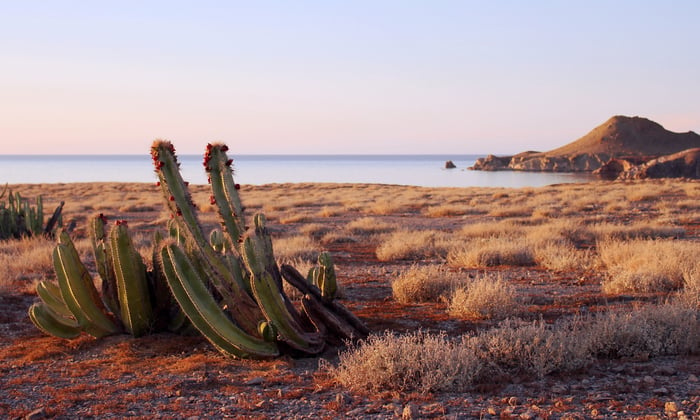
The Sea of Cortez feels like wilderness that happens to sit 2 hours from Los Angeles. Baja California's desert coast runs for hundreds of miles, red rock cliffs dropping straight into turquoise water, tiny fishing villages appearing where freshwater seeps meet the sea. Cardón cacti grow taller than houses, their arms reaching skyward from rocky slopes. After rare rains, the desert explodes with flowers that carpet the ground in yellow, pink and purple. At night, stars fill the sky with no competition from city lights, and the only sounds are waves against the hull and the distant bark of sea lions.
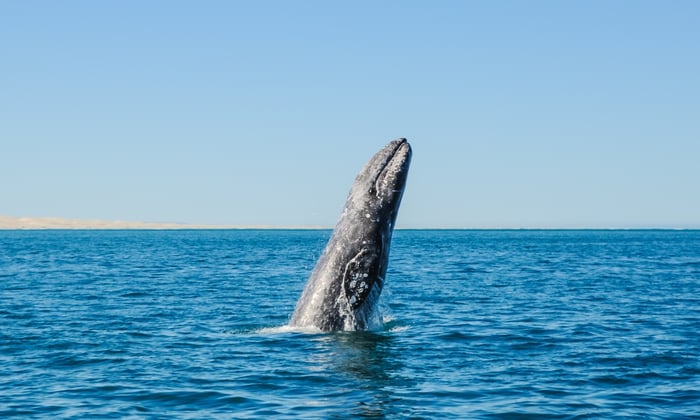
Gray whales arrive in Magdalena Bay between January and March to calve, with mothers and curious young approaching boats close enough to touch. The encounters are consistent and intimate, with whales breaching, spy-hopping and rolling alongside pangas in water so calm you can hear them breathe. Blue whales, the largest animals ever to exist, feed near Loreto in February and March, their massive forms surfacing to blow jets of spray visible for miles. Humpback whales patrol throughout the season, while fin whales, sperm whales and occasionally orcas pass through these rich feeding grounds.
Dolphins travel in pods that number in the thousands, with common dolphins and bottlenose dolphins both abundant. They ride bow waves, leap in synchronized arcs and sometimes hunt together, driving fish into tightening circles while seabirds dive from above. Mobula rays gather in mass formations, leaping clear of the water in displays that leave the surface churning with splashes. Whale sharks drift through plankton blooms, their spotted backs just below the surface as they filter-feed with mouths agape.
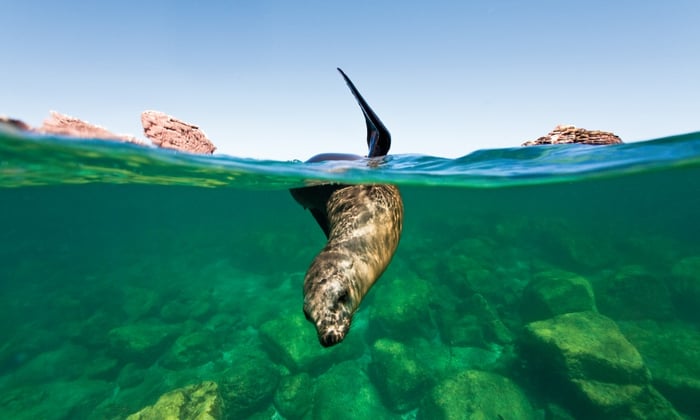
Los Islotes delivers the signature Sea of Cortez experience: swimming with sea lion pups in clear water surrounded by rocky pinnacles. The young ones are curious and playful, spinning past your mask, nibbling fins and performing barrel rolls. Adult males bark from rocks above while females patrol deeper water. Snorkeling here reveals schools of king angelfish, porcupinefish hiding in crevices, moray eels and octopuses changing colour against the rocks.
The expedition difference in the Sea of Cortez
Only a handful of operators run expeditions here, with National Geographic-Lindblad Expeditions, UnCruise Adventures and Ponant offering the most regular departures. Ships carry between 60 and 100 guests, with Ponant's Le Bellot slightly larger at 184-guests. All small enough to navigate protected waters and reach anchorages inaccessible to larger vessels. The expedition teams include marine biologists who know these waters intimately, having spent multiple seasons tracking whale migrations, identifying individual dolphins and monitoring reef health.
Days follow an active rhythm, with Zodiac excursions before breakfast, mid-morning snorkeling sessions, afternoon hikes across islands and sunset whale watching from the deck. Kayaking and stand-up paddleboarding happen in calm bays where you glide past sea turtles and rays. Snorkeling equipment is provided, with shorty wetsuits adequate for water temperatures that rarely dip below 20°C. The atmosphere onboard is casual and relaxed, with no formal nights or dress codes. Meals are served family-style or buffet, with fresh Mexican ingredients and local seafood featuring heavily, although Ponant take a slightly more formal approach. Evenings bring presentations on marine biology, whale identification and conservation challenges facing the Gulf of California.
Sea of Cortez expedition itineraries
Most itineraries run 7-9 nights, operating round-trip from La Paz, Loreto or Cabo San Lucas. National Geographic-Lindblad Expeditions offers the widest selection, with voyages aboard National Geographic Venture (100 guests), National Geographic Sea Lion and National Geographic Sea Bird (both 62 guests). Their itineraries range from 7 to 14 nights, with some focusing on the southern Sea of Cortez and others extending to Magdalena Bay for gray whale encounters.
UnCruise Adventures operates Safari Endeavour (86 guests, though often sailing with fewer) on 7-8 night voyages inspired by John Steinbeck's "Log from the Sea of Cortez". These itineraries emphasize active exploration, with daily kayaking, snorkeling and hiking alongside marine biology studies where guests help collect samples. Ponant visits the region less frequently, with their Explorer yachts offering round-trip voyages from Cabo San Lucas that include Magdalena Bay and the southern Sea of Cortez.
Expedition cruise lines sailing the Sea of Cortez
National Geographic-Lindblad Expeditions pioneered expedition cruising and maintains the strongest presence in the Sea of Cortez, with three ships offering multiple departures throughout the season. Their partnership with National Geographic brings certified photo instructors, Explorers-in-Training family programs and a focus on citizen science.
UnCruise Adventures specialises in small ship exploration with an emphasis on active adventure. Their all-inclusive model covers snorkeling gear, kayaks, paddleboards, wetsuits and even alcoholic beverages. The expedition team consists of marine biologists who lead beach hikes, facilitate snorkeling sessions and present evening programs on marine ecology.
Ponant brings French expedition elegance to Baja California, with their Explorer yachts offering refined onboard amenities alongside Zodiac excursions and wildlife encounters. Their itineraries provide more days at sea and a slightly less active program than the dedicated wildlife-focused operators.
The best time for a Sea of Cortez expedition
- November opens the season after summer heat and hurricane risk have passed. Blue whales and fin whales arrive first, feeding in rich waters near Loreto. The desert blooms with flowers if autumn rains have come, and temperatures are comfortable with warm days and cool evenings perfect for deck time.
- December and January bring humpback whales returning to calving grounds, with mothers and young visible from the ship. Whale sharks drift through plankton blooms, their spotted backs just below the surface. This is peak season for underwater encounters, with water visibility at its best and marine life concentrated in feeding areas. Gray whales begin arriving in Magdalena Bay by late January.
- February and March deliver the most consistent whale watching across all species. Gray whales fill Magdalena Bay with mothers teaching calves to breach and curious young approaching boats. Blue whales feed near Loreto, their massive forms surfacing to blow. Water temperatures reach their annual high, making snorkeling most comfortable. This is peak expedition season, with most operators running maximum departures.
- April marks the season's end, with whales beginning their northward migrations and water temperatures starting to climb toward summer heat. Some operators extend into early April for late-season encounters, though wildlife activity diminishes as animals disperse.
Travel tips and FAQs for Sea of Cortez expedition cruising
Is the Sea of Cortez suitable for families with children?
Yes, particularly with operators offering dedicated family programs. National Geographic-Lindblad Expeditions provides an Explorers-in-Training program for children and teens, while UnCruise Adventures offers Kids in Nature voyages with child-friendly activities. Swimming with sea lion pups, snorkeling and Zodiac excursions in the Sea of Cortez appeal strongly to young adventurers, though the active daily schedule requires reasonable energy levels from all participants.
How close do you get to whales in Magdalena Bay?
Gray whales in Magdalena Bay are famously curious and frequently approach boats close enough to touch, though regulations prohibit actively pursuing them. Other whale species are observed from respectful distances as required by marine protected area rules, typically 100 meters for most species. Zodiac excursions in the Sea of Cortez allow closer observation than deck viewing, with expert guides positioning boats for optimal encounters while prioritizing animal welfare.
What level of swimming ability is required?
Reasonable swimming ability is necessary for snorkeling sessions in the Sea of Cortez, particularly when swimming with sea lions where currents can be present. Life jackets and flotation devices are available for less confident swimmers. Some operators require guests to demonstrate basic water confidence before participating in open water activities. Non-swimmers can participate in Zodiac cruising, beach landings, hiking and deck-based wildlife viewing.
How rough are Sea of Cortez waters?
The Sea of Cortez is generally calm and protected, earning its nickname "the aquarium" partly for sheltered conditions. Magdalena Bay on the Pacific side can experience more swell and wind, though boats only venture there in favorable conditions. Small ship size means some movement is possible during windier periods, though seasickness is rarely a significant issue in these waters. Travelers prone to motion sickness should bring medication as a precaution.
What wildlife can I expect to see besides whales?
Dolphins in pods numbering thousands, sea lions at multiple colonies throughout the Sea of Cortez, mobula rays leaping in mass formations, whale sharks, sea turtles, blue-footed boobies, frigatebirds, brown pelicans, and during snorkeling: king angelfish, porcupinefish, moray eels, octopuses and countless reef fish. Sightings vary by season, location and luck, though marine encounters happen on every expedition with abundant wildlife throughout the season.
Do I need a wetsuit for snorkeling in the Sea of Cortez?
Operators provide shorty wetsuits adequate for Sea of Cortez water temperatures, which range from 20-24°C depending on season and location. Many guests find these comfortable for extended snorkeling sessions, particularly in the cooler early season months. Full wetsuits are unnecessary given the relatively warm water. Bring reef-safe sunscreen as exposed skin burns easily when snorkeling in Baja California's strong sun.
What should I pack for a Sea of Cortez expedition?
Layers are essential for warm days and cooler evenings in Baja California. Comfortable shoes work for both ship and shore, swimwear is necessary for daily water activities, and sun protection (hat, sunscreen, sunglasses) is critical in the desert environment. An underwater camera or GoPro captures sea lion encounters and reef life. Dry bags protect camera equipment during Zodiac excursions. The onboard atmosphere is casual with no formal dress requirements.
How far is the Sea of Cortez from major cities?
La Paz, Loreto and Cabo San Lucas in Baja California are all under two hours by air from Los Angeles, with direct flights available from multiple US gateways. This makes the Sea of Cortez one of the most accessible expedition cruise destinations for North American and UK travelers, limiting complex logistics. Most operators include transfers from airports to ships as part of the package.
What our clients say
“It was a great experience and we would recommend it to wildlife enthusiasts! ”Mrs Jones
collections
You may also like

Galapagos
Visiting this isolated archipelago is like stepping into another world: the wildlife, both fearless and curious, either ignores you or finds you intriguing.

Alaska & Pacific Northwest
What a wonderful wilderness this is: geographically extraordinary, with glowing glaciers alongside lush greenery, ancient cultures and an extraordinary history to boot.

Dolphin and whale watching cruises
If you want to see whales and dolphins in their natural habitat, then a whale watching cruise is simply the only way to do it.