Beyond Tokyo and Kyoto lies a different Japan. Luxury small expedition ship cruises reach the Seto Inland Sea's mist-wrapped islands, the subtropical Ryukyu chain and Hokkaido's working ports. Expedition teams travel with you, adding depth to every landing. Where roads exist, coaches run to nearby temples and gardens. Where they do not, Zodiacs take you in. Best for travellers ready to go deeper.
Japan Expedition Cruises

Find a cruise
Our top picks
National Geographic - Lindblad Expeditions
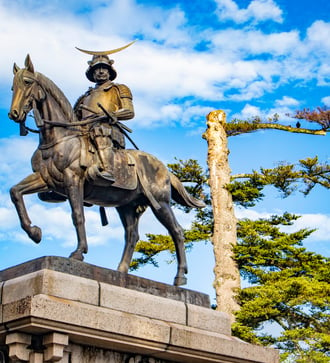
Alaska to Japan: Ring of Fire to Ainu Culture
From Anchorage to Osaka
20 Aug - 7 Sep 2026 (18 Nights)
From £28,788 per guest
National Geographic - Lindblad Expeditions
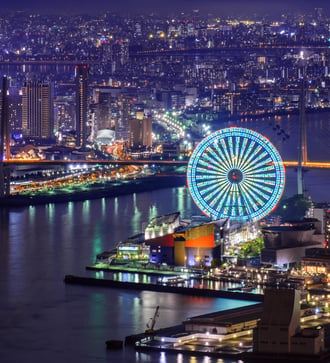
Coastal Japan: Imperial Dynasties and Modern Culture
From Osaka to Osaka
7 Sep - 21 Sep 2026 (14 Nights)
From £22,491 per guest
National Geographic - Lindblad Expeditions
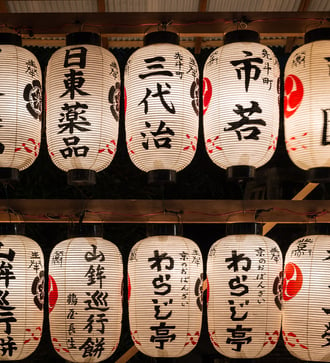
Coastal Japan: Imperial Dynasties and Modern Culture
From Osaka to Osaka
19 Sep - 3 Oct 2026 (14 Nights)
From £25,743 per guest
Silversea Expeditions
Autumn Delights of Japan
From Tokyo to Tokyo
15 Oct - 29 Oct 2026 (14 Nights)
From £10,800 per guest
Our Insight
Highlights of a luxury Japan expedition cruise
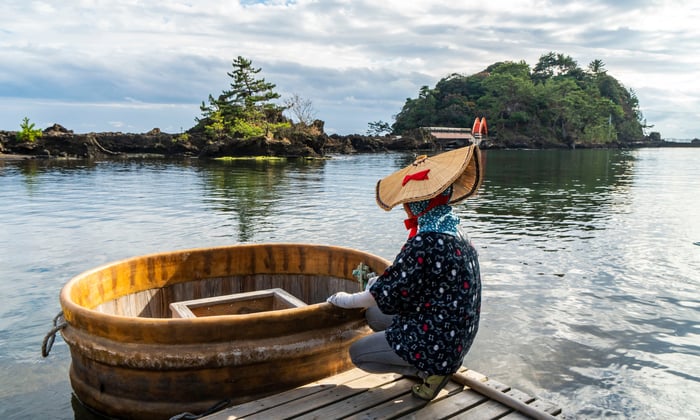
The Seto Inland Sea is where the country's old maritime heart still beats, a sheltered stretch between Honshu, Shikoku and Kyushu where small islands rise out of the morning haze. Fishing boats slip out before dawn, temple bells carry over the water and harbours the smell of salt, cedar and breakfast cooking in nearby houses. You might anchor off Mitarai, where cobbled streets climb the hillside and the shutters are painted the same faded blue they have been for decades. Or Zodiac into Tomonoura, a harbour village where Miyazaki sat sketching the waterfront for Ponyo.
Naoshima brings contemporary art into the mix: galleries built from blackened copper refinery walls, Yayoi Kusama's yellow pumpkin standing alone by the tide line, museum spaces carved into hillsides. The island was industrial once, then quiet and now it draws visitors who come to see how art and landscape sit together.
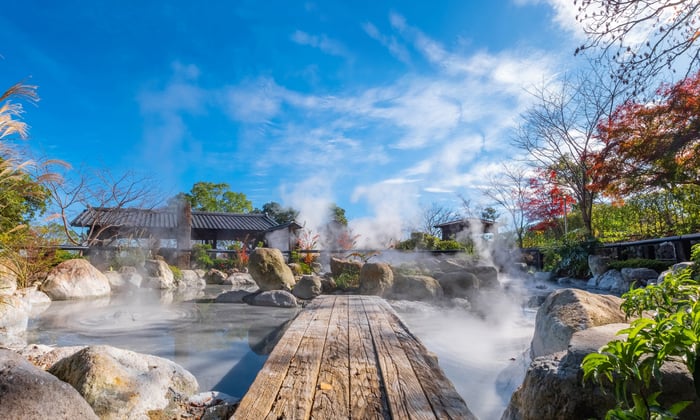
South of here, the Ryukyu and Yaeyama chains feel like another country. White sand, coral gardens, banyan forests and the warm, slow cadence of Okinawan culture. Yakushima rises steeply from the Pacific, its ancient cedar forests dark and quiet under a canopy that barely lets the light through. Further up the chain, Beppu on Kyushu is where onsen culture runs deep. Steam rises from the hillsides, bathing rituals go back centuries and the hot mineral water is treated with something close to reverence.
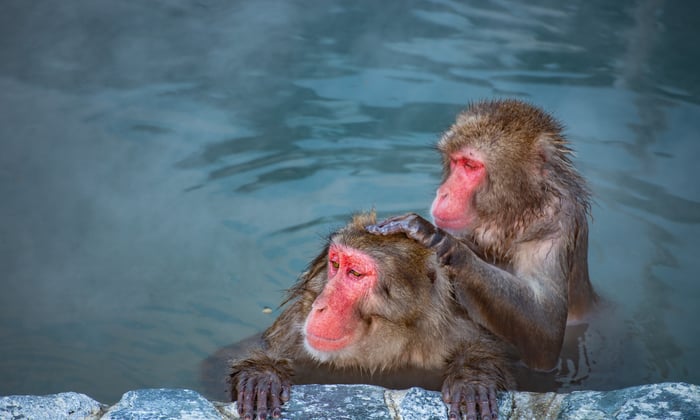
In the north, Hokkaido offers forested coastline, Ainu heritage and ports such as Otaru, Kushiro and Okushiri that rarely see cruise ships. The light here is different again: colder, sharper, with weather rolling in off the Pacific. Wildlife shifts north too. Japanese cranes gather in wetlands, Steller's sea eagles hunt along the coast and snow monkeys soak in hot spring valleys when winter closes in. Longer expeditions from Hokkaido push into the Aleutians, link to Alaska or attempt the Northwest Passage.
The expedition team carries as much weight as the itinerary. Naturalists, historians and photographers travel with you, explaining what you are seeing as it unfolds: Edo period history at Matsue Castle, the biology of a coral reef in the Yaeyamas, the ritual of a tea ceremony in a private home. Cultural visits reach beyond the obvious. You might spend an afternoon at a sword polishing workshop, walk through the Adachi Museum's landscape garden with a guide who knows every stone placement, or sit with a family in their home while they talk about what it means to keep tradition alive. You leave with context, not just photographs.
The small expedition ship difference in Japan
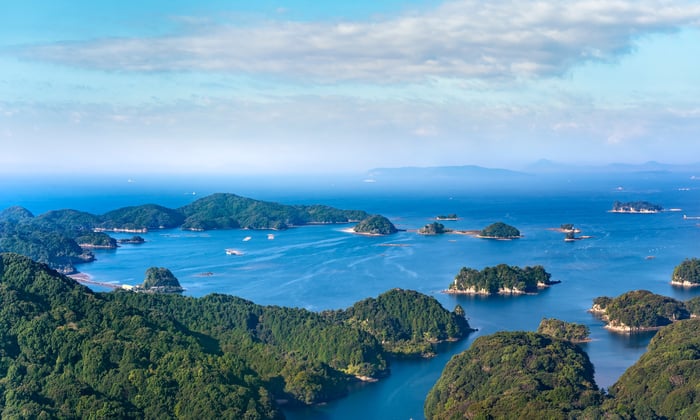
Small expedition ships slip into harbours built for working life, rather than tourism. The Seto Inland Sea's fishing ports, the volcanic coves of Kyushu, the remote islands off Hokkaido, all were sized for modest vessels. A luxury small ship of 120 to 230 guests ties up in the centre of these towns, so you step off the gangway straight into the morning. No waiting for tenders, no long shuttle rides, just the quay and the day ahead.
Many days you travel by coach to a temple, castle or garden within reach of the harbour. This is different from polar expeditions, where everything happens by Zodiac. It means you can reach places easily that would otherwise take hours to hike to. Where there are no roads or ports, at remote islands or along wild coast, Zodiacs take you in.
The expedition team shapes the experience as much as the route. Historians explain the Silla kingdom at Gyeongju. Marine biologists point out reef structure in the Yaeyamas. Photographers help you frame the light over a misty harbour at dawn. The small numbers mean conversations stay personal. You are not in a crowd. You are in a group small enough that guides remember your name and your questions and you leave with understanding, not just a camera roll.
Japan expedition cruise itineraries
Most Japan expedition cruise itineraries run 10 to 16 nights. Round-trip voyages from Tokyo, Osaka, Kobe or Sapporo are common, sometimes circumnavigating the four main islands. Others focus on a single thread, Seto Inland Sea cruises through the sheltered waters and art islands, Hokkaido expedition cruises along the northern coast and into Ainu country, or southern routes through the subtropical Ryukyu chain. Many pair Japan with South Korea or Taiwan for contrast. A handful of much longer voyages push north into the Aleutians, link to Alaska or attempt the Northwest Passage. Spring cherry blossom sailings and autumn maple routes book early. Summer itineraries are growing year on year.
Luxury cruise lines sailing Japan
Four expedition lines lead the field for luxury small ship cruises in Japan, each with a distinct character.
- Ponant runs expedition voyages on small ships of around 184 guests. Their Japan itineraries weigh heavily towards the Seto Inland Sea, the subtropical southern islands and cultural depth on the main islands. The pace is measured, the design is elegant and the onboard team includes naturalists, historians and photographers. Ponant ships have a European sensibility that suits the quieter, more contemplative side of Japan.
- Silversea operates expedition voyages with butler service throughout. The onboard experience is polished and comfortable while still reaching remote ports. Their Japan routes balance flagship cities with quieter calls. For travellers who want expedition access without sacrificing the refinement of luxury cruising, Silversea sits in that space.
- Hapag-Lloyd brings German engineering and a serious expedition pedigree. Their Japan routes go further than most: full circumnavigations, access to remote islands like Okushiri and the Koshikishima archipelago and itineraries that link Japan to the Aleutians and beyond. The ships are built for some serious exploration, with ice-class hulls and expedition teams that have pioneered routes around both poles.
- National Geographic-Lindblad pairs photographers, scientists and naturalists with ships built for genuine exploration. Their Japan routes lean into wildlife, geology and cultural exchange, with several itineraries linking Japan to Alaska or the Russian Far East via the Aleutians. The National Geographic partnership brings a depth of educational programming that sets these voyages apart, with onboard experts who often publish their research in National Geographic channels.
The best time to cruise Japan
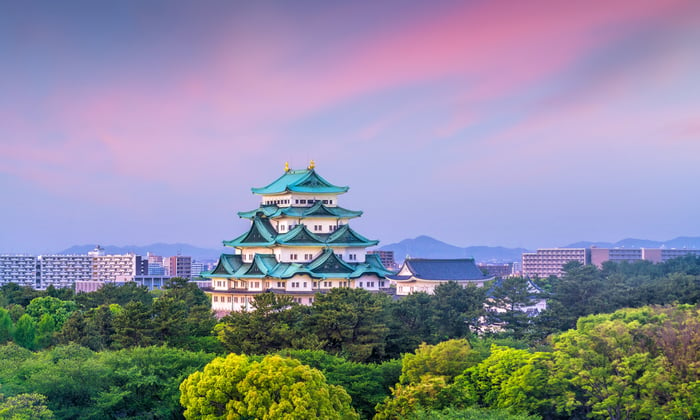
- April brings the cherry blossoms and the busiest, most photographed sailings of the year. Petals drift across temple courtyards, the light is soft and the cities are crowded.
- May and June are quieter, with cooler air and fewer tour buses at major sites. The rainy season runs through June and into mid-July, bringing mist over the mountains and wet mornings in harbour towns.
- Summer voyages, July through early September, focus on Hokkaido and the subtropical south, where the climate is most forgiving. Days are long, the sea is warm around the Yaeyamas and wildlife is at its most active.
- Autumn is the other peak season. Red maples blaze through October and into November across central and northern Japan, the air sharpens and crowds thin. Perfect for walkers, photographers and anyone who prefers space over spectacle.
Winter expedition cruising in Japan is rare. The season effectively closes by late November and resumes the following spring..
Travel tips and FAQs for Japan expedition cruising
Is a Japan expedition cruise different from a regular cruise?
Yes, but not in the way polar expeditions are. Japan has well developed roads, railways and ports, so many days are run by coach to temples, gardens or castles near the harbour. You might spend the morning at Matsue Castle, then drive to the Adachi Museum for lunch and a walk through its landscape garden. Zodiacs come into play at remote islands like Yakushima or along stretches of Hokkaido coast where no port exists. The bigger difference is the expedition team. Naturalists, historians and photographers travel with you, adding depth to every landing.
Who is best suited to a Japan expedition cruise?
Travellers who have visited Japan before, or who want to skip the obvious circuit. Tokyo, Kyoto and Hiroshima still feature, but expedition routes weight the experience towards lesser-known harbours, smaller islands and slower cultural visits. The Seto Inland Sea, the Ryukyu chain, the northern ports of Hokkaido, these are places standard itineraries miss. A good fit for a second or third visit, or anyone who finds the standard tourist trail too crowded.
How active are shore excursions in Japan?
Most days involve walking, with occasional hikes in Yakushima's ancient cedar forests or around the coastline of Hokkaido. Cultural days are easier, often by coach to a temple, garden or castle. You do not need to train for it, but decent shoes and rainwear help. In the Seto Inland Sea, you might Zodiac ashore at Mitarai or Tomonoura, then walk the village lanes. In the Yaeyamas, snorkelling over coral gardens is an option.
What wildlife might I see on a Japan expedition cruise?
In the south around the Yaeyama islands, expect coral reef life, sea birds and sea turtles. Further north in Hokkaido, the wildlife shifts to Steller's sea eagles, sea otters, foxes, deer and seasonal whales. Inland visits often feature Japanese cranes gathering in wetlands, snow monkeys near hot spring valleys and serious birdlife along the rivers and rice paddies. The naturalist team knows where to look and when.
What is the weather like during the Japan cruise season?
Cherry blossom season in April is mild but variable, with rain possible and busy crowds at headline sites. The rainy season runs through June and into mid-July across most of the country, bringing mist over the Seto Inland Sea and wet mornings in harbour towns. Summer is warm and humid in the south and cooler in Hokkaido. Autumn brings clear days and red maples, particularly across central and northern Japan. Layers and a waterproof shell cover most situations.
Is English widely spoken on shore in Japan?
In major cities such as Tokyo, Osaka and Hiroshima, yes. In smaller fishing villages along the Seto Inland Sea and the islands, less so, but expedition guides and shore staff handle the translation. Signage in tourist areas usually runs in both Japanese and English. The expedition team bridges the gap and many cultural visits, tea ceremonies, workshops, private homes, include translators as part of the experience.
Do I need a visa for Japan?
Most UK and EU passport holders do not need a visa for visits under 90 days. Some itineraries that include South Korea or Taiwan require additional paperwork and we will flag this when you book. Japan entry requirements change occasionally, so always check with us closer to departure.
What is the dress code onboard?
Relaxed through the day, smart casual in the evening. None of the four expedition lines hold formal nights as a fixed feature, which suits the active, daytime focus of an expedition voyage. You are more likely to need hiking boots, a raincoat and binoculars than anything requiring dry cleaning.
collections
You may also like

Russian Far East
There’s remote, and then there’s the Russian Far East – this extraordinary region is like another world, with amazing scenery, isolated settlements and abundant wildlife.

Vietnam & Cambodia
Vietnam and Cambodia are quintessential South East Asia: lush green rice paddies, fishing villages built on stilts, unspoilt white sand beaches and awe-inspiring temples rising from the jungle.

South East Asia
This extensive region covers a whole variety of countries and lands, including the extensive Indonesian archipelago, the huge island of Borneo, diverse and spectacular Papua New Guinea in the southwestern Pacific, and the ever intriguing Vietnam and Cambodia with their rich history and captivating cultures.