Travel Advice

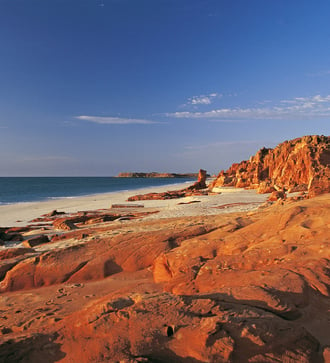
Outside of Australia, few have even heard of the Kimberley, but this is an ancient land, a landscape so old that vast tracts pre-date the very existence of fossils. Here huge tidal surges cause coral reefs to immerge from the waters, creating a rich feeding ground for a whole variety of seabirds as marine life is caught in the newly and regularly created shallows. Rich hues of red, oranges, and browns permeate across the landscape and huge gorges are explored where the barren outback meets the water's edge. This is your complete guide to cruising in the Kimberley Australia.
Where is the Kimberley Australia?
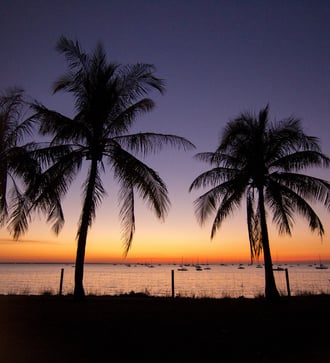
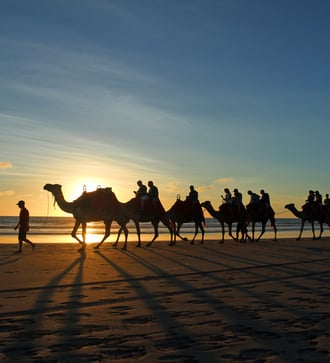
Sparsely settled and hard to reach, you would be forgiven for dismissing the vast Kimberley region as an empty space on the map, but this couldn't be further from the truth. The Kimberley is an ancient land of thunderous waterfalls tumbling over towering cliffs, where Aboriginal communities date back more than 50,000 years. Situated in the northernmost part of Western Australia, the Kimberley borders the Indian Ocean and the Timor Sea, and most commonly, Kimberley cruises start from Broome or Darwin.
What Will I See in The Kimberley Australia?
An expedition cruise to the Kimberley allows you to explore the immense and complex landscape of north western Australia, encompassing spectacular gorges, waterfalls, caves, rainforests and wildlife.
Here, rivers have moulded the landscape over eons, and the luminous quality of the immensely rich terrain brings the Dreamtime mythology of the Wunambal Gaambera people - and their Wanjina and Wunggurr ancestors - to life as you travel through the region, discovering a fascinating culture, spectacular scenery, and amazing wildlife.
Scenery in The Kimberley Australia
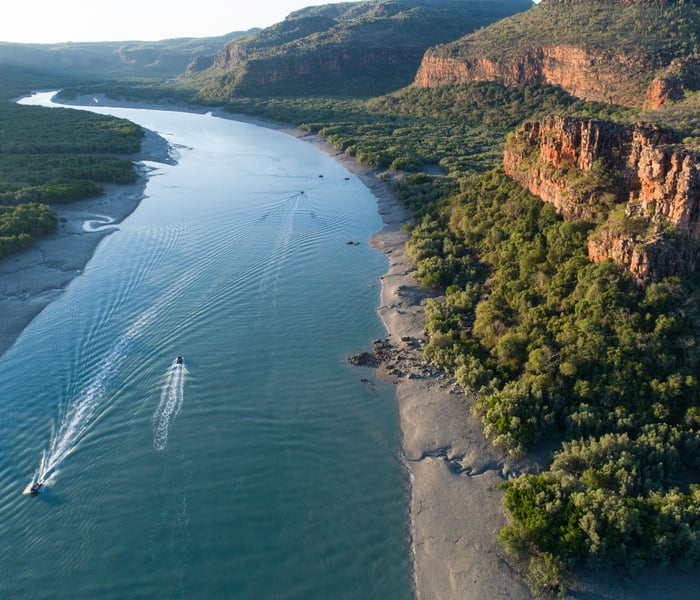
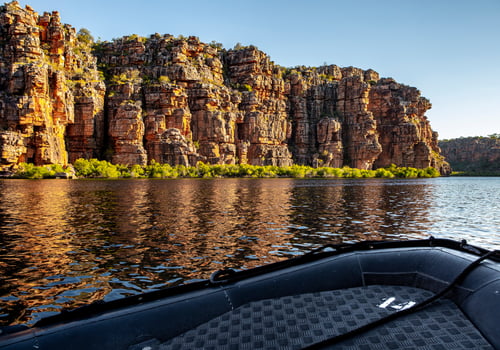
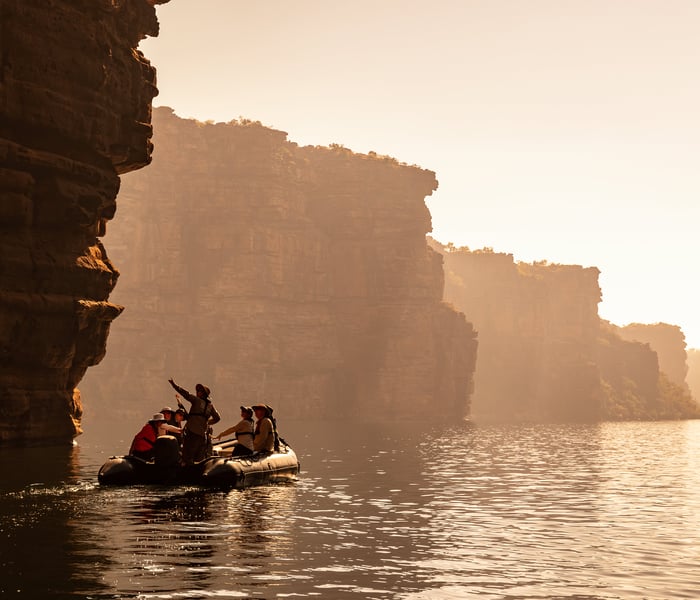
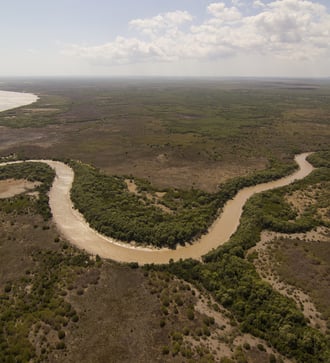
The scale of the Kimberley is truly something else. Over millennia, rivers and streams have carved deep gorges, and travelling through these narrow channels beneath towering rock faces is an incredible experience. The colours of the red and orange sandstone shift throughout the day, lending an almost magical quality to the scenery. A journey up the King George River is a highlight, and it is nothing short of breathtaking. The 80-metre-high sides of the gorge display colours and textures that change with the light as you move further up the river, creating a continually evolving landscape that is simply stunning. The journey culminates at the King George twin falls, which, at 80 metres, are the highest single-drop waterfalls in the whole of the Kimberley. Fed by wet season run-off, the volume of water cascading over the falls varies from year to year.
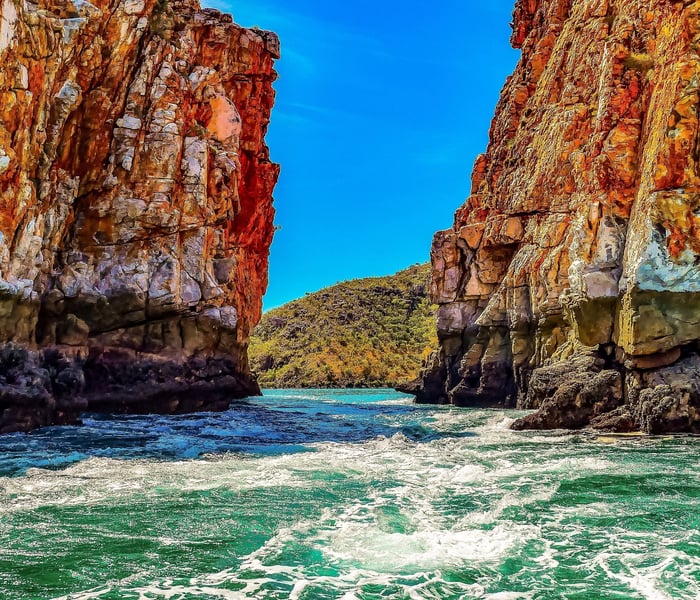
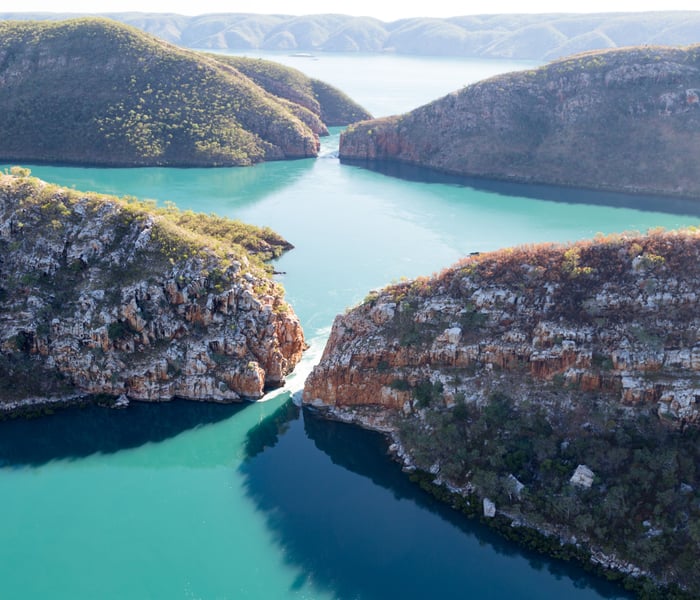
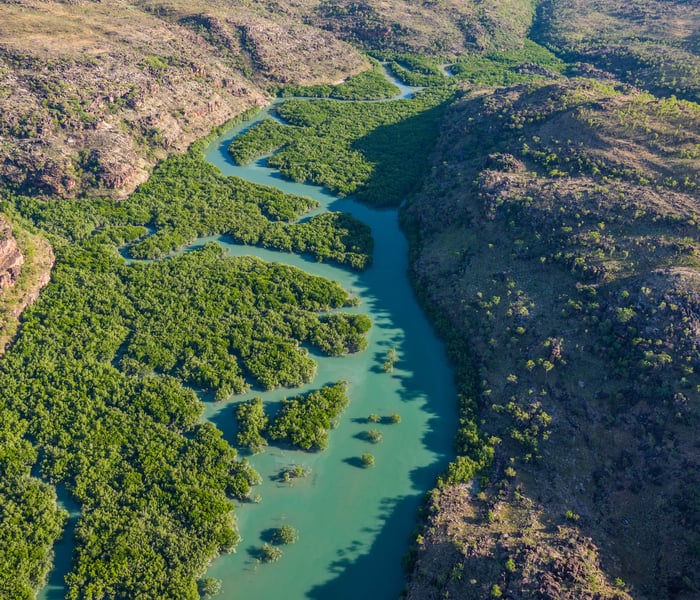
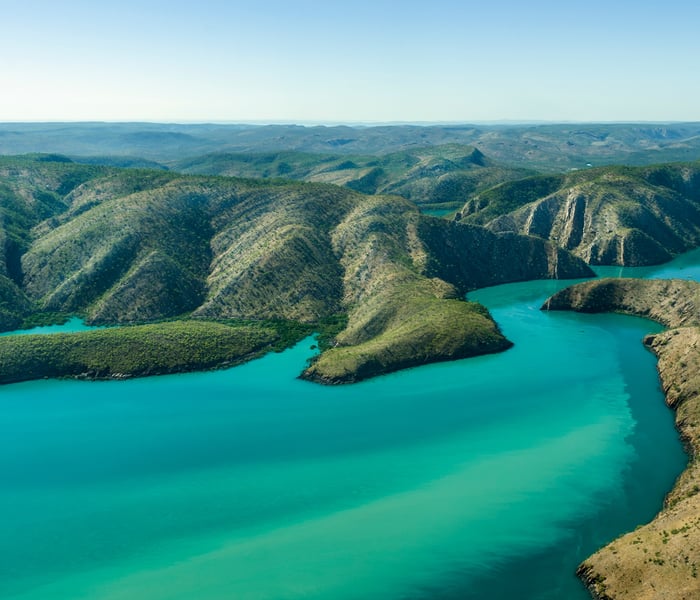
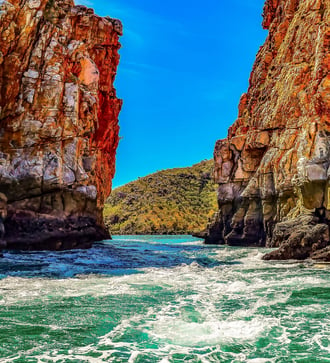
The Hunter River region is another scenic highlight, where mangrove-lined rivers are framed by iconic red sandstone cliffs teeming with life. A stop at the spectacular Mitchell Falls is a must, where waters cascade from one shimmering emerald pool to the next. You may also witness one of the world's most unusual natural wonders - the 'Horizontal Falls' at Talbot Bay. This remarkable phenomenon occurs when tidal movements force water through narrow gaps in the ridges on either side of Poulton Creek. As the water builds up faster on one side than it can flow through, it creates a dramatic waterfall effect. The area is also home to the Bungle Bungles, a stunning range of beehive-shaped towers that stretch across the vast wilderness and can be explored on optional excursions with selected operators.
Culture in The Kimberley Australia
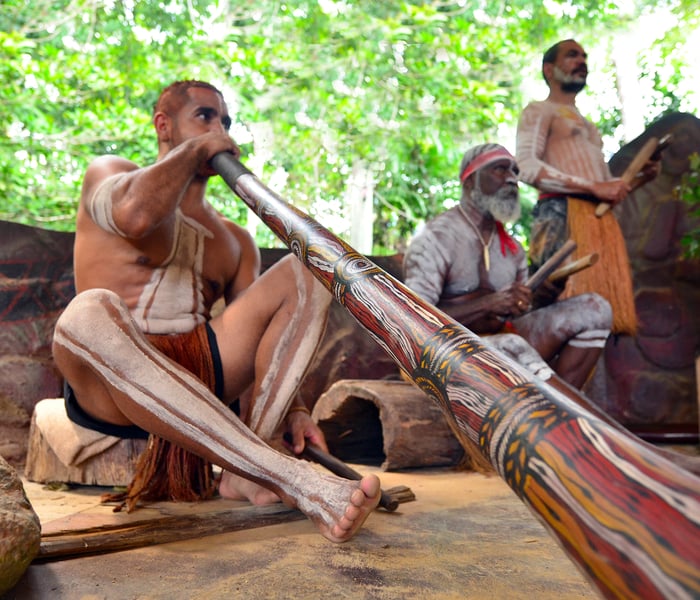
There is an inseparable connection between the culture and landscape of the Kimberley. Aboriginal history in the region dates back more than 50,000 years, evidenced by the expressive rock art that can still be seen today. This art varies across the region - from the Wandjina paintings, which depict the ancient spirits at the heart of Dreamtime Creation (thought to be around 3,000 to 4,000 years old), to the much older Gwion Gwion, or Bradshaw art, believed to date back as far as 30,000 years.
On your Kimberley cruise, don't miss a visit to Vansittart Bay - near the northern tip of Western Australia - offers the chance to view fascinating examples of indigenous art, including the world's oldest known detailed depictions of human figures for a deeper insight into the region's First Nations heritage, as well as its more recent history.
Wildlife in The Kimberley Australia
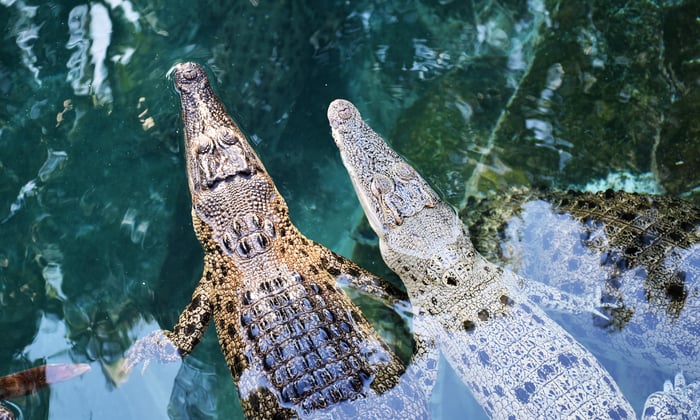
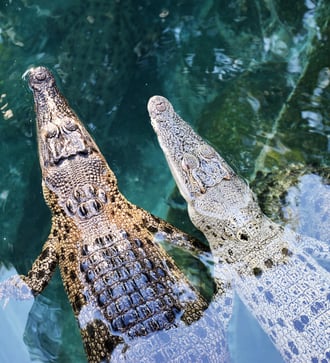
The Kimberley is a haven for wildlife, with flora and fauna found nowhere else on Earth. This surprisingly diverse habitat - often underestimated at first glance - includes savanna, woodlands and mangrove-lined coasts that support the formidable saltwater crocodiles (locally known as 'salties'), sea eagles, and the iconic Australian barramundi. On hikes, you may spot rock wallabies, monitor lizards, or even dingoes. Many expedition cruises to the Kimberley also visit Montgomery Reef, once described as the 'Eighth Wonder of the World' by Sir David Attenborough.
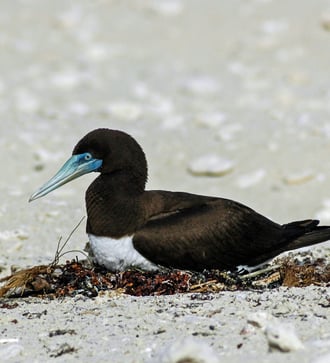
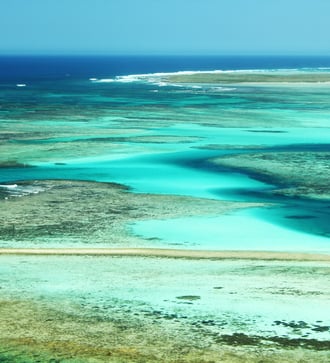
This remarkable ecosystem is home to turtles, seabirds, sharks, octopuses, and even dugongs, and is revealed dramatically as the reef rises above the waters surface with the falling tide. The Hunter River region offers another rich wildlife experience, with mangrove- fringed channels framed by towering red sandstone cliffs. The area teems with mudskippers, fiddler crabs, saltwater crocodiles, and a myriad of bird species. Bird enthusiasts will also appreciate the Lacepede Islands, located just off the Kimberley coast. These remote islands support over 1% of the world's population of brown boobies and have recorded up to 20,000 roseate terns.

When to Visit the Kimberley
The Kimberley has just two seasons - wet and dry - with cruises operating during the cooler dry season from May to September to avoid the intense heat and heavy rainfall. Despite this simple division, Aboriginal communities recognise six distinct seasons throughout the year.
December to March (Mankala)
The main wet season, when up to 90% of the region's rain falls. This period transforms and replenishes the land, feeding waterfalls. As the water recedes, desert grasses come to life, providing vital habitats and food for wildlife.
April (Marul)
The wet season can extend into April, but this is usually when the rains begin to stop and the region starts to open up.
May (Wirralburu)
May marks the beginning of the cruise season and the first month when humidity drops to more comfortable levels. Drying winds come from inland, and daytime temperatures fall from 30-35°C to a more pleasant 16-18°C at night. This is the ideal time to visit for seeing waterfalls flowing at their most forceful.
June to August (Barrgana)
June to August is the true dry season. Daytime temperatures are comfortably in the high twenties, while nighttime temperatures can drop into the low teens. In June, waterfalls still have some strength, but this dwindles as the dry season progresses. From July to August, humpback whales return from their Antarctic feeding grounds to mate and give birth, with sightings most common in August.
September (Wilburu)
Temperatures rise in September, though they have not yet reached the wet season's peak of 40°C or more, and the rains have not yet arrived.
October to November (Larja)
Temperatures peak and the rains begin, bringing intense showers and thunderstorms that often result in dramatic lightning displays.
“The Kimberley is a haven for wildlife, with flora and fauna found nowhere else on Earth.”
How to Get to The Kimberley
Most Kimberley cruises begin in Broome, Darwin or Perth, and some even in Bali or Singapore. An itinerary that starts or ends in Perth also offers the added convenience of Qantas' non-stop flight to and from London - a direct route of nearly 17 hours.
Or, to get to Broome or Darwin, if you're not flying direct to Perth you'll usually have to fly from London via Singapore, Doha, Hong Kong, and then change at Perth to fly onwards. Sydney and Melbourne are also well connected with regular flights from Darwin and Broome. Both cities can easily entertain for three or four days which is a great add-on to your Kimberley cruise - though it's worth bearing in mind you'll be travelling during the cooler winter months.
Choosing Your Itinerary
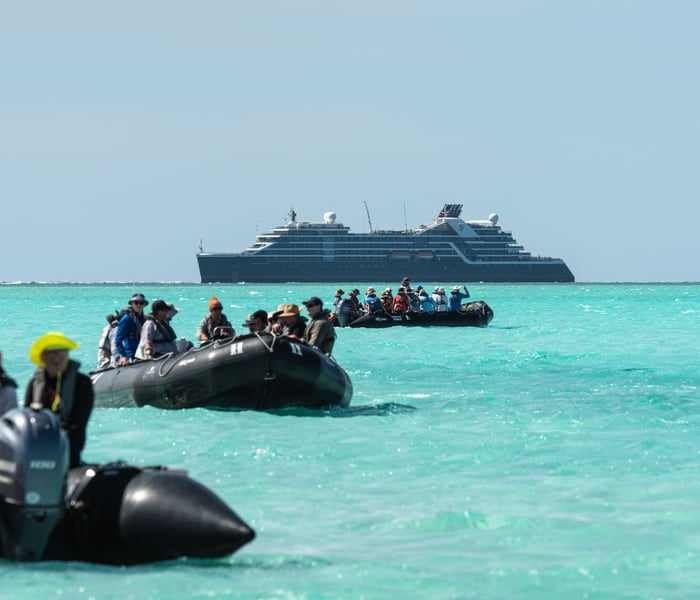
Most Kimberley cruises follow a similar route between Broome and Darwin, typically operating in both directions over 10 to 11 nights. This standard itinerary is common across operators and includes all the Kimberley highlights you'd hope for.
Longer itineraries offer more variation and are well worth considering - espcially given the long journey to Western Australia or the Northern Territory. There are several extended cruise options, as well as land-based add-ons, that make a more in-depth exploration of the region even more rewarding.
Australia's Rowley Shoals and the Abrolhos Islands
For a chance to see some of Australia's most pristine coral reefs, a visit to the Rowley Shoals or the Abrolhos Islands is a must. The Rowley Shoals is a group of three atoll-like reefs located west of Broome and featured on only a handful of select itineraries, making it a rare and special experience. Further south, off Australia's western coast, lies the Houtman Abrolhos archipelago - commonly referred to simply as the Abrolhos.
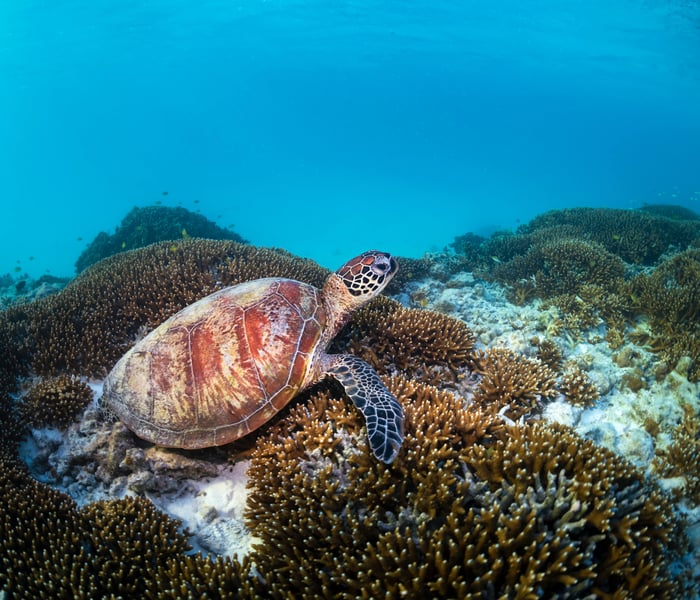
This remarkable collection of more than 100 islands and coral reefs can be visited on extended Kimberley itineraries, particularly those that begin or end in Perth. The islands and their waters provide a rich habitat for sea lions, green turtles, wallabies, carpet pythons, and an impressive array of birdlife.
Begin in Bali or Singapore
Occasionally, Kimberley itineraries begin in Bali - or even Singapore - as ships completing their Asia routes reposition to the Australian coast. These sailings offer a unique opportunity to add another dimension to your cruise, whether by experiencing the spirituality and culture of Bali or the vibrant modernism of Singapore.
Voyages including Asia often cross the Wallace Line - a biogeographical boundary where there is a distinct shift in flora and fauna, marking the division between Asian and Australian species. Named by British naturalist Alfred Russel Wallace in 1859, the line reflects his groundbreaking research in the region. Wallace's work paralleled that of Charles Darwin, and the two men jointly presented their theory of evolution in 1858.
Indonesia, Papua New Guinea and Beyond
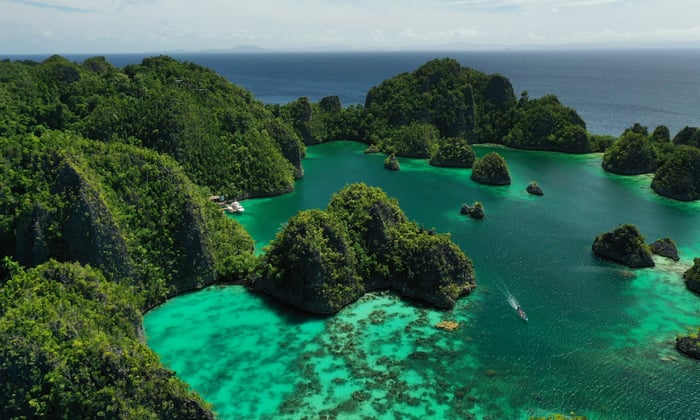
Seabourn offers a range of sailings that combine an extraordinary Kimberley cruise with an equally remarkable exploration of Indonesia and Papua New Guinea. You'll journey through the Raja Ampat archipelago, an almost impossibly beautiful collection of limestone islands that shelter some of the most spectacular coral reefs on Earth.
These biodiverse waters are home to an incredible array of marine life, while nearby Cenderawasih Bay, off the northern coast of Papua, is home to dolphins, dugongs, and four different species of turtle - plus the star attraction: a resident population of whale sharks. For those looking to go even further, some itineraries extend to include the Pacific Islands, and even South America and Antarctica, creating an epic, all-encompassing expedition of a lifetime.
Cruise and Land Combinations
There is no shortage of incredible land combinations that can be added to a Kimberley itinerary. In Darwin, the vast Kakadu National Park - Australia's second largest - begs to be explored. With thundering waterfalls, huge rock escarpments, and wildlife-filled wetlands, this is the Australian wilderness of your imagination, partly thanks to its fame as the backdrop for the Crocodile Dundee films.
For an outback experience like no other, why not travel through the heart of the country's Red Centre on The Ghan, a passenger train that travels from coast to coast between Adelaide and Darwin? The journey takes two nights and three days and can be broken up into two separate trips to offer time to discover Uluru from the midpoint at Alice Springs.

Meet the Author

Find a cruise
Cruises to The Kimberley Australia
Ponant Explorations
Australia's Iconic Kimberley
From Darwin to Broome
12 Jul - 22 Jul 2026 (10 Nights)
From £11,070 per guest
Silversea Expeditions
Wild Beauty of the Kimberley Coast
From Darwin to Broome
12 Jul - 25 Jul 2026 (13 Nights)
From £8,100 per guest
Seabourn Cruises
10-Day Kimberley Expedition: Waterfalls & Wanjinas
From Darwin to Broome
16 Jul - 26 Jul 2026 (10 Nights)
From £8,839 per guest
Ponant Explorations
Australia's Iconic Kimberley
From Darwin to Broome
19 Jul - 29 Jul 2026 (10 Nights)
From £22,070 per guest
Ponant Explorations
Australia's Iconic Kimberley
From Broome to Darwin
22 Jul - 1 Aug 2026 (10 Nights)
From £18,730 per guest
Silversea Expeditions
Broome to Darwin
From Broome to Darwin
24 Jul - 3 Aug 2026 (10 Nights)
From £8,370 per guest
Ponant Explorations
Australia’s West Coast Odyssey
From Broome to Fremantle (Perth)
26 Jul - 9 Aug 2026 (14 Nights)
From £9,690 per guest
Ponant Explorations
Australia's Iconic Kimberley
From Darwin to Broome
1 Aug - 11 Aug 2026 (10 Nights)
From £22,070 per guest
Silversea Expeditions
The Incredible Kimberley & Western Australia
From Darwin to Fremantle (Perth)
1 Aug - 21 Aug 2026 (20 Nights)
From £13,280 per guest
Seabourn Cruises
10-Day Kimberley Expedition: Waterfalls & Wanjinas
From Darwin to Broome
4 Aug - 14 Aug 2026 (10 Nights)
From £8,924 per guest
Ponant Explorations
Australia’s West Coast Odyssey
From Fremantle (Perth) to Broome
8 Aug - 18 Aug 2026 (10 Nights)
From £9,690 per guest
Ponant Explorations
Australia's Iconic Kimberley
From Broome to Darwin
11 Aug - 21 Aug 2026 (10 Nights)
From £10,470 per guest